In today’s competitive labor market, salary and title no longer carry the persuasive power they once did. Increasingly, professionals are asking a deeper question before accepting an offer or remaining in a role. Does this organization reflect what I believe about the dignity of work, the value of the human person, and the kind of society we are trying to build. Values and culture alignment has become a defining factor in career decisions, and for Catholic professionals, this shift offers both opportunity and responsibility.
The New Priority in Career Decisions
Surveys consistently show that employees, particularly younger generations, prioritize meaning alongside compensation. They are attentive to how companies treat their people, how leaders communicate, and how business decisions impact communities. Workplace culture is no longer a secondary consideration. It is central.
For Catholic professionals, this development resonates with the Church’s rich teaching on work. In Laborem Exercens, Pope John Paul II reminds us that work is not merely a commodity or a means of production. It is a participation in God’s creative action. When employees seek alignment between their values and their workplace, they are, often without realizing it, affirming this deeper truth.
Culture as a Daily Experience
Culture is not a slogan on a website. It is the lived experience of meetings, deadlines, promotions, and conflict. It reveals itself in how leaders handle mistakes, how teams celebrate success, and how policies are applied when pressure mounts.
A company may advertise integrity, but does it reward honesty when truth is inconvenient. It may speak of teamwork, but does it foster collaboration or quiet competition. Catholic professionals must learn to discern these realities. Culture alignment does not mean perfection. It means coherence between stated principles and actual behavior.
This discernment requires prudence. Before accepting a position, candidates can ask thoughtful questions about decision making, accountability, and long term vision. Current employees can reflect on whether their daily tasks contribute to authentic human flourishing or merely to financial targets detached from moral responsibility.
The Dignity of the Human Person at Work
At the heart of culture alignment lies the Church’s insistence on the dignity of every human person. In Centesimus Annus, Pope John Paul II emphasizes that economic systems must serve the person, not the other way around. A workplace aligned with sound values recognizes employees as persons with families, aspirations, and consciences.
This has practical implications. It affects parental leave policies, flexibility for family responsibilities, transparency in compensation, and respect for religious conviction. Catholic professionals should not expect a secular corporation to mirror every aspect of Catholic life. Yet they can reasonably seek an environment where moral integrity is respected and where they are not pressured to act against conscience.
At the same time, alignment is not a passive demand placed solely on employers. Employees contribute to culture. The way they speak about colleagues, handle authority, and approach their responsibilities shapes the moral atmosphere of the organization.
From Consumer to Co Creator of Culture
There is a temptation to approach culture alignment as consumers shopping for the perfect environment. Yet Catholic professionals are called to something more demanding. They are called to be leaven.
In the Gospel, leaven works quietly from within. Likewise, professionals who embody patience, fairness, and courage can elevate an entire team. When they refuse to participate in gossip, when they advocate for ethical practices, when they mentor junior colleagues with generosity, they strengthen alignment from the inside.
Values alignment is therefore not simply about finding the right company. It is about becoming the right kind of leader, regardless of title. Authentic leadership flows from character. It does not require a corner office to influence a culture.
It's About Alignment of Values
A workplace aligned with sound values will never be flawless. Markets fluctuate. Leaders make mistakes. Personalities clash. Yet when an organization sincerely seeks the good of its people and the communities it serves, it creates space for professionals to integrate faith and work with integrity.
For the Catholic professional, the rise of values and culture alignment is an invitation. It invites careful discernment in career decisions, courageous witness within organizations, and a renewed commitment to shaping environments where human dignity is honored. In doing so, work becomes more than a career path. It becomes a path of sanctification in the heart of the world.
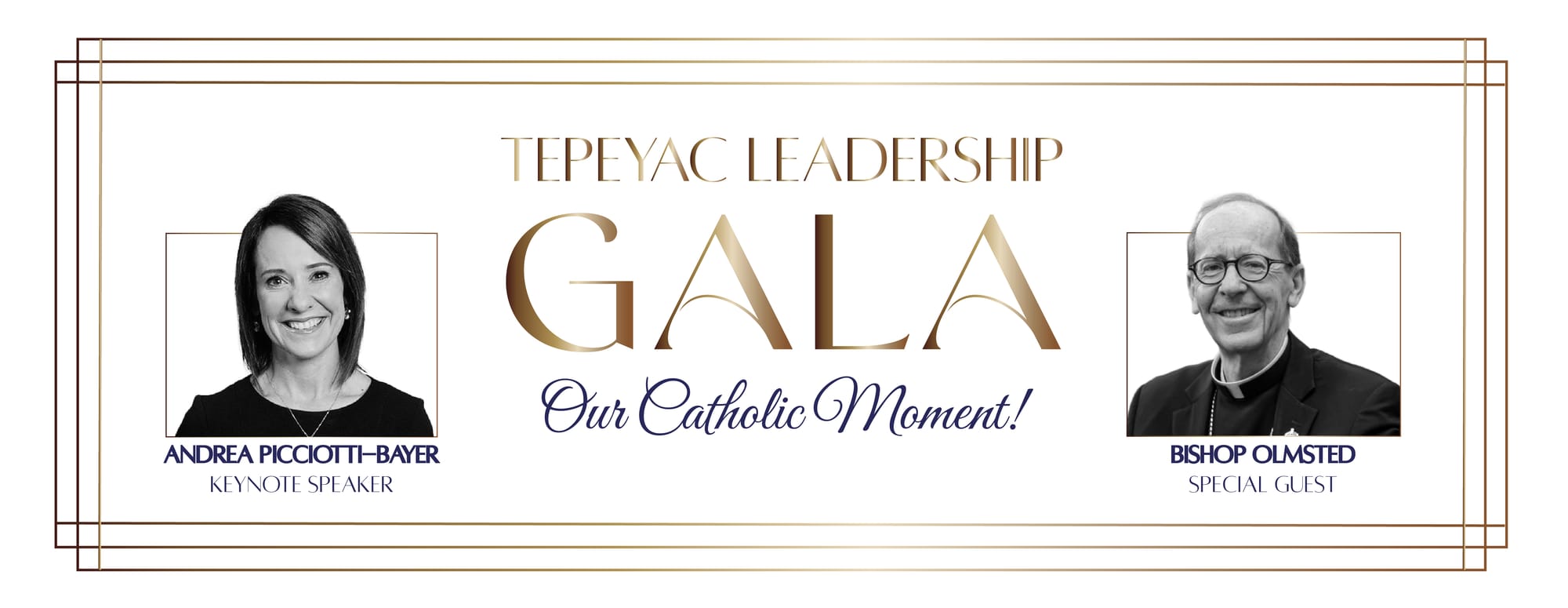
P.S. Last year, as guests arrived at the venue for the Tepeyac Leadership Gala, we asked them a simple but important question. Their answers were thoughtful, candid, and deeply hopeful for the future of our Church and our society. In the video below, you will see a compilation of their responses.