Gratitude as an Act of Courage
In a season marked by global conflict, economic uncertainty, and cultural division, authentic thanksgiving is not a retreat from reality. It is a bold leadership discipline rooted in trust in Divine Providence.
Look at any news feed this Thanksgiving week, and you will find plenty of reasons to brace for impact. Escalating energy strikes in Eastern Europe, persistent turmoil across the Middle East, rapid disruptions from artificial intelligence, and lingering political polarization have left many professionals quietly anxious about what the coming year holds. In boardrooms and break rooms alike, the prevailing mood is cautious, reactive, and guarded.
Against that backdrop, pausing to give thanks can feel almost naive, like a pleasant holiday distraction from serious work. In secular corporate culture, gratitude is often reduced to a soft wellness exercise or a form of toxic positivity that glosses over hard truths.
For the Catholic professional, however, gratitude is never escapism. It is an act of courage.
Eyes-Wide-Open Thanksgiving
The Greek root of the word Eucharist, eucharistia, means thanksgiving. Notice when Our Lord instituted it. He did not wait for a moment of political stability, organizational consensus, or personal comfort. He gave thanks on the night he was betrayed, looking squarely at the cross ahead of him.
That is the model for lay Catholic leadership in turbulent times. Authentic gratitude does not deny the reality of tight margins, geopolitical instability, or strained teams. Instead, it refuses to let fear have the final word over how we lead. Choosing to thank God in the middle of uncertainty is a deliberate act of defiance against despair, declaring that our security rests in Providence rather than in quarterly forecasts or global headlines.
Refusing Fear-Driven Leadership
When uncertainty rises, anxious leaders tend to hoard control, micromanage, and communicate from a posture of scarcity. Teams immediately feel that tension, and trust erodes.
Gratitude interrupts that cycle. A leader anchored in thanksgiving brings steadiness into volatile rooms. By consciously naming what remains good, true, and enduring, such as the loyalty of a hardworking team, the dignity of the mission, and the daily grace to meet the next challenge, you shift your organization from defensive survival to purposeful stewardship.
Practical Ways to Lead With Courageous Gratitude
How does this virtue take shape at work during the Thanksgiving season and beyond?
First, acknowledge reality without surrendering hope. When addressing your team about headwinds for the year ahead, be honest about the challenges, then deliberately anchor the conversation in the strengths, relationships, and blessings already present in your organization.
Second, give specific, personal recognition. Generic holiday emails rarely move hearts. Take time this week to write a handwritten note or make a direct phone call thanking a colleague, vendor, or junior team member for a specific virtue or effort you observed in them this year.
Third, reclaim gratitude as an interior discipline. Before opening your inbox or checking morning headlines, begin your workday by thanking God for three concrete gifts in your vocation. Ordering your mind toward grace before engaging the noise of the world changes how you respond under pressure.
Where Faith Meets Daily Leadership
The world does not need more leaders who mirror its anxiety. It needs lay men and women whose interior peace makes them credible witnesses to the Gospel in the public square.
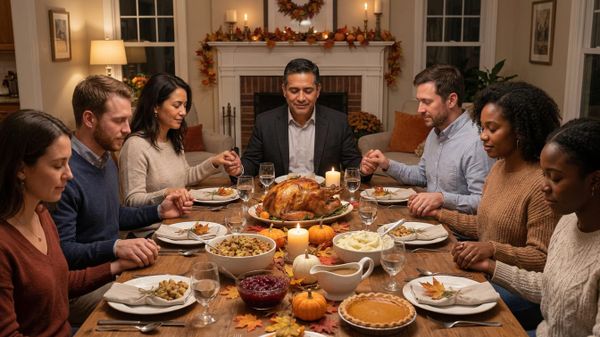
This Thanksgiving, when we gather around our tables and return to our desks, let us practice a gratitude that is clear-eyed, unshakable, and deeply rooted in Christ. In an anxious age, thanking God with confidence is one of the strongest leadership statements we can make.
May the King of the Universe bless you and yours.