Periods of uncertainty test every leader. Economic instability, cultural division, workplace disruption, and moral confusion place extraordinary pressure on those entrusted with responsibility. For Catholic professionals, these moments are not only challenges to manage, but invitations to lead differently. The Church offers a distinct vision of leadership rooted not in control or self preservation, but in service. The saints provide concrete and compelling examples of what servant leadership looks like when times are difficult.
Servant Leadership as a Gospel Mandate
Servant leadership begins with a fundamental truth taught by Christ Himself. Whoever wishes to lead must first learn to serve. This is not a sentimental idea, but a demanding one. It requires the leader to place the good of others above personal comfort, reputation, or advantage. In turbulent times, this approach can appear countercultural or even risky. Yet the witness of the saints shows that it is precisely this posture that builds trust, sustains institutions, and transforms cultures.
Saint Joseph and Leadership Through Fidelity
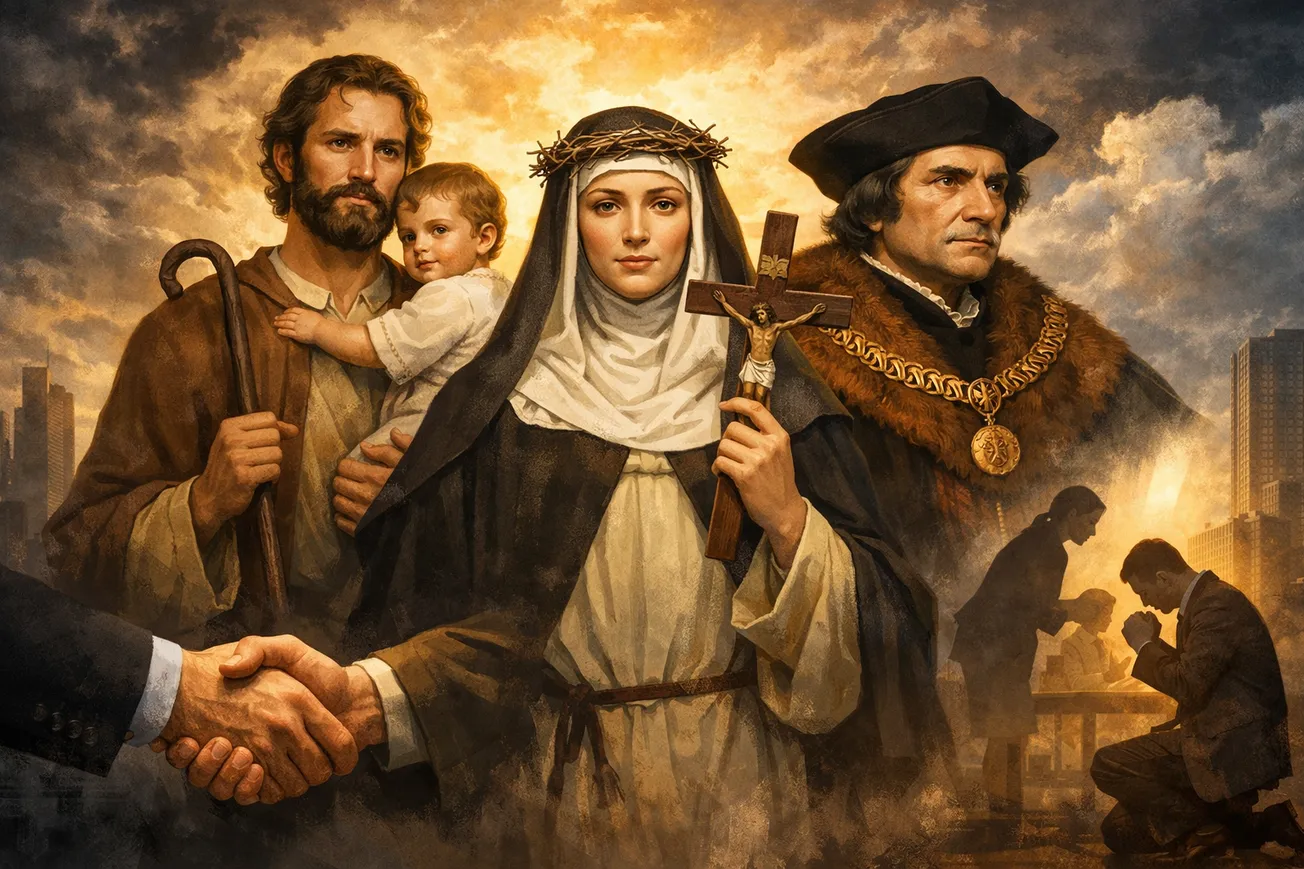
Consider Saint Joseph, whose leadership unfolded in obscurity and crisis. Charged with protecting the Holy Family, he faced political danger, economic insecurity, and the responsibility of guiding those entrusted to him without recognition or acclaim. His authority was exercised quietly, through fidelity, obedience, and decisive action when necessary. For Catholic professionals, Saint Joseph models leadership that is attentive, courageous, and rooted in prayer rather than ego.
Saint Catherine of Siena and Moral Courage
Saint Catherine of Siena offers another powerful example. Though not holding formal office, she exercised extraordinary influence during one of the most chaotic periods in Church history. Her leadership flowed from moral clarity, spiritual depth, and a willingness to speak truth with charity. She did not seek power, yet power followed her witness. In professional life, this reminds leaders that credibility comes from integrity and courage, not from titles alone.
Saint Thomas More and the Primacy of Conscience
In more recent times, Saint Thomas More stands as a patron for leaders navigating ethical conflict. As a statesman, he faced immense pressure to compromise his conscience for political expediency and personal security. His refusal cost him his position, and eventually his life. While most professionals will never face such extreme consequences, his example underscores a central principle of servant leadership. Faithfulness to truth and conscience is never optional, even when the cost is high.
The Interior Foundation of Servant Leadership
What unites these saints is not uniformity of role or temperament, but a shared interior foundation. Their leadership was anchored in prayer, humility, and a clear understanding of whom they served. They understood that authority is a form of stewardship, entrusted by God for the sake of others. This interior freedom allowed them to act with clarity during moments of confusion and fear.
Practicing Servant Leadership in Today’s Workplace
For Catholic professionals today, servant leadership in turbulent times means several concrete practices. It means listening before reacting, especially when anxiety runs high. It means protecting the dignity of colleagues and employees, even when systems are strained. It means making difficult decisions transparently and justly, rather than shifting burdens downward. Above all, it means resisting the temptation to lead from fear.
Servant leaders also recognize that turbulence is often a moment of purification. Crises reveal what truly matters and expose unhealthy structures and habits. Leaders formed by the Gospel do not waste these moments. They use them to realign their organizations with truth, justice, and the common good.
In turbulent times, the world does not need more aggressive or self protecting leaders. It needs men and women formed by the example of the saints, who understand that to lead well is to serve faithfully. Through such leadership, Catholic professionals become instruments of stability, light, and renewal in the very places where uncertainty is greatest.
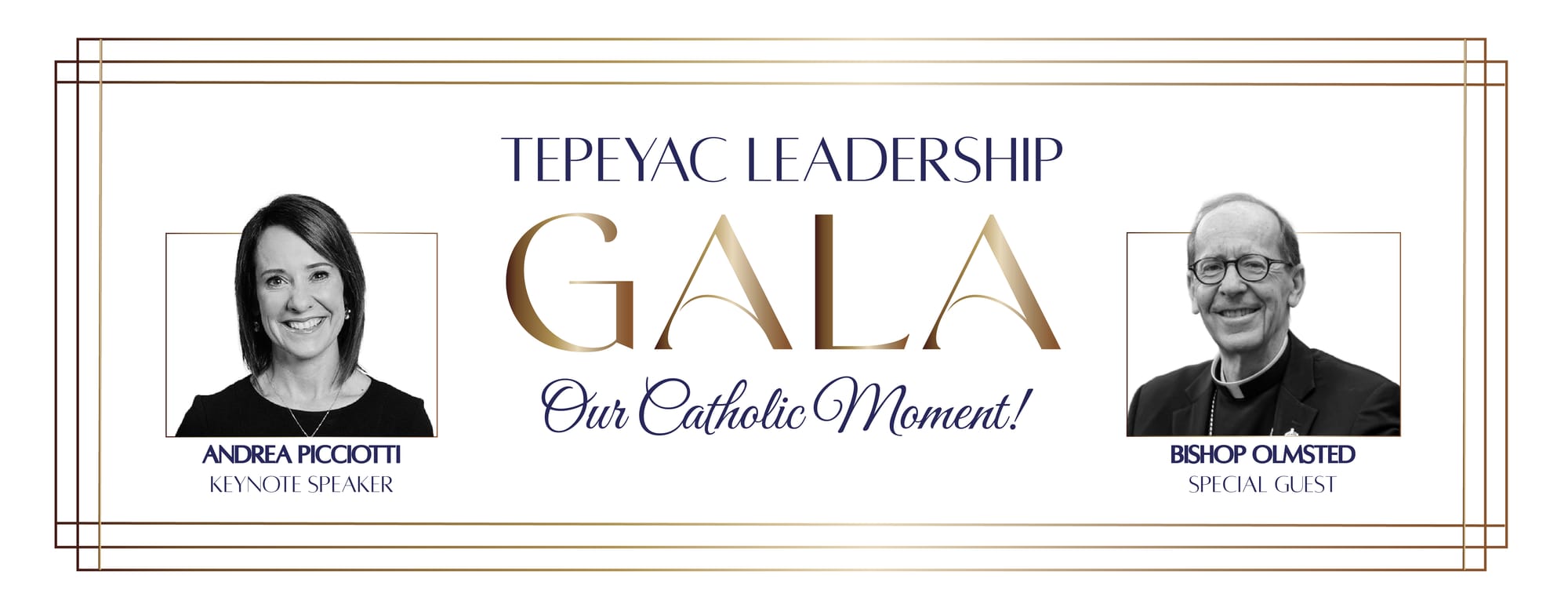
P.S. The countdown is on for the 2nd Tepeyac Leadership Gala, secure your tickets today by clicking below!
A special invitation from Andrea Picciotti.