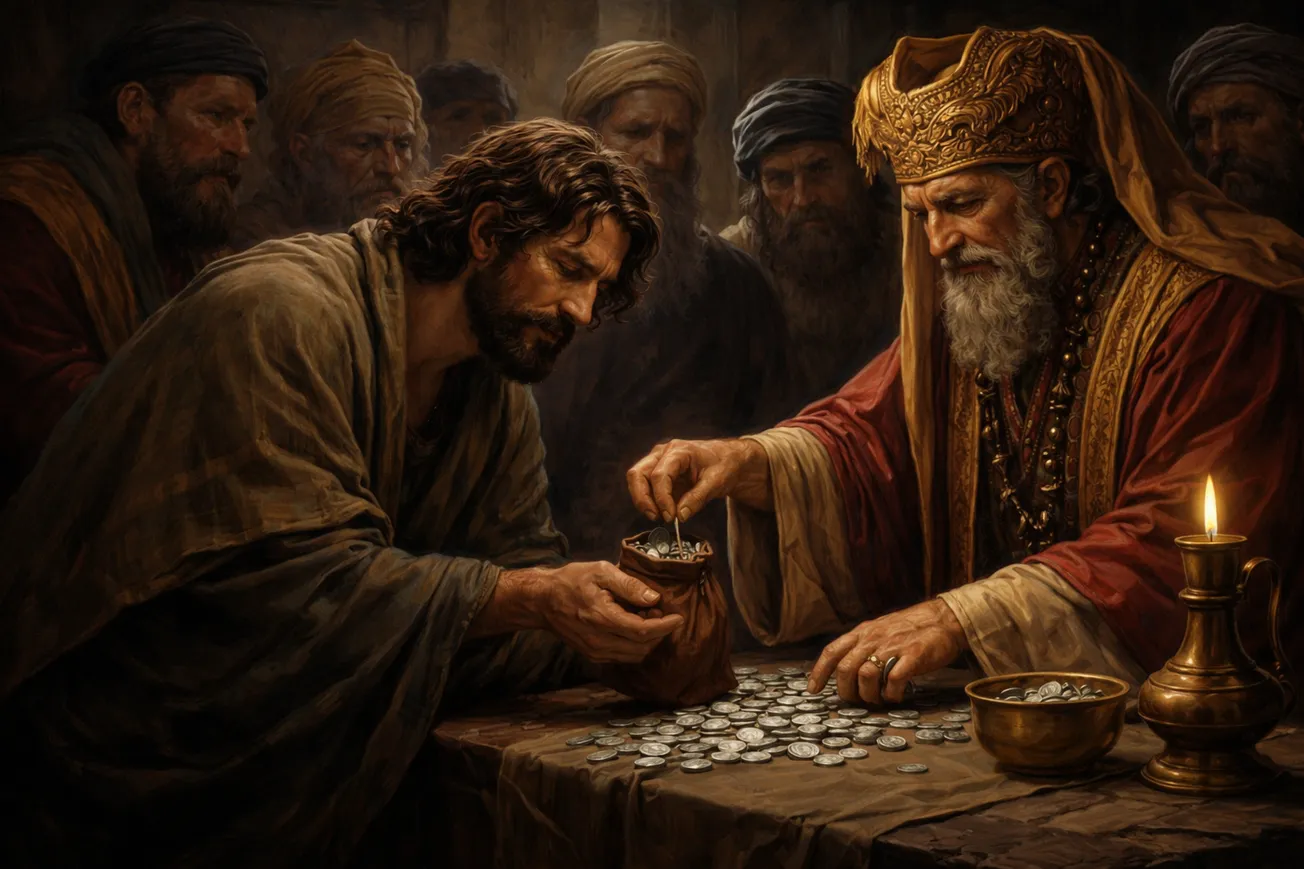
The Wednesday of Holy Week is one of the most sobering moments in the liturgical year. It confronts us not with crowds, palms, or dramatic public scenes, but with something far more unsettling: betrayal from within. Traditionally known as the day of Judas’ betrayal, this moment invites Catholic professionals to reflect deeply on fidelity, integrity, and the subtle ways we can distance ourselves from Christ even while remaining outwardly close to Him.
The Day of the Hidden Decision
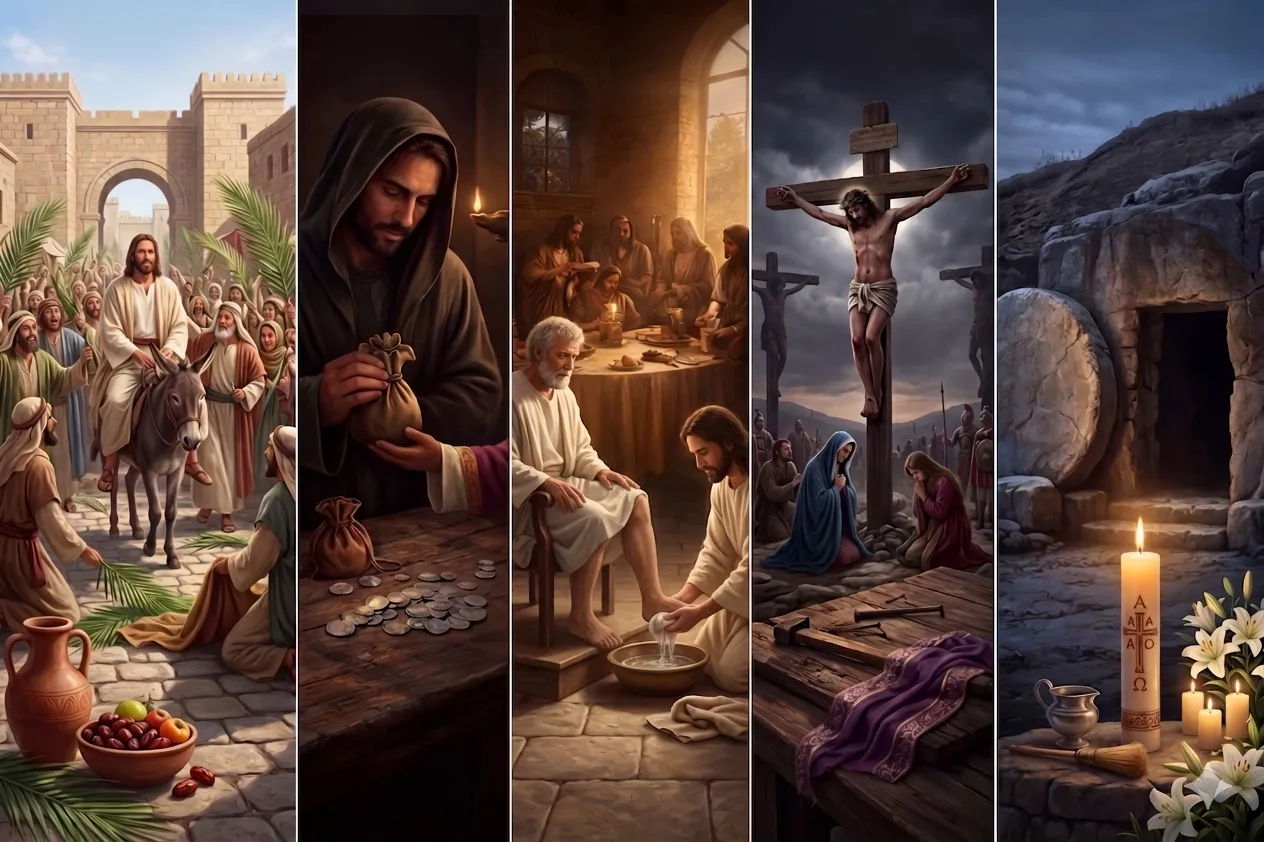
The Gospel proclaimed on this day, drawn from Matthew 26, recounts the decisive moment when Judas Iscariot goes to the chief priests and asks, “What will you give me if I hand Him over to you?” The price is agreed upon: thirty pieces of silver. From that point forward, Judas begins to look for an opportunity to betray Jesus.
What is striking is not only the act itself, but the deliberateness behind it. Judas is not coerced. He initiates the betrayal. He negotiates. He plans. The betrayal of Christ begins not in a moment of weakness alone, but in a sustained interior compromise. This is why the Church places this Gospel before us in such a solemn way. It is not merely about Judas. It is about every disciple.
Proximity Without Fidelity
Judas was not an outsider. He was one of the Twelve, chosen personally by Christ. He walked with Him, listened to His teaching, witnessed miracles, and shared in the intimacy of daily life with the Lord. Yet, despite this proximity, his heart had already drifted.
Even more striking is what happens during the Last Supper. As Jesus announces that one of the disciples will betray Him, each of the apostles asks, “Is it I, Lord?” Judas himself joins the question, masking his intention.
This moment reveals a powerful truth. It is possible to remain externally close to Christ while internally turning away. For Catholic professionals, this tension is especially relevant. One may be active in the Church, engaged in leadership, and respected in the community, yet still allow small compromises to grow into serious infidelity.
The Price of Compromise
The thirty pieces of silver are more than a historical detail. They symbolize the tragic reality that Christ can be exchanged for lesser goods. In the professional world, those “thirty coins” can take many forms: ambition without ethics, success without integrity, influence without truth.
The betrayal of Judas did not happen overnight. It was the culmination of choices, of small concessions, of priorities slowly reordered. The Gospel reminds us that grave failures often begin with seemingly minor decisions left unchecked.
This is why the Church invites us, on this day, to examine our own lives. Where are we tempted to compromise? What are the “prices” for which we risk distancing ourselves from Christ? These questions are not meant to discourage, but to awaken.
Christ’s Awareness and Mercy
Another profound aspect of this Gospel is that Jesus is not unaware. He knows what Judas is about to do. He even identifies the betrayer during the meal. Yet, He does not expose him publicly or cast him out. Instead, He allows Judas the freedom to act.
This reveals both the gravity of human freedom and the depth of divine patience. Christ does not force fidelity. He invites it. Even in the face of betrayal, He continues to offer Himself.
For us, this is both a warning and a consolation. A warning, because our choices matter deeply. A consolation, because even when we falter, Christ remains faithful.
A Call to Interior Integrity
The Wednesday of Holy Week stands as a quiet but piercing examination of conscience. It shifts the focus from external events to the interior life. Before the Cross, before the public drama of Good Friday, the Church asks us to look within.
In the workplace, in leadership, in daily responsibilities, fidelity to Christ is tested not only in grand decisions, but in the ordinary moments where integrity is either upheld or compromised.
Judas reminds us of what can happen when those moments are neglected. But the other apostles, who question themselves sincerely, show us the path forward: humility, vigilance, and a willingness to examine our hearts honestly.
Walking Toward the Triduum
As Holy Week moves toward its climax, this day prepares us in a unique way. It strips away illusions and invites us into truth. The question is no longer abstract. It becomes personal.
Will we remain faithful, even when it costs us? Or will we, like Judas, allow something lesser to take the place of Christ?
The grace of this day lies precisely in this clarity. It is an opportunity, given before the Cross, to choose again.
P.S. Discover the place where Our Lady of Guadalupe appeared to St. Juan Diego. See her image. And join Archbishop José Gómez , Bishop Thomas Olmsted and Bishop Timothy Freyer for The Hour of the Laity 2026 in Mexico City.