Across industries, one of the biggest shifts of 2025 is the rise of agentic AI, a new generation of artificial intelligence capable of performing tasks far beyond the reach of older chatbots. According to insights highlighted by Technology Magazine and Capgemini, this technology is becoming a defining force in how companies operate, reorganize workflows, and make strategic decisions. Agentic AI can monitor processes, anticipate needs, trigger actions, and even collaborate with teams in real time. Generative AI continues to support creativity, research, communications, and design, while agentic systems move into execution, logistics, and decision support.
This combination is reshaping professional life at a remarkable pace. For Catholic professionals, this moment is not simply a technological milestone, but a moral and vocational one. These new tools raise important questions about leadership, responsibility, and the meaning of work. They also offer new possibilities for service, stewardship, and innovation rooted in the Gospel.
A Shift From Tools to Teammates
Companies today are no longer implementing AI merely to speed up repetitive tasks. They are increasingly building work environments where AI behaves like a “partner” in operations, capable of taking initiative, predicting needs, and managing workflows across departments. In many cases, AI systems are beginning to collaborate alongside human teams in scheduling, analysis, quality control, customer engagement, and internal operations.
This shift means that professionals are now expected not simply to use AI, but to oversee it as they would any other element of their team. As Business Wire notes, organizations are urgently seeking leaders who can guide and ethically manage AI systems. Skills such as project management, emotional intelligence, communication, and digital literacy have become just as important as technical knowledge. AI has not eliminated leadership; it has amplified the need for wise and discerning leaders.
The Human Person at the Center
For Catholic professionals, the Church’s social teaching provides the foundation for understanding this moment. Work is not merely a matter of efficiency or output. It is part of the human vocation to participate in God’s creative action in the world. Because of that, every tool, system, and innovation must be evaluated by a single question: Does it serve the dignity of the human person?
Agentic AI brings opportunities for greater productivity, reduced errors, and more creative and strategic roles for workers. But it also raises concerns about job displacement, privacy, fairness, and the risks of placing too much decision-making power in automated systems. The Gospel calls Catholics in the workplace to ensure that new technologies remain servants of humanity, not its masters.
This means advocating for transparency, thoughtful implementation, and ethical guardrails. It means designing and using AI in ways that honor workers, protect the vulnerable, and build up the common good. It means remembering that no matter how advanced technology becomes, moral responsibility always remains in human hands.
Leadership Shaped by Virtue
The rise of agentic AI gives Catholic professionals a unique opportunity to lead with integrity. As companies undergo digital transformation, they need people who can navigate complexity without losing sight of human values. This requires the virtues the Church continually proposes: prudence, justice, fortitude, and temperance.
Prudence guides professionals to make wise decisions about where AI should or should not be used. Justice leads to policies that respect workers and customers. Fortitude helps leaders resist shortcuts or unethical uses of data and automation. Temperance sets healthy limits on technology, ensuring it serves people rather than dominating them.
A Moment for Witness
As workplaces evolve, the world needs professionals who can integrate faith with innovation. Catholics can bring a distinctive voice to conversations about the automation of work: one that acknowledges the value of progress but insists on the primacy of the human person. Agentic AI may be a partner in our work, but it is never the heart of it. Our mission remains the same: to serve, to lead, and to build a culture where every person is treated with dignity.
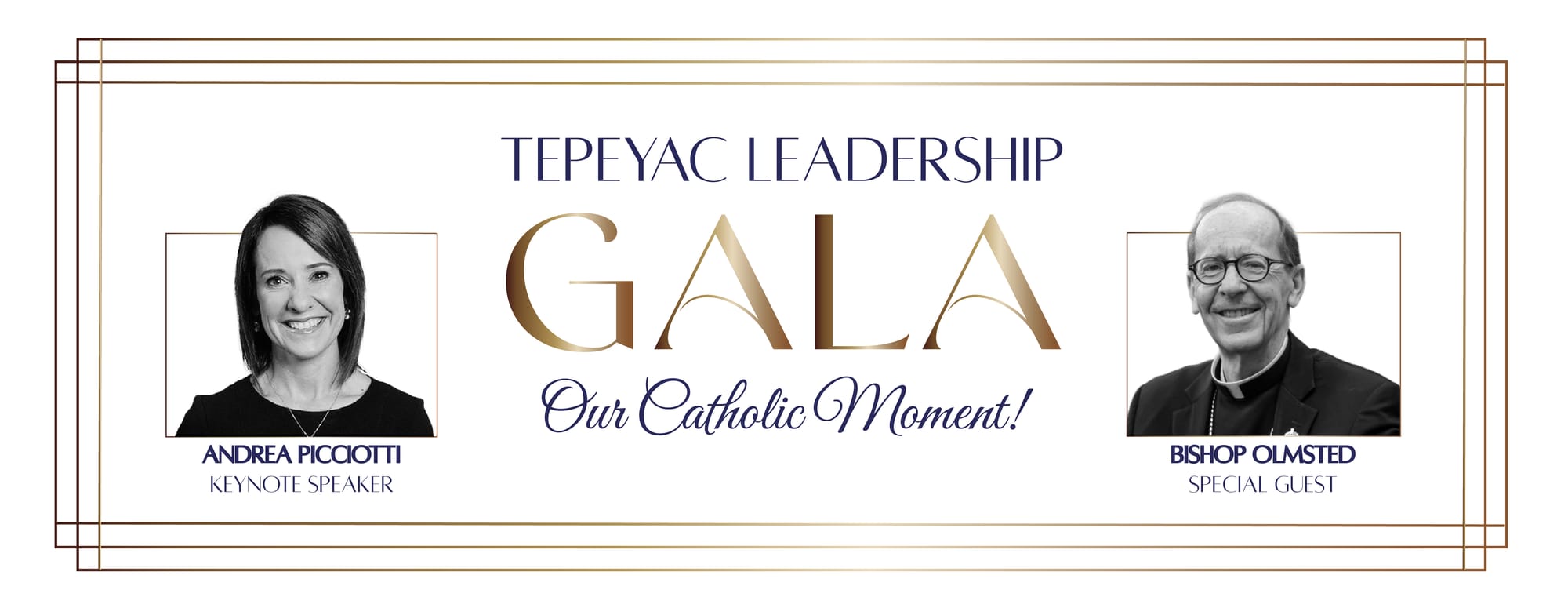
P.S. The date has been set for the 2nd Tepeyac Leadership Gala. Click below to register and mark your calendar to join us!