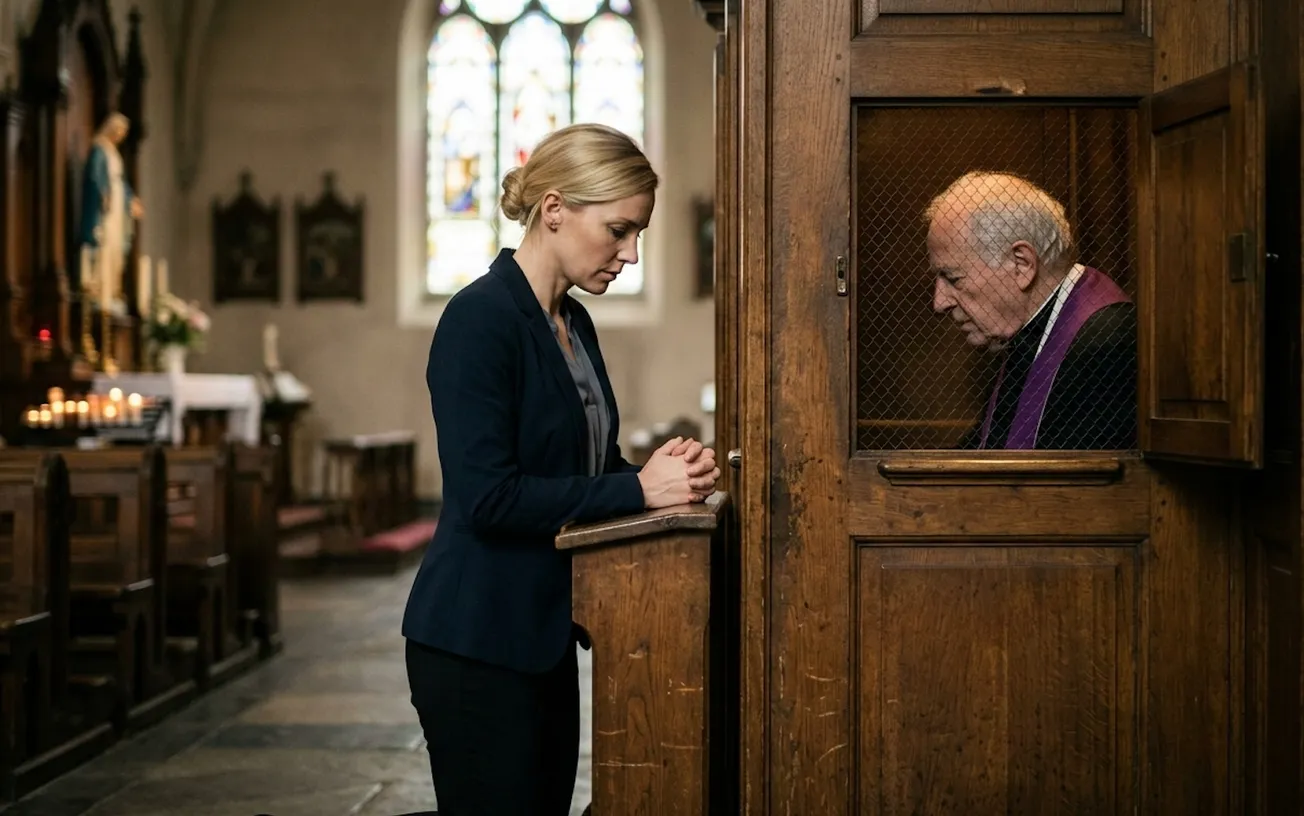
The Catholic Church asks the faithful to confess serious sin at least once a year. In her wisdom, she urges us to do so during Lent, as we prepare our hearts for the joy of Easter. Lent is not merely a season on the liturgical calendar. It is a summons to repentance, purification, and interior renewal. For the Catholic professional, immersed in responsibilities, decisions, and pressures, the Sacrament of Reconciliation is not only an obligation. It is a lifeline.
The Confessional as a Place of Truth
In a culture that prizes productivity and image, it is tempting to treat spiritual life as secondary. Yet the Gospel calls us to integrity of heart. The confessional is where integrity is restored. There, we stand in truth before God. There, we receive not condemnation, but mercy.
Saints across the centuries have testified to the transforming power of confession. St. John Vianney, the patron of parish priests and tireless confessor, once said, “The Lord is more anxious to forgive our sins than a woman is to carry her baby out of a burning building.” He spent countless hours in the confessional because he understood that souls are renewed by grace, not by self improvement alone.
The Soul’s Bath and the Formation of Conscience
St. Padre Pio urged frequent confession, calling it “the soul’s bath.” Just as we would not neglect physical hygiene, he insisted that we should not neglect the cleansing of the soul. For those entrusted with leadership, finances, strategy, and influence, this cleansing is not optional. It shapes conscience. It clarifies judgment. It strengthens virtue.
Lent provides the perfect context to return to this sacrament with seriousness. The Church invites us to prayer, fasting, and almsgiving. Yet these practices find their fullest meaning when united to repentance. Confession humbles us. It dismantles pride. It exposes the subtle compromises that can creep into professional life: impatience, harshness, ambition unchecked by charity, silence in the face of wrongdoing.
Frequent Confession as a Path to Growth
St. Josemaría Escrivá, who preached holiness in ordinary work, encouraged regular confession as a means of sanctifying daily life. He wrote that frequent confession “is a means of progress.” For those striving to live their faith in the marketplace, this is critical. Growth in virtue does not happen by accident. It happens through grace received humbly and consistently.
While annual confession fulfills the minimum requirement, love seeks more than the minimum. Monthly confession is a wise and realistic commitment for many Catholic professionals. It creates a rhythm of examination, repentance, and renewal. It prevents the soul from growing dull. It keeps us attentive to small faults before they become serious habits.
A School of Conversion for Leaders
St. John Paul II strongly promoted frequent confession, even for those not conscious of mortal sin. He described it as a “school of conversion.” In that school, we learn self knowledge. We grow in humility. We experience the tenderness of Christ who restores us.
This matters in the spiritual and professional life. Leaders who regularly confess become more patient with others’ weaknesses because they confront their own. Entrepreneurs who kneel before God become less enslaved to ego. Managers who seek mercy become more merciful. The sacrament forms character in ways no seminar or leadership book can replicate.
Confidence in Divine Mercy
St. Therese of Lisieux trusted deeply in divine mercy and encouraged confidence rather than fear. The confessional is not a tribunal of humiliation. It is an encounter with the Heart of Christ. When we rise from absolution, we rise lighter. We rise freer. We rise ready to serve again.
This Lent, go to confession. Go with sincerity. Go with courage. But do not let the grace of the season end with Easter Sunday. Consider committing to monthly confession. Put it on your calendar with the same seriousness as your most important meetings.
The Catholic professional is called not only to competence, but to holiness. Reconciliation strengthens both. In that quiet encounter with Christ, we recover clarity of conscience, purity of intention, and the strength to lead with virtue. Lent opens the door. Let us walk through it often.
P.S. Last year, as guests arrived at the venue for the Tepeyac Leadership Gala, we asked them a simple but important question. Their answers were thoughtful, candid, and deeply hopeful for the future of our Church and our society. In the video below, you will see a compilation of their responses.