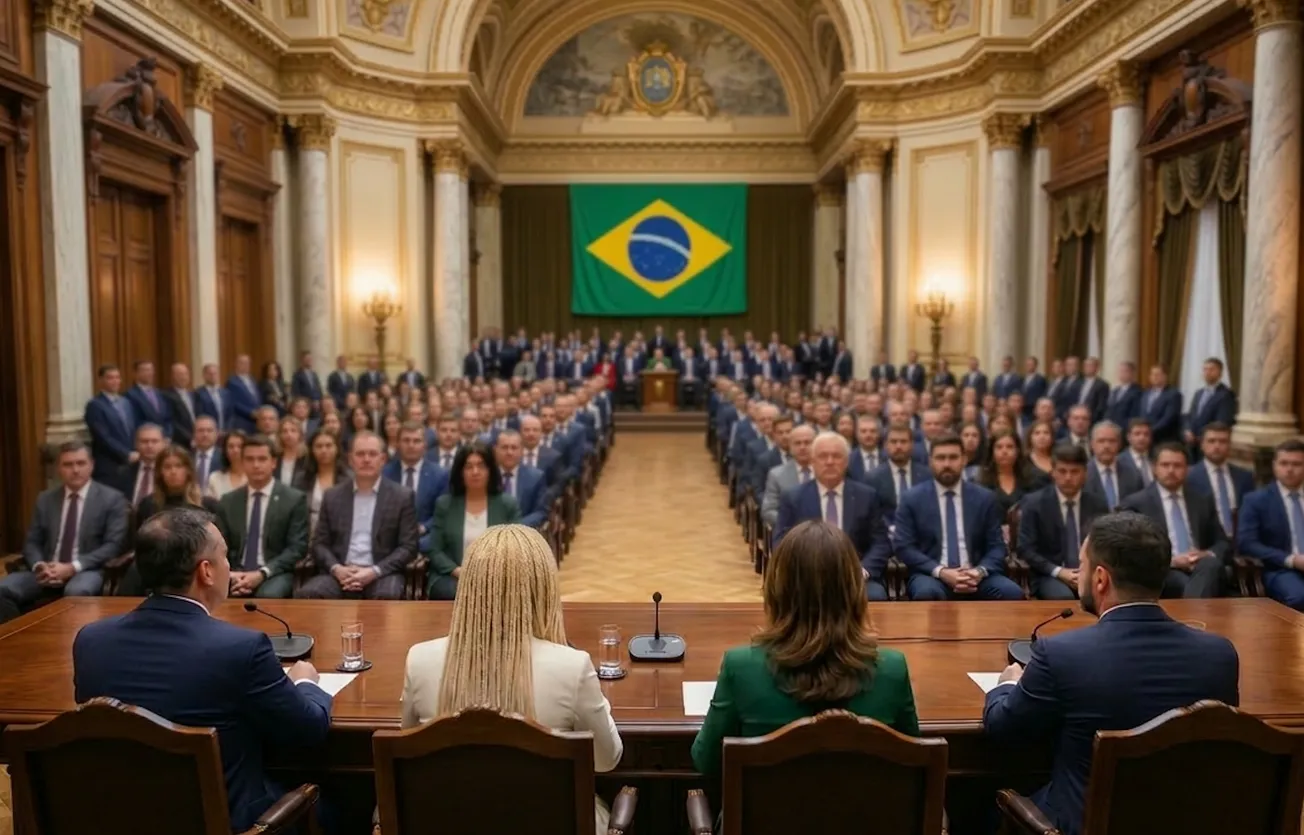
This week, a significant and controversial political moment unfolded in Brazil when Erika Hilton, a well‑known transgender lawmaker who identifies as a woman, assumed the presidency of the Commission of Defense of the Rights of Women in Brazil’s Chamber of Deputies. This decision drew sharp criticism from fellow legislators such as Bia Kicis, who said that appointing someone who was biologically male into this position “is an affront to all women” and “a disrespect” to women seeking authentic representation. Critics argue that the commission’s mission, protecting women's rights, safety, health and dignity, should be led by someone rooted in the lived experiences of biological women.
This episode is far more than a partisan dispute. It highlights a wider crisis in human anthropology, a crisis in how our culture understands who human beings are, what it means to be male or female, and why these realities matter for law, public policy, and social life.
The Crisis of Human Anthropology
At its root, the controversy reflects competing visions of human nature. On one side are those who hold to the Catholic understanding that God created humanity male and female, and that this biological reality is fundamental to human identity and dignity. On the other side are forces in contemporary culture and politics that divorce identity from biology, arguing instead that gender is a matter of personal self-identification.
This cultural shift is larger than one commission or one nation. Around the globe, debates rage over laws and policies that redefine sex and gender. In Brazil alone, numerous legislators and political activists on all sides of the spectrum are grappling with how to incorporate these ideas into legislation, public discourse, and institutional structures. This debate affects how societies define rights and protections for women, children, families, and all citizens.
The question Catholics must ask is not merely “Who should chair a committee?” but rather “What vision of the human person will society embrace?” Catholics believe that every human being is created in the image and likeness of God, and that man and woman are distinct and complementary realities. This truth is foundational to a just social order and must not be surrendered in public life.
Why Catholic Engagement Matters
The erosion of an objective understanding of human nature has profound implications for public policy. If sex and gender are seen as arbitrary or malleable, then rights, protections, and social roles become untethered from the truth of human existence. This can lead to confusion in areas that deeply affect women and families, such as the protection of women from violence, resources and spaces designated specifically for women, and the support of children in their development.
Catholics cannot sit on the sidelines as these debates unfold. The Church teaches that Catholics are called to “bring the light of the Gospel to all areas of society” and to defend the truth about the human person with charity and courage. This means engaging politics and culture, not from a place of mere opinion, but grounded in a profound and objective anthropology shaped by natural law, revealed truth and science.
Engaging with Clarity and Charity
Engagement does not require hatred or exclusion of those with whom we disagree. It calls instead for a clear articulation of the Church’s teaching on the human person, coupled with compassion for every person’s dignity. Lay Catholic leaders are uniquely positioned to enter these cultural conversations, whether in politics, education, business, or media, bringing clarity where confusion abounds.
We must affirm with confidence that every person, regardless of background, is made for love, community, and truth. That does not mean avoiding difficult questions; it means addressing them with fidelity to the dignity bestowed by the Creator. The Brazilian situation is a vivid example of how deeply these questions touch public life and how urgently Catholic witness is needed.
Called to Bear Witness
As Catholic professionals and citizens, we are called to be lights in the public square. This means joyfully proclaiming what it means to be human: that male and female realities are gifts, that family is the foundational cell of society, and that public policy must protect, not undermine, human dignity. In the face of cultural confusion, we must engage, speak truth with love, and work for a society that reflects the truth written into every human heart.
The events in Brazil are not just about one commission chair. They are a call to action for all who believe that truth matters and that the human person is made by God and for God.
P.S. Last year, as guests arrived at the venue for the Tepeyac Leadership Gala, we asked them a simple but important question. Their answers were thoughtful, candid, and deeply hopeful for the future of our Church and our society. In the video below, you will see a compilation of their responses.