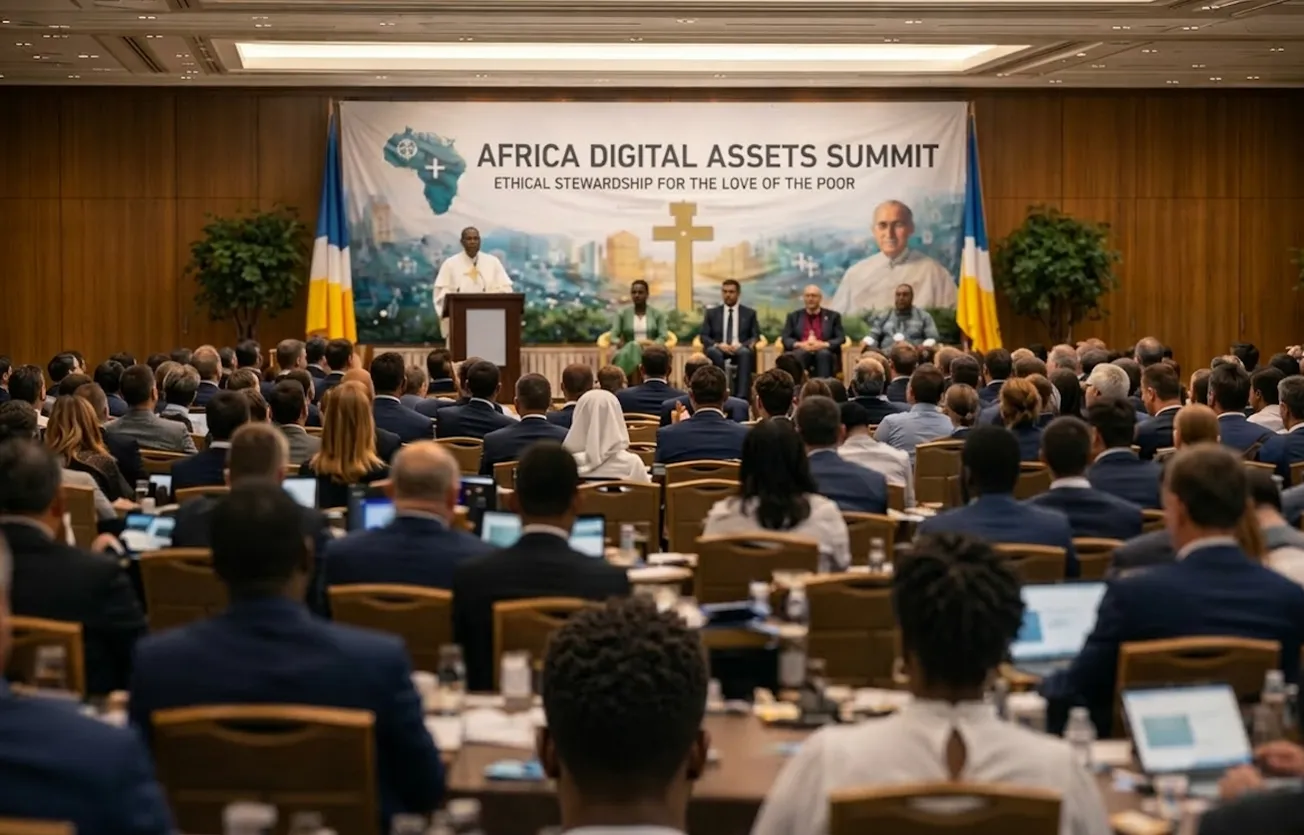
In a remarkable convergence of faith, justice, and the promise of emerging technologies, the Africa Digital Assets Summit (ADAS) is set to make history in Nairobi, Kenya, on April 29–30, 2026. Rooted deeply in the Catholic understanding of love for the poor articulated in Pope Leo XIV’s Apostolic Exhortation Dilexi Te, the summit invites leaders from every walk of life to consider how digital innovation can serve all humanity, especially the most vulnerable.
The title Dilexi Te, Latin for “I have loved you,” reflects the core of the Holy Father’s message on the love of Christ for the poor and society’s obligation to reflect that love in concrete action. Promulgated on October 4, 2025, this exhortation lays out a vision of Christian charity that moves beyond mere ideas into lives transformed and institutions reimagined. It calls us to see the poor not as a problem to solve but as brothers and sisters to welcome. The document underscores love for the poor as essential to the mission of the Church and to a just and humane society.
At its heart, Dilexi Te urges Christians and all people of goodwill to allow charity to reshape structures that perpetuate human vulnerability. It affirms that love for the poor is not a secondary concern or a sentimental impulse. Rather it is the very condition of a Church faithful to Christ. The exhortation ties this imperative to the broader challenges of our time, including rapid technological change that can uplift human dignity or deepen exclusion, depending on how it is guided.
A Vision Grounded in Love for the Poor and Human Dignity
ADAS takes up this challenge boldly. By convening technologists, policymakers, investors, faith leaders, and civil society, the summit seeks to answer a pressing question: “How can digital innovation serve humanity?” This question reflects not just economic curiosity but moral urgency. It invites participants to evaluate digital technologies such as blockchain, cryptocurrencies, and tokenization through the lens of human dignity, and moral accountability.
The summit’s theme, Ethical Stewardship for the Love of the Poor, places the poor at the center of conversations about the future of digital finance. It challenges conventional systems that have often left the marginalized on the outside looking in. The organizers emphasize that Africa is already home to some of the world’s fastest-growing digital finance markets. There is a real opportunity to ensure that this growth becomes inclusive rather than exclusive.
Key to this vision is the “Solomonic economics model” proposed by Fred Ogola, the summit’s founder and convener. Ogola’s model encourages reforms that empower those historically excluded from economic participation. His mission is not incremental adjustment but transformation that ushers in what he calls a golden age for the continent and a new era for Kenya.
Faith in Dialogue With Digital Innovation
The conveners chose Nairobi as the site for this first-ever summit precisely because the city is widely regarded as an innovation hub within Africa. Here, bold thinkers and entrepreneurs are already exploring how new technologies can extend opportunity, improve access to financial systems, and bridge divides that once seemed insurmountable.
Reflecting the spirit of Dilexi Te, the summit also takes place in the context of the Year of St. Francis declared by the Holy Father in 2026. This adds a spiritual dimension that connects the age-old witness of Francis of Assisi, his radical embrace of poverty and solidarity with the least, with the challenges of the 21st century. The Church continues to teach that technology must serve the human person, not the other way around. Pope Leo XIV’s exhortation makes this especially clear, reminding us that true love takes concrete form in service and solidarity.
A Moment of Hope and Responsibility
For Catholic professionals engaged in the world of finance, technology, and public policy, gatherings such as ADAS are more than academic exercises. They are concrete opportunities to witness the Gospel in sectors where ethical reflection is often in short supply. They invite us to consider how our work can contribute to structures that uphold human dignity and ensure that the fruits of innovation are shared widely and justly.
In a world rapidly reshaped by digital forces, the Church’s voice, guided by love for the poor, brings clarity and moral depth. As Dilexi Te teaches, charity must inform every conversation about progress, ensuring that innovation always serves humanity, especially those on the margins.
P.S. Last year, as guests arrived at the venue for the Tepeyac Leadership Gala, we asked them a simple but important question. Their answers were thoughtful, candid, and deeply hopeful for the future of our Church and our society. In the video below, you will see a compilation of their responses.