In recent political discourse both in the United States and Europe, there has been profound talk of revitalizing what many Catholics describe as Christian civilization by appealing to a shared historical inheritance rooted in the Gospel and the Church’s transformative role in the West. This conversation has taken center stage in diplomacy and at international gatherings such as the Munich Security Conference, where Vice President J. D. Vance and Secretary of State Marco Rubio, both Catholics, have articulated their vision for a transatlantic future shaped by common spiritual and moral roots and by mutual cooperation.
From a faithful Catholic perspective, the idea of rebuilding Christian civilization resonates with a recognition that the West’s deepest moral and social achievements trace back to the Christian faith. Long before democratic constitutions and liberal freedoms, it was the teaching of Christ and the witness of the saints that inspired hospitals, universities, the abolition of slavery, the dignity of the human person, and the rule of law infused with justice and charity. This is not a nostalgic longing for political power but an acknowledgment of the transcendent source of order, peace, and human flourishing.
The Transatlantic Vision
At the Munich Security Conference, Secretary Rubio delivered a forceful defense of this heritage, affirming that “for the United States and Europe, we belong together… America was founded 250 years ago, but the roots began here on this continent long before. The men who settled and built the nation of my birth arrived on our shores carrying the memories and the traditions and the Christian faith of their ancestors as a sacred inheritance, an unbreakable link between the old world and the new.” Rubio explicitly tied this inheritance to the very identity of Western civilization, stating, “We are part of one civilization, Western civilization. We are bound to one another by the deepest bonds that nations could share, forged by centuries of shared history, Christian faith, culture, heritage, language, ancestry, and the sacrifices our forefathers made together for the common civilization to which we have fallen heir.”
For committed Catholics, there is truth in acknowledging the Church’s role in forming the moral imagination of the West. The Church has long taught that political communities must serve human dignity and promote authentic human flourishing. A recognition of shared Christian roots can serve as a reminder that freedom detached from truth cannot sustain a civilization for long.
Cultural Challenges and Moral Clarity
While Rubio’s emphasis on shared spiritual roots was welcomed by many, his framing also intersected with contemporary security and cultural concerns, notably mass migration and economic competition, that he portrayed as threats to social cohesion and to the continuity of Western culture. In his words, uncontrolled migration “threatens the cohesion of our societies, the continuity of our culture, and the future of our people.” The essential distinction here is not migration itself, which has long formed part of the very fabric of the United States, but migration that is unmanaged and detached from an ordered vision of the common good.
Vice President Vance likewise addressed European leaders with a call to examine internal cultural weaknesses, arguing that the greatest threats to Western societies may arise from within rather than from external adversaries. He has stated publicly that America “has been anchored by Christianity” and that Christian moral commitments remain central to its identity and future. His argument suggests that the renewal of Western civilization will require moral confidence and a willingness to defend foundational truths about the human person.
For Catholics engaged in public life, such appeals raise serious questions. The Church affirms both the legitimate role of nations in safeguarding the common good and the universal dignity of every human being, including migrants and the vulnerable. A renewed Christian civilization must hold together truth and charity, justice and mercy, sovereignty and solidarity.
Beyond Politics, Toward Renewal
Ultimately, the rebuilding of Christian civilization cannot be achieved through political rhetoric alone. Laws and alliances matter, yet they cannot substitute for conversion of heart, renewal of the family, and fidelity within the Church herself. The true strength of Christian civilization has always flowed from sanctity, from men and women who live the Gospel in their homes, workplaces, and public service.
For Catholic professionals, this moment presents both opportunity and responsibility. If Western nations are indeed heirs to a Christian inheritance, then that inheritance calls for courageous witness, ethical leadership, and a commitment to the common good that transcends partisan divides. Rebuilding Christian civilization means protecting life from conception to natural death, defending religious liberty, fostering strong families, and promoting economic systems that respect the dignity of work and the primacy of the human person.
The language of a united Europe and United States rooted in Christian faith can inspire cooperation across the Atlantic. Yet the deeper task remains spiritual. Civilization is renewed not merely by speeches but by saints. If Christians in public life live with integrity, charity, and confidence in the truth, then the civilization shaped by the Gospel will not simply be preserved, it will be renewed in justice and love for generations to come.
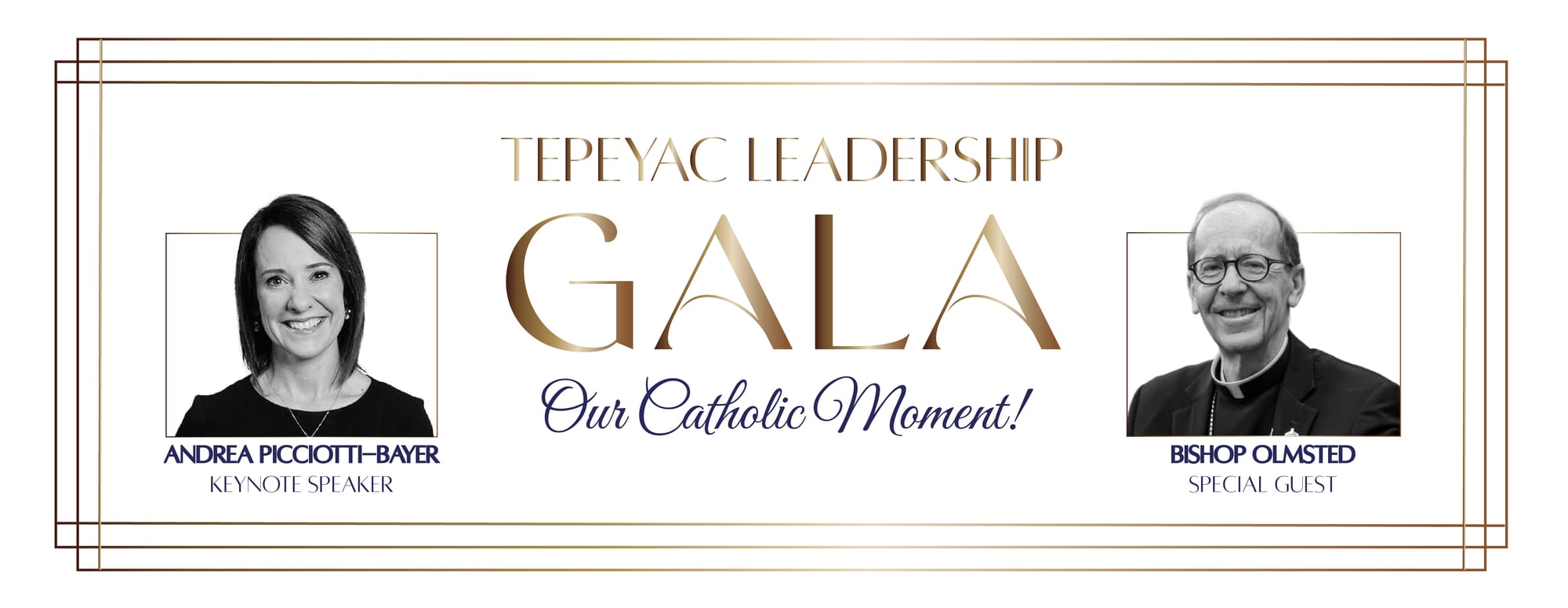
P.S. The countdown is on for the 2nd Tepeyac Leadership Gala, on March 28. Secure your tickets today by clicking below!