Table of Contents
Corpus Christi, the Solemnity of the Most Holy Body and Blood of Christ, offers Catholic leaders a profound meditation on presence, communion, and self-gift. At first glance, it may appear to be a liturgical celebration centered on worship. Yet beneath its processions, Eucharistic adoration, and theological depth lies a powerful framework for leadership in the Church and in the world. For those called to serve in professional, civic, or pastoral environments, Corpus Christi becomes a school of leadership rooted in Christ’s total offering of Himself.
Leadership Rooted in Real Presence
At the heart of Corpus Christi is the mystery of the Real Presence. Christ is not symbolic, distant, or abstract. He is truly present in the Eucharist, Body, Blood, Soul, and Divinity. For Catholic leaders, this truth reorders priorities. Leadership is not about managing perception or maintaining influence. It is about presence, authentic, consistent, and available presence.
In a professional world often marked by distraction and fragmentation, leaders inspired by the Eucharist learn to be fully present to people rather than merely productive around tasks. Meetings become encounters rather than transactions. Conversations become moments of attentiveness rather than performance. The Eucharist forms leaders who stay, listen, and remain engaged even when efficiency would suggest moving on.
The Logic of Self Gift
Corpus Christi also reveals the logic of Christ’s self-gift. “This is my body given for you” is not only a liturgical phrase, but also a leadership model. Christ does not lead from preservation but from donation. He gives Himself completely, without calculation or reserve.
For Catholic professionals, this challenges the instinct to lead from self-protection. Many leadership environments reward image management and guarded vulnerability. The Eucharist forms a different pattern. It teaches that true authority flows from generosity. Time, attention, expertise, and even emotional availability become offerings rather than assets to be conserved.
This does not mean burnout or unhealthy self-neglect. Rather, it means discerningly offering oneself where love and mission require it, trusting that what is given in Christ is never lost but transformed.
Communion as the Shape of Leadership
Corpus Christi is fundamentally about communion. The Eucharist is not received individually in isolation but as part of the Body of Christ. Even when received alone at the altar, it unites the believer to the entire Church, across time and geography.
Catholic leaders are therefore called to build communion wherever they serve. This means resisting siloed thinking, where departments, teams, or ministries operate in isolation. It also means fostering collaboration rather than competition, especially in environments where professional advancement can quietly become a rival to shared mission.
Leadership shaped by the Eucharist asks a simple but demanding question. Does this decision build unity or fragmentation. Does it draw people into deeper communion or into quiet isolation. Corpus Christi reminds leaders that no success is authentically Catholic if it damages the unity of the Body.
Reverence in Ordinary Work
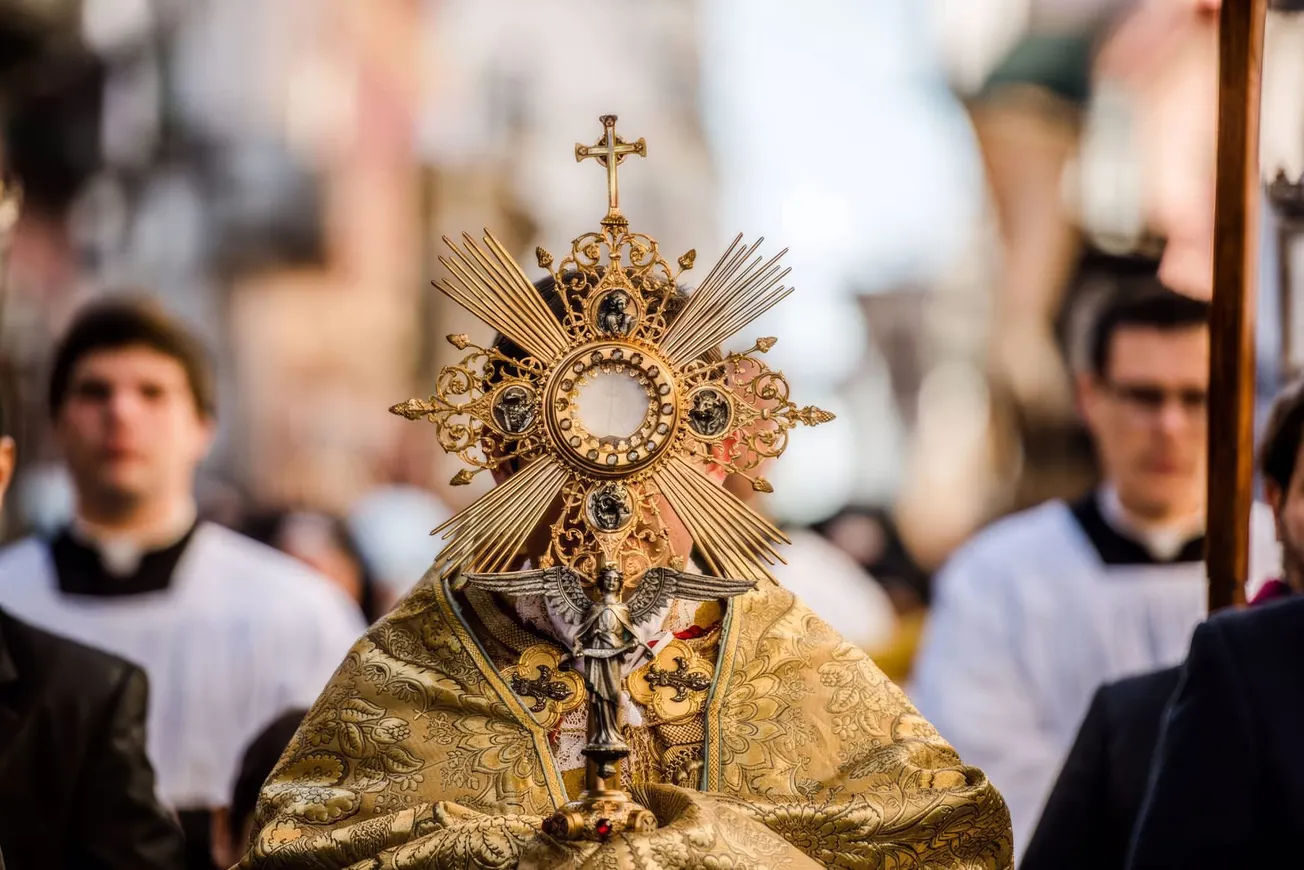
One of the most striking aspects of Corpus Christi is the public procession of the Blessed Sacrament. Christ is carried through streets, blessing ordinary spaces with His presence. This act proclaims that the sacred is not confined to churches but enters the world.
For Catholic professionals, this is a call to reverence in ordinary work. Offices, classrooms, boardrooms, and construction sites are not spiritually neutral spaces. They are places where grace can be carried and witnessed. Leadership, then, is not only about outcomes but about how one carries Christ into the ordinary rhythms of life.
When leaders act with integrity, patience, and quiet fidelity, they participate in this procession. Their work becomes a kind of extended Corpus Christi, where Christ is made visible in the world through their witness.
Becoming What We Receive
St. Augustine famously urged believers to become what they receive. Corpus Christi is not only about adoration, but transformation. The Eucharist forms leaders who gradually take on the shape of what they consume: Christ’s humility, His courage, His mercy, and His mission.
Catholic leadership, therefore, is not merely skill based. It is sacramental. The more deeply a leader enters the mystery of Corpus Christi, the more their leadership begins to reflect the quiet strength of Christ Himself.
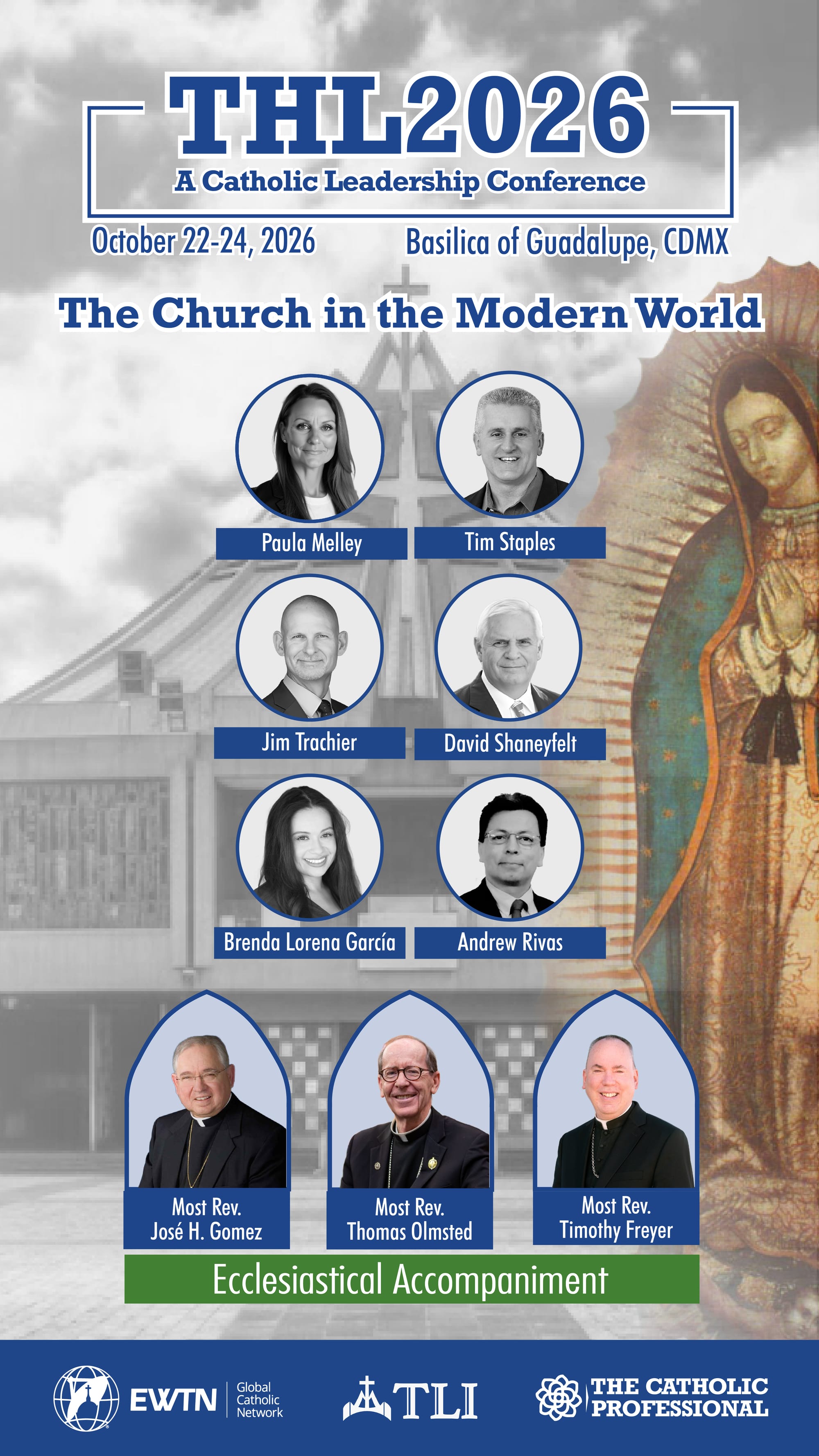
P.S. Discover the place where Our Lady of Guadalupe appeared to St. Juan Diego. See her image. And join Archbishop José Gómez, Bishop Thomas Olmsted and Bishop Timothy Freyer for The Hour of the Laity 2026 in Mexico City.