In the fast-paced ecosystem of modern business, professional advancement often seems governed by zero-sum dynamics. Conventional corporate wisdom suggests that climbing the executive ladder requires aggressive self-advancement, ruthless negotiation, and an unwavering focus on personal positioning. To put others first, the standard narrative warns, is to invite career stagnation.
This creates an intense internal friction for the Christian professional. We are called by Gospel imperative to practice radical grace, to honor others above ourselves, serve with humility, and view our colleagues not as competitors to be outmaneuvered, but as image-bearers of God. Yet, we operate in an environment that daily demands measurable results, competitive edge, and personal distinction.
Reconciling this apparent dichotomy requires a fundamental shift in how we understand power, ambition, and success.
1. Disentangling Ambition from Self-Aggrandizement
The tension between faith and career progression often stems from a misconception that all professional ambition is inherently selfish. Catholic theology, however, distinguishes between disordered ambition, the pursuit of power for self-exaltation, and holy ambition, which is the pursuit of excellence in service of a greater good.
Wanting to advance, earn a seat at the decision-making table, or expand your sphere of influence is not inherently un-Christian. When driven by stewardship rather than ego, higher authority simply provides a broader platform to effect positive change, ensure fair practices, and protect those under your care. Placing others first does not mean burying your talents; it means directing the fruit of those talents outward.
2. Grace as an Operational Advantage
In traditional corporate frameworks, grace is frequently mistaken for weakness or passivity. But in practice, authentic Christian grace is a powerful force that restores human dignity and fosters resilience within organizations.
Where a worldly mindset views business transactions as purely self-serving, a grace-filled approach transforms professional relationships. In competition, leaders seek success through genuine innovation and superior value rather than undermining colleagues or disparaging competitors. In conflict, they choose clarity, fairness, and reconciliation over political score-settling or punitive maneuvering. In delegation, they elevate junior team members by giving them ownership of high-visibility projects, actively preparing them to step into higher roles.
Far from hindering career growth, leaders who consistently demonstrate grace build deep organizational trust. They attract top talent, cultivate fierce loyalty, and create high-performing teams grounded in psychological safety, outcomes that traditional, self-centered leadership styles rarely sustain over the long haul.
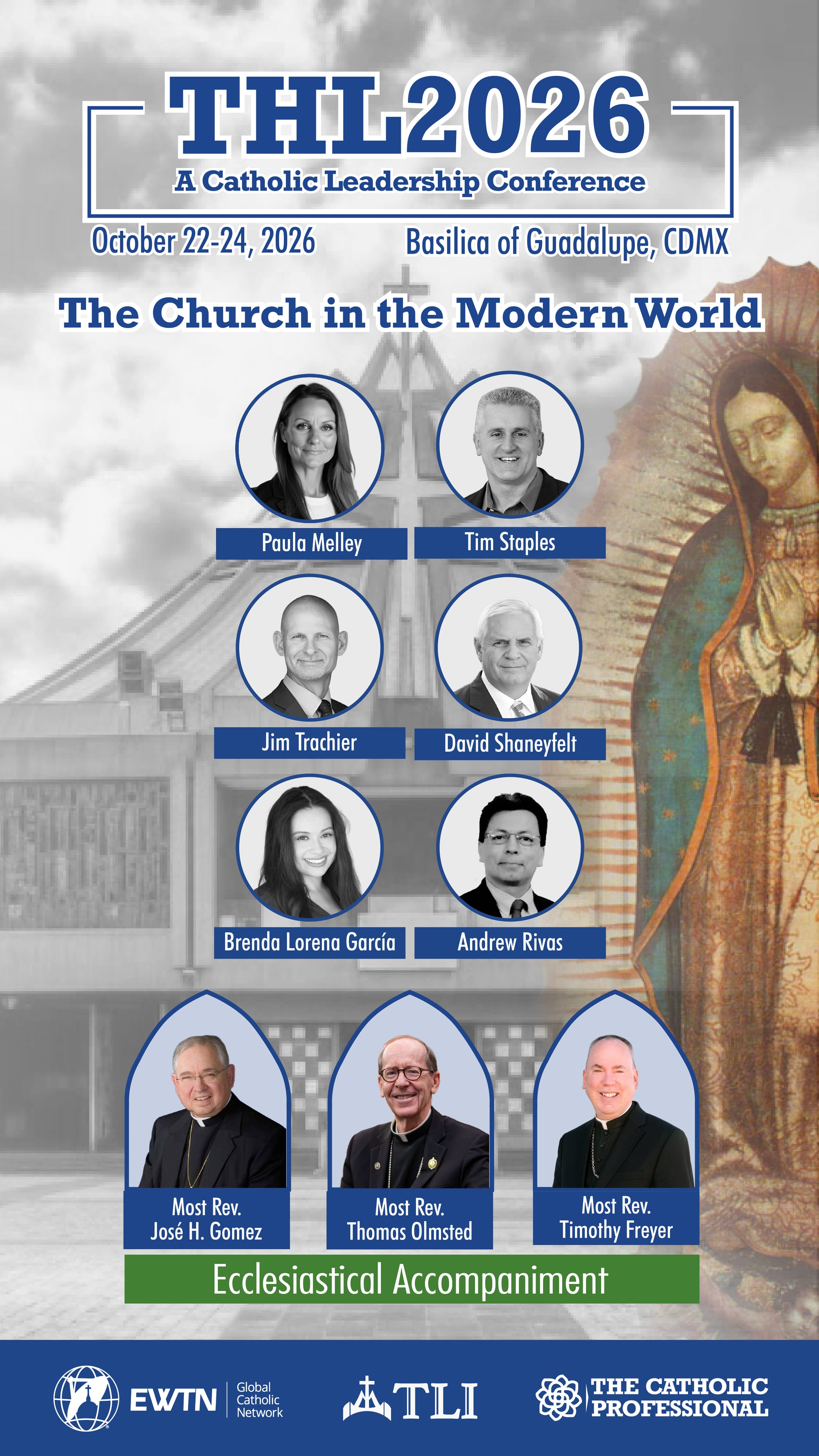
Ad: Discover the place where Our Lady of Guadalupe appeared to St. Juan Diego. See her image. And join Archbishop José Gómez, Bishop Thomas Olmsted and Bishop Timothy Freyer for The Hour of the Laity 2026 in Mexico City.
3. The Power of "Other-First" Leadership
Putting others first in the workplace does not require adopting a posture of self-effacement that harms your organization. An executive who allows poor performance to slide out of misdirected "kindness" is not practicing grace; they are avoiding conflict to the detriment of the entire team.
True Christian grace aligns accountability with compassion. It means holding high standards while providing the mentorship, resources, and psychological support necessary for individuals to meet those standards. It means taking the hit for a team failure while freely passing along the praise for a major victory.
When we lead with this orientation, we model the "logic of gift" in the marketplace. We prove that business excellence and Gospel-centered charity are not mutually exclusive pursuits, but complementary dimensions of a unified life of faith.
Living the Balance
Navigating this dynamic requires daily discernment. When faced with a promotion, a high-stakes deal, or a promotion cycle, ask yourself: Am I seeking this outcome to build my own kingdom, or to better serve the Kingdom of God?
By grounding our professional identity in Christ rather than our resume, we are liberated from the anxious drive to get ahead at any cost. In doing so, we become effective, credible leaders who demonstrate that the highest form of professional achievement is found not in self-advancement, but in lifting others up alongside us.
P.S. Join Archbishop José Gómez, Bishop Thomas Olmsted and Bishop Timothy Freyer for The Hour of the Laity 2026 in Mexico City. In the videos bellow you will see what they have to say about THL2026.
Ad: Tepeyac Leadership’s Leadership for the World is a $2 million, three year mission to form lay Catholic leaders for the public square. Without formation, others fill the void. Will you step in or step aside now, when it matters most?