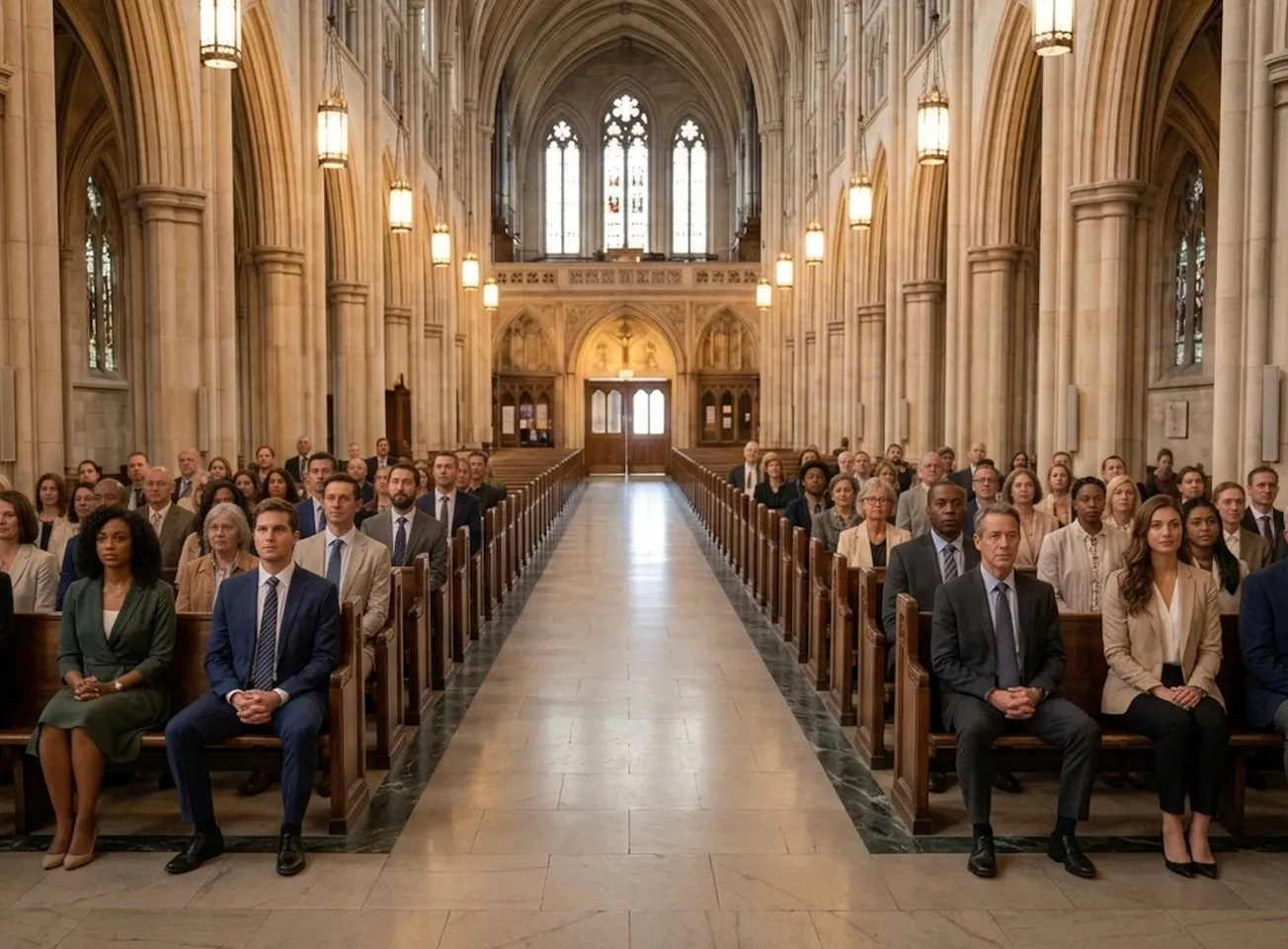
The global workplace is changing at remarkable speed. Automation, remote work, and cross-cultural collaboration have created teams that are more diverse, distributed, and dynamic than ever before. Mid-level professionals today face the challenge of leading through uncertainty while fostering trust, collaboration, and resilience within their teams. From a Catholic perspective, these are not merely professional goals. They are expressions of our vocation to serve, to build community, and to uphold the dignity of every person in the workplace.
The Centrality of Trust
In an age of rapid change, trust has become the currency of effective leadership. Projects shift direction overnight, teams work across time zones, and new technologies transform how we communicate. Amid such flux, trust anchors relationships and allows collaboration to flourish.
Catholic social teaching reminds us that trust begins with truth. When professionals lead with integrity and transparency, they echo Christ’s call to let our “yes” mean yes. This means being honest about goals, timelines, and expectations, even when doing so feels uncomfortable. It also means giving credit where it is due, acknowledging mistakes, and showing consistency between words and actions.
A culture of trust cannot be manufactured through policies alone. It emerges when leaders cultivate humility and approach their colleagues not as tools for productivity, but as persons with gifts, struggles, and aspirations. The more our leadership reflects this authentic concern for others, the stronger and more enduring that trust becomes.
Building a Culture of Resilience
Resilience has become one of the most valued workplace qualities of our time. Yet for Catholic professionals, resilience is not simply the ability to “bounce back.” It is the capacity to persevere through challenges with faith, hope, and love.
St. Paul wrote that “suffering produces endurance, and endurance produces character, and character produces hope.” In this light, resilience is a spiritual as well as a professional virtue. It grows when we respond to setbacks not with fear or frustration, but with prayer, discernment, and renewed commitment to our mission.
Mid-level professionals often sit at the crossroads of pressure from above and expectations from below. They must manage limited resources, shifting priorities, and the human emotions that come with change. This is precisely where a Catholic worldview offers strength. We believe that work is a participation in God’s creative plan, not a mere survival mechanism. When we remember this truth, even the most difficult professional challenges can be transformed into opportunities for grace.
The Human Side of Productivity
Many organizations today are rediscovering what the Church has long taught: people are not replaceable resources. They are the heartbeat of every institution. The concept of the “human-first” workplace echoes the Catholic understanding of the person as made in the image of God, endowed with reason, freedom, and creativity.
This perspective calls Catholic leaders to see productivity not as an end in itself, but as a byproduct of healthy relationships and a shared sense of purpose. Leaders who foster an environment of respect, open dialogue, and mutual support often discover that performance improves naturally. Workers thrive when they feel valued and when their contributions connect to something larger than themselves.
Leadership as Service
Ultimately, the challenges facing today’s workforce call for a renewal of servant leadership. Jesus modeled this in washing the feet of his disciples, showing that true authority flows from love. Catholic professionals are uniquely positioned to bring this model into modern workplaces, leading not through power or prestige but through service.
Service-oriented leadership builds trust, strengthens resilience, and creates communities that can withstand turbulence. It inspires people to give their best not out of fear or ambition, but out of shared commitment and joy.
A Call to Witness
The world of work will continue to evolve, but the principles of Catholic leadership remain timeless. Every meeting, deadline, and decision becomes an occasion to witness to truth, charity, and hope. By building trust and resilience in our teams, we do more than help our organizations succeed. We participate in sanctifying the world of work, one act of faithful leadership at a time.
In this mission, Catholic professionals have a vital role. And mid-level leaders who bridge strategy and execution, they can shape the moral tone of their organizations. In doing so, they remind the world that even in the age of automation and uncertainty, the most powerful force in the workplace remains the human heart guided by grace.
P.S. At Tepeyac Leadership, we equip lay Catholics to lead with the values of the Gospel in every sector of society. Our mission comes to life through Tepeyac Leadership Initiative (TLI), a premier formation experience. Now taking applications for the TLI 2026 cohort.
Like what we do? Share this piece, and follow us on Instagram and LinkedIn.