Leadership is not first learned in a boardroom. It is first learned at a dinner table. Long before a Catholic professional signs contracts, leads teams, or shapes strategy, he or she is called to lead in the hidden and demanding school of the home. The formation of Catholic leaders begins where love is tested daily, sacrifices are real, and character is shaped through ordinary fidelity.
For the Catholic professional, the call to leadership is inseparable from the call to holiness. In the Gospel, Our Lord makes clear that authority is ordered toward service. The pattern is given to us by Christ Himself, who leads not by domination but by self gift. This vision of leadership transforms both family life and professional life.
The Domestic Church as the First Leadership Academy
The family is often called the domestic church, a phrase beautifully articulated in the Catechism of the Catholic Church and strongly emphasized by Saint John Paul II. In the home, children learn what authority looks like. They learn whether leadership means impatience or patience, selfishness or sacrifice, harshness or mercy.
Parents who strive to live the virtues give their children a living curriculum. Prudence is taught when decisions are made thoughtfully and prayerfully. Justice is modeled when parents are fair and consistent. Fortitude is embodied when difficulties are faced without complaint. Temperance is practiced in the discipline of daily life.
When children see their parents kneel in prayer, speak truthfully, apologize when wrong, and serve one another with generosity, they absorb a vision of leadership rooted in humility. These lessons cannot be outsourced. No school, no parish program, no extracurricular activity can replace the moral and spiritual formation that occurs within the walls of the home.
For Catholic professionals, this means recognizing that career success can never compensate for neglect at home. The credibility of one’s leadership in the office is strengthened, not weakened, by faithful presence in family life.
Virtue as the Foundation of Professional Excellence
In the workplace, Catholic leadership does not require preaching. It requires integrity. A Catholic professional leads differently because he understands that work is not merely transactional. It is participatory. Through work, we cooperate in God’s providence and contribute to the common good.
This perspective changes how decisions are made. Profit matters, but not at the expense of human dignity. Efficiency matters, but not at the expense of justice. Success matters, but not at the expense of truth.
A Catholic leader cultivates a culture of respect. He treats employees not as tools but as persons. She mentors younger colleagues not only to advance performance but to shape character. Difficult conversations are handled with clarity and charity. Authority is exercised with accountability.
When professional setbacks come, as they inevitably do, the Catholic leader draws strength from faith. Confidence is not rooted solely in titles or outcomes, but in the conviction that God is present even in uncertainty. This interior freedom allows for courageous decisions, including those that may be costly in the short term but right in the long term.
Integration, Not Compartmentalization
One of the great temptations of modern life is compartmentalization. It is easy to live one way at home and another at work. Yet authentic Catholic leadership demands integration. The same virtues that govern family life must animate professional life.
If patience is practiced with children, it should also be practiced with colleagues. If honesty is required in business, it must also be present in the small promises made at home. Consistency builds trust. Trust builds influence. Influence, rightly ordered, becomes a channel of grace.
The Catholic professional is called to see both home and office as arenas of mission. Raising Catholic leaders in the home means forming children who understand service, responsibility, and love. Leading in the office means embodying those same virtues in complex and competitive environments.
Ultimately, leadership is not about control. It is about stewardship. The Catholic parent and the Catholic executive alike are entrusted with souls, opportunities, and resources. When exercised with humility and fidelity, their leadership becomes a witness to a higher kingdom and a quiet but powerful contribution to the renewal of the world.
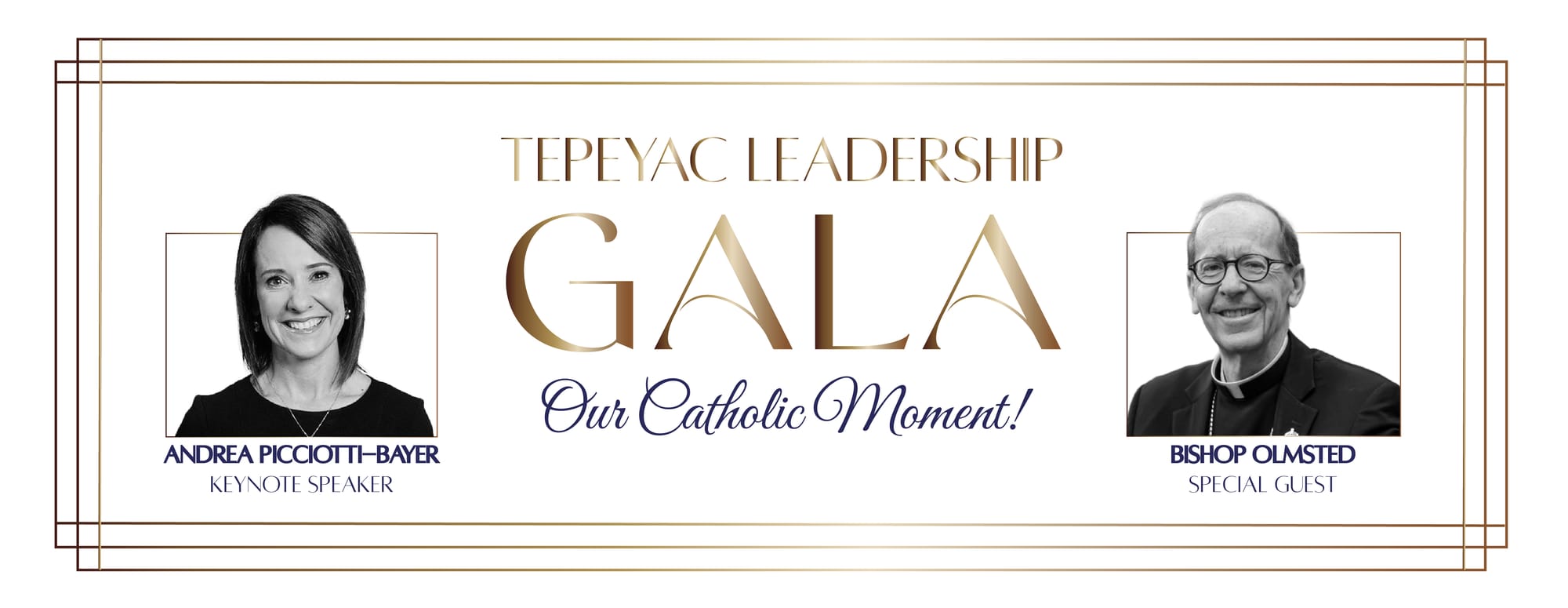
P.S. The countdown is on for the 2nd Tepeyac Leadership Gala, on March 28. Secure your tickets today by clicking below!