
In an era defined by hyper-partisanship and partisan news cycles, the workplace has become a minefield of political tension. For Catholic professionals, this divide often creates a profound spiritual query: Should we pray for the success of politicians whose policies we actively oppose?
When an administration or elected official champions policies that conflict with Catholic moral teaching or economic prudence, our natural inclination may be to root for their failure. We might hope their initiatives stall, their public standing drops, or their legislative agendas crumble. Yet, the Christian call to prayer leaves little room for partisan exceptions.
The Scriptural and Magisterial Mandate
The directive to pray for governing authorities is not a modern compromise, it is an ancient Christian obligation forged under far harsher regimes than modern democracies.
In his First Letter to Timothy, St. Paul explicitly writes: "I ask that supplications, prayers, petitions, and thanksgivings be offered for everyone, for kings and for all in authority, that we may lead a quiet and tranquil life in all devotion and dignity" (1 Tim 2:1–2). Writing during the reign of the Roman Empire, a government actively hostile to the nascent Church, St. Paul did not condition this instruction on the moral alignment of the emperor.
Furthermore, the Catechism of the Catholic Church underscores that authority is necessary for human society, and Christians are called to contribute to the common good alongside civil authorities (CCC 1900). Praying for political leaders is an exercise of civic duty grounded in charity, acknowledging that all earthly authority ultimately answers to God.
Ad: Advance your career and deepen your faith with the Tepeyac Leadership Initiative, an 18-week leadership development program designed to elevate your professional trajectory while strengthening your relationship with Christ. Gain the vision, skills, and network needed to lead effectively in today’s world. Visit to learn more and submit your application for admission by November 10.

Defining "Success": What Are We Actually Praying For?
The hesitation many feel around this duty stems from a misunderstanding of what "success" means in a Christian context. Praying for a politician’s success does not mean asking God to advance policies that harm human dignity, undermine religious liberty, or promote injustice. Instead, praying for a leader's success means praying for their conversion, wisdom, and alignment with the truth.
First, we pray that the Holy Spirit grants them the grace of wisdom and prudence to seek justice, protect the vulnerable, and serve the genuine common good. Second, we petition that they are shielded from pride, vanity, partisan malice, and self-serving ambition.
Third, we pray that their hearts are moved toward truth, asking that wherever their decisions align with error, God opens their mind to moral reality and human dignity. Finally, we ask that their good initiatives succeed, praying that wherever their policies do genuine good, such as alleviating poverty, promoting peace, or supporting families, those efforts bear fruitful results.
If a leader succeeds in governing with justice and wisdom, society prospers. Rooting for their total failure often means rooting for economic hardship, social instability, or compromised human dignity for millions of citizens.
The Professional and Spiritual Benefits of Political Prayer
For the Catholic executive, manager, or employee, cultivating the habit of praying for political opponents yields immediate practical benefits in daily professional life.
First, it guards against bitterness. Resentment and political outrage drain emotional and spiritual energy, whereas interceding for those we disagree with softens our hearts and frees us from toxic cynicism.
Second, it fosters workplace charity. In corporate settings where political discussions arise, a professional anchored in Christian charity is better equipped to listen, speak calmly, and build bridges rather than divide.
Finally, it centers our ultimate hope. Praying for earthly leaders reminds us that no political party, candidate, or policy platform holds the key to human salvation, as our ultimate allegiance remains with Christ the King.
Praying for politicians we disagree with is not a concession to their ideology, it is a declaration of trust in God's sovereignty. By lifting up our leaders in prayer, we fulfill our apostolic calling to be salt and light in the secular professional world.
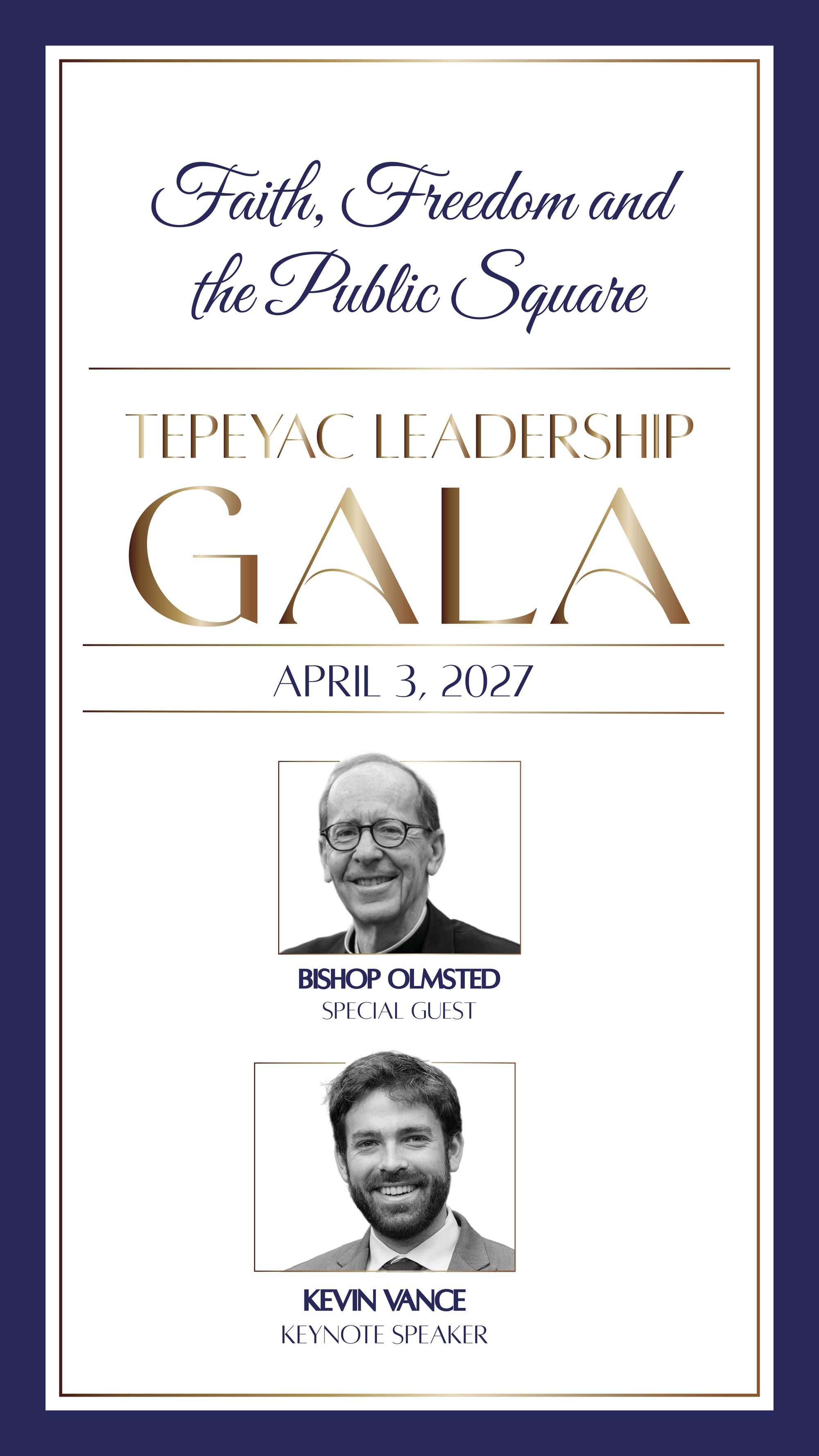
P.S. By joining us at the Tepeyac Leadership Gala, you directly invest in forming the next generation of lay Catholic leaders for civil society. This elegant evening is vital to funding our mission, and your presence ensures we can continue empowering faithful leaders to transform our culture. Reserve your seat today to support this transformative work.
Ad: Tepeyac Leadership’s Leadership for the World is a $2 million, three year mission to form lay Catholic leaders for the public square. Without formation, others fill the void. Will you step in or step aside now, when it matters most?