In the aftermath of another intense national election cycle, Washington once again finds itself confronting a familiar, friction-filled reality: a deeply divided capital. With razor-thin margins in Congress and opposing parties holding key levers of power, headline commentators naturally rush to predict perpetual gridlock, legislative warfare, and ideological stalemate.
For Catholic professionals, whether working in public policy, corporate governance, trade associations, or non-profit leadership, it is easy to absorb the cynicism of the moment. But treating political division as an insurmountable wall fails to reflect the higher calling of our baptism.
The Gospel does not call us to retreat into partisan echo chambers or throw up our hands in frustration. Instead, Catholic social teaching offers a compelling blueprint for how to lead with integrity, build authentic bridges, and seek the common good right where the culture feels most fractured.
Ground Every Interaction in Human Dignity
The foundation of Catholic social thought is simple yet radical: every single human person possesses inherent dignity, created in the image and likeness of God (Imago Dei).
In a hyper-polarized workspace, our political opponents are not adversaries to be vanquished or caricatured; they are colleagues to be respected. Modeling civic grace starts in hallway conversations, committee rooms, and email threads where tempers easily flare.
Principled pushback is essential, but it must never degenerate into personal contempt. We must critique ideas rather than character, maintaining high ethical standards without degrading those with whom we disagree.
Furthermore, practicing active listening by seeking first to understand another person’s underlying concerns, even when we disagree with their conclusions, demonstrates a genuine humility that lowers defensive walls and invites constructive dialogue.
Leverage the Principle Subsidiarity
When federal policy stalls in partisan gridlock, the Catholic principle of subsidiarity reminds us that higher-level institutions should not absorb functions that can be carried out effectively at a more local level. Gridlock in the Capitol is often an invitation to pivot our focus toward tangible, community-level stewardship.
Rather than waiting for sweeping federal mandates, Catholic professionals can drive meaningful progress through state and local public-private partnerships. Engaging at these regional levels allows us to address pressing issues like workforce development, housing affordability, and charitable initiatives where local consensus is often far easier to foster.
We can also focus on operational excellence within our immediate sphere of influence. Concentrating on practical administrative execution, ethical supply chain management, and transparent stewardship ensures that our day-to-day work builds stronger institutions regardless of the political climate above us.
Ad: Advance your career and deepen your faith with the Tepeyac Leadership Initiative, an 18-week leadership development program designed to elevate your professional trajectory while strengthening your relationship with Christ. Gain the vision, skills, and network needed to lead effectively in today’s world. Visit to learn more and submit your application for admission by November 10.

Practice Solidarity Without Compromising Moral Truth
Modern workplace culture often presents a false choice: either embrace total ideological conformity or adopt bitter, combative cynicism. As Catholics, we are called to a higher path, one of principled solidarity.
Solidarity means recognizing that we are all responsible for one another. It empowers us to advocate fiercely for the vulnerable, for economic justice, and for the protection of human life at every stage, while remaining open to genuine collaboration wherever truth and goodness align.
When engaging in legislative drafting, policy advocacy, or corporate decision-making, we must hold fast to principled solidarity by balancing unwavering core principles with pragmatic cooperation. On one hand, we must stand firm on human dignity, ethics, and moral truth, refusing to compromise on non-negotiable foundations. On the other hand, we must remain willing to engage in pragmatic cooperation, collaborating on shared practical outcomes that genuinely serve the common good.
When two parties hold different political philosophies but share a desire to solve a concrete problem, such as energy security, infrastructure safety, or digital privacy, a Catholic professional can bridge the divide and serve as a trusted, unifying voice.
Sanctifying the Capital Through Authentic Witness
Divided government, though challenging, serves as a natural check against rash, unchecked power. It demands that policies be debated, refined, and built to outlast political news cycles.
As professionals striving for holiness in secular environments, our primary goal is not tactical political victory, but faithful witness. By offering our daily work as a prayer, treating colleagues with unwavering charity, and relentlessly pursuing the common good, we become the salt and light our divided capital so desperately needs.
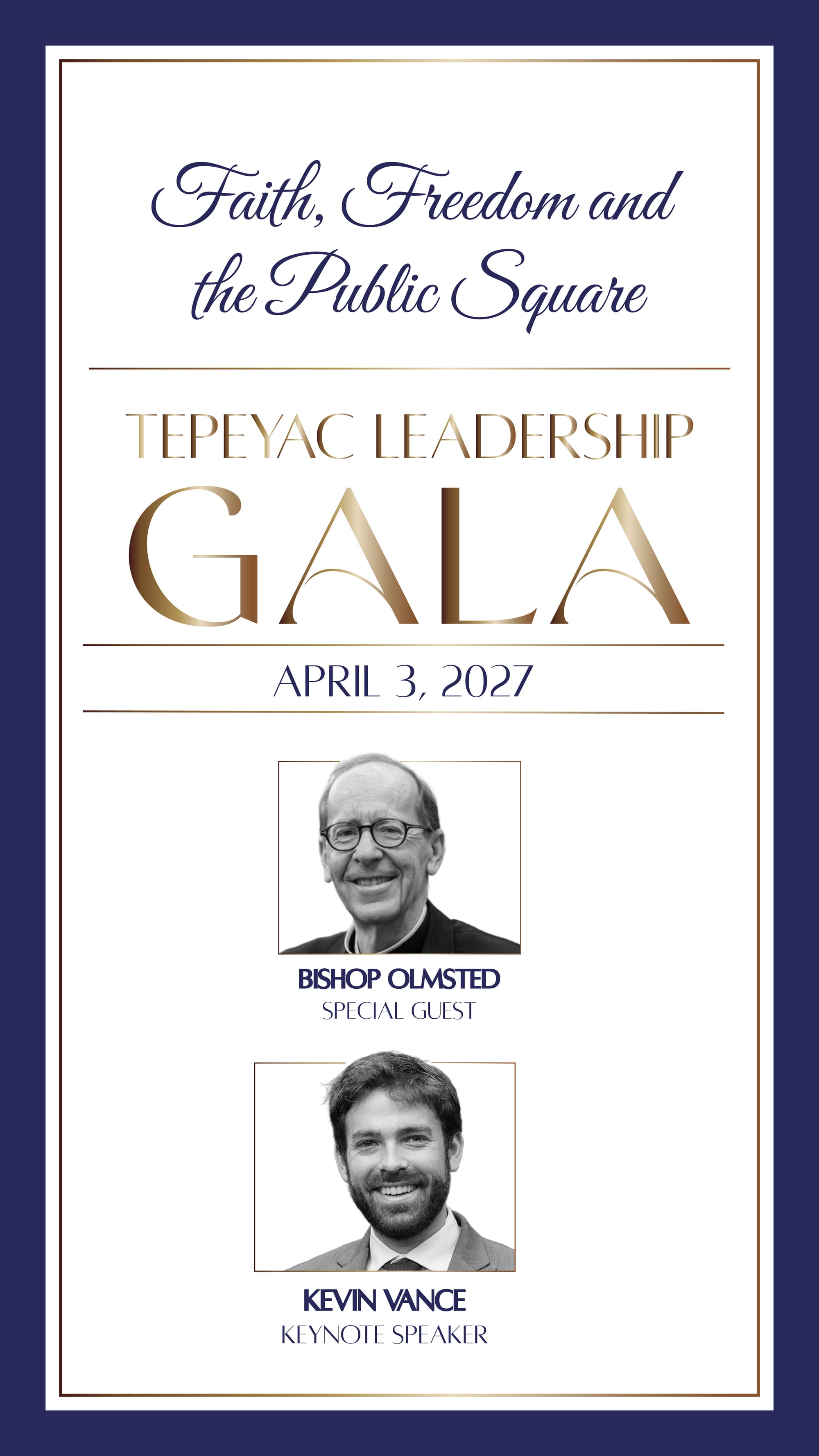
P.S. By joining us at the Tepeyac Leadership Gala, you directly invest in forming the next generation of lay Catholic leaders for civil society. This elegant evening is vital to funding our mission, and your presence ensures we can continue empowering faithful leaders to transform our culture. Reserve your seat today to support this transformative work.
Ad: Tepeyac Leadership’s Leadership for the World is a $2 million, three year mission to form lay Catholic leaders for the public square. Without formation, others fill the void. Will you step in or step aside now, when it matters most?