For Catholic professionals, digital presence is no longer optional. Whether through social media, professional platforms, articles, podcasts, or public commentary, most leaders now leave a visible digital footprint. The question is not whether you will be seen, but how you will be seen, and whether that visibility reflects truth, integrity, and mission. For those seeking to lead as Catholics in the public square, digital presence must be approached deliberately and with spiritual maturity.
The Church has long taught that lay men and women are called to sanctify the world from within. Today, the digital world is one of the most influential spaces shaping culture, opinion, and values. To ignore it is to abandon a mission field. To enter it without formation is to risk confusion, vanity, or compromise.
Digital Presence as an Extension of Vocation
Your digital presence is not separate from your vocation. It is an extension of it. The same virtues that guide your work, prudence, charity, justice, and fortitude, must guide your online engagement. Catholic leadership online is not about constant posting or personal branding for its own sake. It is about witness.
This means clarity about who you are and what you stand for. Catholic professionals should aim for coherence between faith, work, and public communication. Inconsistency erodes credibility. Silence on matters of importance can as much as reckless speech. Discernment is essential.
Truth Over Visibility
Digital culture rewards speed, outrage, and attention. Catholic leadership must resist these temptations. The goal is not maximum reach, but faithful presence. Before posting, commenting, or publishing, leaders should ask simple but demanding questions. Is this true. Is it necessary. Is it charitable. Does it build up.
Leadership rooted in truth may grow more slowly, but it grows more deeply. Over time, people learn whom they can trust. In an age of noise, credibility becomes influence.
Authority Comes From Integrity
Online authority is not granted by followers alone. It is earned through consistency and character. Catholic professionals who lead well digitally understand that every post contributes to a reputation, and every reputation eventually becomes a form of authority.
This requires discipline. Avoid impulsive reactions. Do not engage every controversy. Do not confuse conviction with aggression. Leadership online is not proven by winning arguments, but by elevating conversations and modeling virtue under pressure.
Professional Excellence Still Matters
Faithful digital leadership does not excuse poor craftsmanship. Sloppy writing, unclear thinking, or emotionally driven messaging undermines witness. Catholic professionals should strive for excellence in how they communicate, just as they do in their work.
This includes clarity of language, respect for complexity, and intellectual honesty. The Catholic tradition values reason, order, and depth. These qualities should be evident in digital leadership.
Witness Without Preaching
Effective Catholic digital leaders do not preach constantly, but they do not hide. They integrate faith naturally into their worldview, their priorities, and their decision making. This often speaks louder than overt religious language.
There is a time to speak explicitly about faith, and a time to demonstrate it through tone, fairness, courage, and humility. Both are forms of witness, and both require prudence.
Accountability and Interior Life
No digital strategy can substitute for an interior life. Without prayer, leaders risk being shaped by the platforms they use rather than shaping them. Regular examination of conscience, spiritual direction, and sacramental life provide the grounding necessary to lead well in visible spaces.
Catholic professionals should periodically step back and ask whether their digital presence is serving their mission or distracting from it. Leadership sometimes requires restraint.
TCP’s guide to digital presence and leadership is ultimately simple. Be truthful. Be excellent. Be rooted in prayer. Engage the digital world not as a stage for self promotion, but as a place of service. When Catholic professionals lead this way, their presence becomes not only influential, but sanctifying.
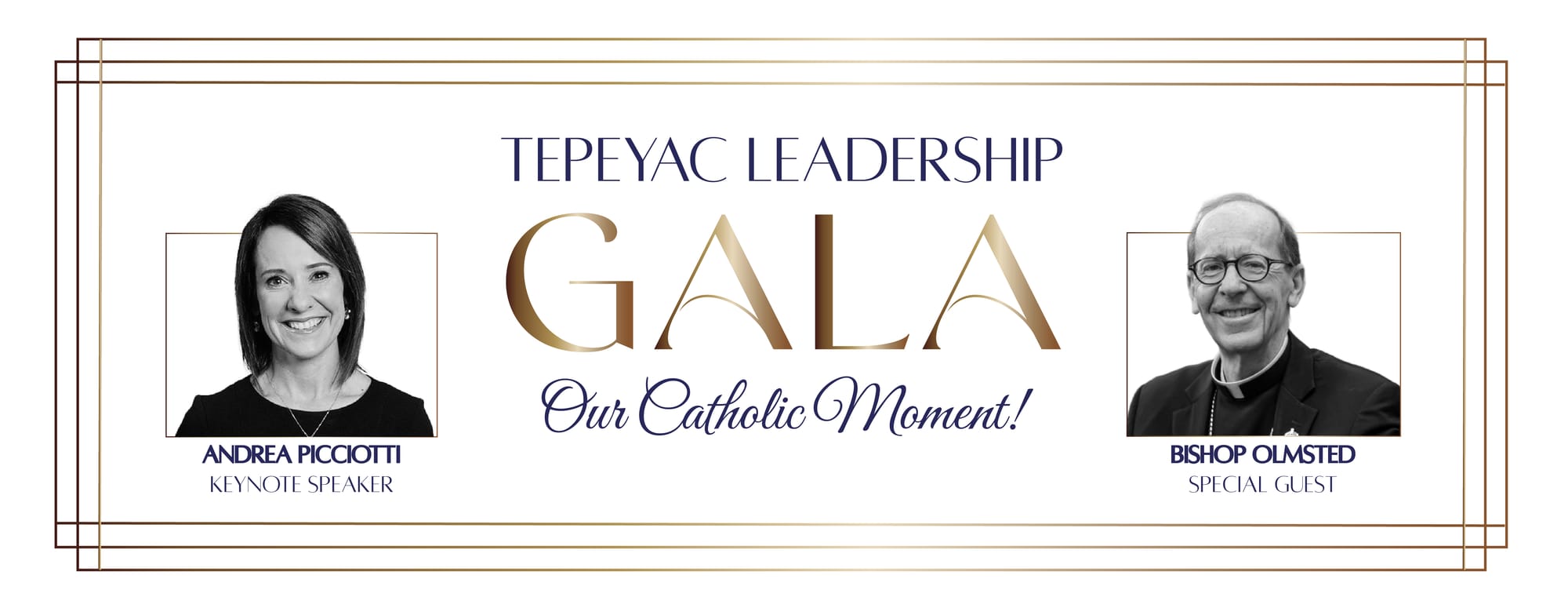
P.S. The countdown is on for the 2nd Tepeyac Leadership Gala, secure your tickets today by clicking below!