We live in an age of fragmentation. Attention is divided. Commitments are provisional. Identity is often curated rather than lived. The professional world rewards agility and reinvention, yet quietly suffers from instability, burnout, and distrust. In such a climate, one of the most countercultural virtues a Catholic professional can embody is consistency.
Consistency is not rigidity. It is fidelity over time. It is the quiet alignment between what we profess and how we act, between Sunday worship and Monday decisions, between private conviction and public conduct. In a fragmented age, consistency becomes a powerful form of witness.
Identity Before Occupation
For the Catholic professional, consistency begins with identity. Before we are executives, physicians, attorneys, educators, or entrepreneurs, we are disciples. Our baptism is not a private sentiment but an ontological reality. It shapes how we think, choose, lead, and serve. When our professional lives are integrated with our spiritual lives, we experience a unity that the world deeply longs for but rarely finds.
Fragmentation often manifests as compartmentalization. Faith is placed in one box, career in another, family in yet another. Over time, these compartments drift apart. The result is interior tension and exterior inconsistency. Colleagues may encounter excellence in performance but confusion in values. Children may see success but not coherence. Clients may admire competence but question trustworthiness.
Habits That Build Character
Consistency heals this division. It does so not through grand gestures but through repeated, faithful action. The professional who consistently tells the truth, even when it costs. The leader who consistently defends the dignity of every employee, not only the most profitable ones. The entrepreneur who consistently prioritizes the common good over short term gain. These habits form character, and character builds trust.
Trust, in fact, is one of the greatest professional assets in our time. In markets saturated with information and noise, people gravitate toward those whose word is reliable. Consistency creates predictability in the best sense. Others learn that your principles are not situational. They know where you stand because you stand there steadily.
The Spiritual Discipline of Repetition
There is also a spiritual dimension to consistency that cannot be overlooked. Growth in virtue comes through repetition. Daily prayer, frequent reception of the sacraments, examination of conscience, small acts of charity. None of these are dramatic. All of them are transformative. Grace builds upon nature, and nature is formed through habit. The professional who is consistent in prayer will gradually become consistent in prudence, justice, fortitude, and temperance.
In a fragmented culture, distractions are constant. Digital platforms reward immediacy. News cycles amplify outrage. Professional trends shift rapidly. Consistency anchors us. It allows us to respond rather than react. It reminds us that our ultimate measure of success is not quarterly performance but eternal fidelity.
Leadership That Forms Culture
Consistency also shapes leadership. Employees and younger colleagues watch more than they listen. They observe how we treat support staff, how we speak about competitors, how we handle setbacks. A consistent leader does not need to constantly assert authority. Authority flows naturally from integrity. Over time, such leadership forms cultures rather than merely achieving targets.
Of course, consistency does not mean perfection. Catholic professionals will stumble. We will misjudge, overextend, or fail. The power of consistency includes the humility to repent and begin again. In fact, the willingness to admit fault may be one of the most compelling forms of coherence in a defensive age.
The fragmented world does not need more brilliance without depth or success without soul. It needs men and women whose lives hold together. Professionals whose faith informs their strategy. Leaders whose ethics are not seasonal. Parents whose children see the same person at home that colleagues see at work.
In the end, consistency is a quiet strength. It rarely trends. It seldom goes viral. But it endures. And in an age marked by instability, endurance itself becomes a sign of hope.
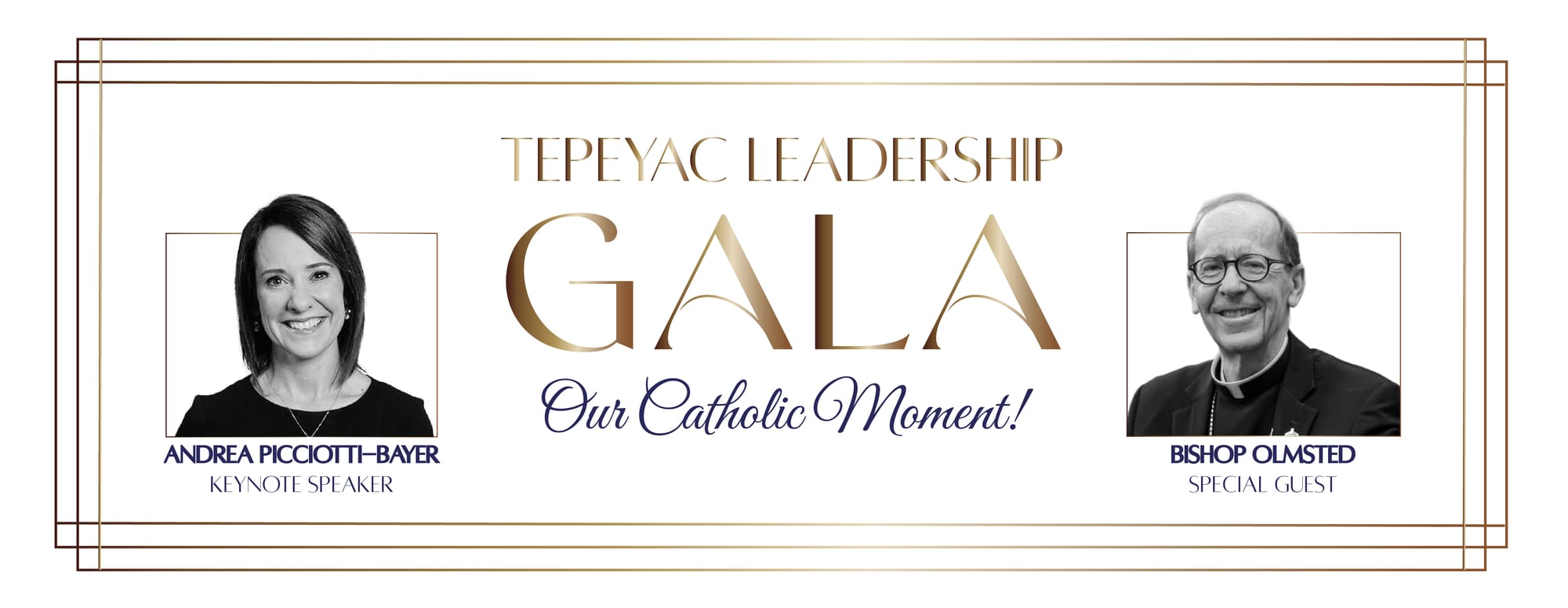
P.S. The countdown is on for the 2nd Tepeyac Leadership Gala, on March 28. Secure your tickets today by clicking below!