In a development that has become increasingly familiar yet no less consequential, the United States has reached another demographic milestone, one that should prompt reflection well beyond economics or public policy. Recent data confirms that the nation’s fertility rate has fallen to an all-time low, extending a decline that has now persisted for nearly two decades.
The numbers themselves are striking. In 2025, approximately 3.6 million babies were born in the United States, a slight decline from the previous year. The general fertility rate dropped to about 53 births per 1,000 women of childbearing age, continuing a steady downward trajectory since the late 2000s. The total fertility rate now sits well below the replacement level of 2.1 children per woman, the threshold required for a population to sustain itself without immigration.
A Generational Shift in Family Formation
One of the most notable features of this trend is not simply that fewer children are being born, but that the timing and pattern of family life are changing. Birth rates among women in their twenties have declined sharply, while births among women in their thirties and even forties have risen modestly.
At the same time, teen birth rates have fallen to historic lows, a shift often attributed to increased education and access to contraception, as well as changing cultural expectations. While this represents a positive development in many respects, it also contributes to the broader decline in overall fertility.
This transformation reflects a deeper cultural shift. Many young adults are delaying marriage, prioritizing education and career advancement, or reconsidering whether to have children at all. The result is not merely postponed parenthood, but in many cases, foregone parenthood.
Economic Pressures and Social Realities
Economic considerations play a significant role in this story. The rising cost of housing, childcare, and education has made family life appear increasingly burdensome to many couples. Financial uncertainty, student debt, and concerns about long term stability weigh heavily on decisions about marriage and children.
Yet economics alone does not explain the full picture. Broader social dynamics are also at play, including shifting priorities, expanded professional opportunities, and a cultural environment that often emphasizes personal autonomy over family formation.
In this context, the decision to have children is no longer seen as a natural progression of adult life, but as one option among many, often delayed or declined in pursuit of other goals.
A Demographic and Cultural Crossroads
The long-term implications of declining fertility are profound. A sustained drop below replacement levels leads to an aging population, a shrinking workforce, and increased pressure on social systems. While immigration has offset these trends in the United States, it cannot fully substitute for a stable native birth rate.
More fundamentally, however, this trend raises questions about how society understands the meaning of family, the value of children, and the purpose of human flourishing. A culture that increasingly distances itself from parenthood risks not only demographic imbalance, but also a loss of intergenerational continuity and shared identity.
For Catholic professionals, this moment invites both clarity and leadership. The data is not merely a set of statistics, but a reflection of deeper human choices and cultural currents. It calls for renewed attention to the conditions that support family life, including economic stability, meaningful work, and communities that welcome children.
Reclaiming a Vision of the Future
The decline in fertility is not inevitable, nor is it irreversible. It is shaped by the values, structures, and priorities of society. Where families are supported, where marriage is strengthened, and where children are seen as a gift rather than a burden, different outcomes are possible.
At its heart, this issue is about hope. A society confident in its future is one that invests in the next generation. Reversing the current trend will require more than policy adjustments. It will require a cultural renewal that affirms the dignity of family life and the irreplaceable role of children in shaping the world to come.
For those called to lead in their professions and communities, the challenge is clear. The future will belong to those who are willing to build it, not only through innovation and enterprise, but through the generous embrace of life itself.
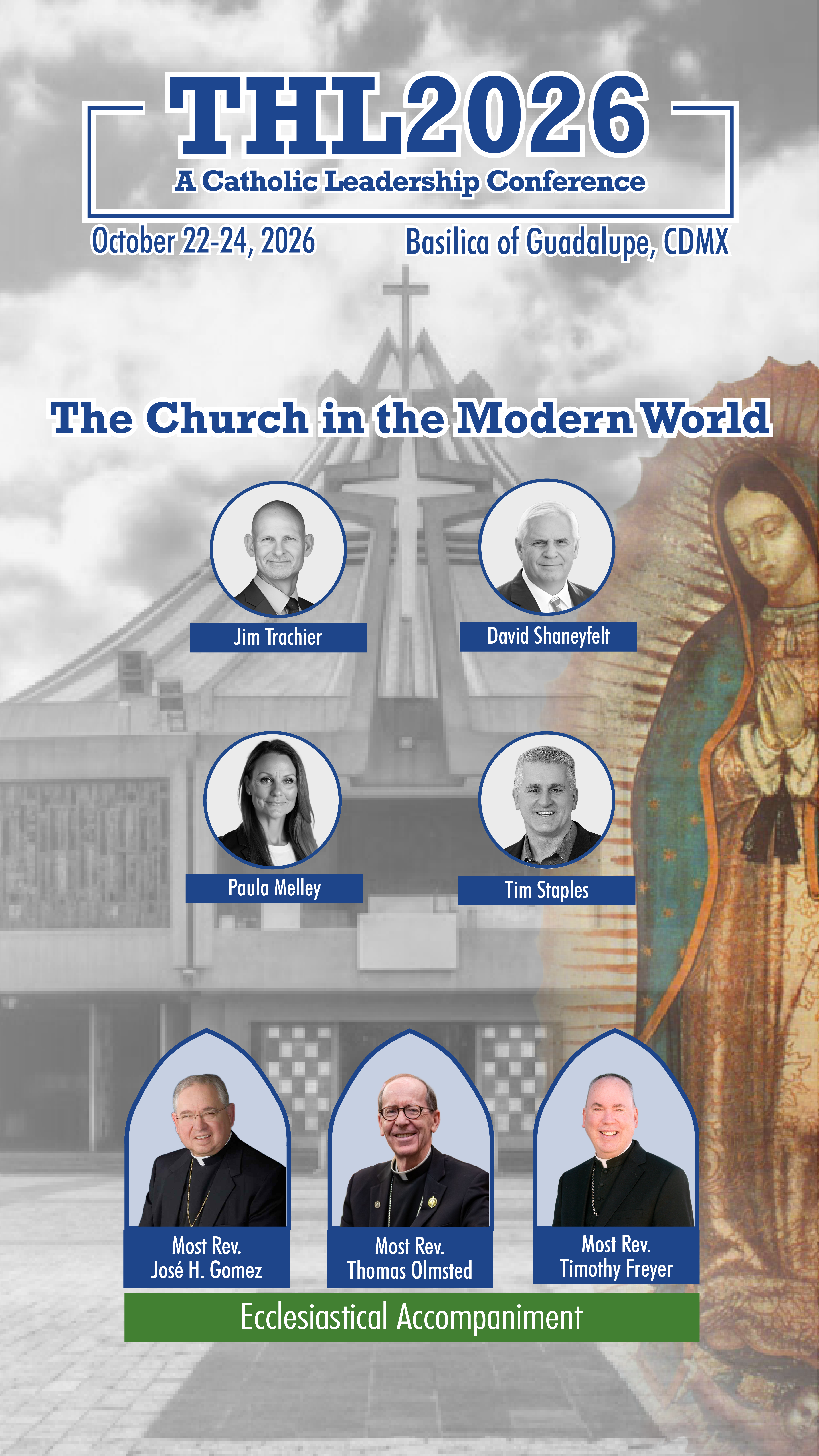
P.S. Discover the place where Our Lady of Guadalupe appeared to St. Juan Diego. See her image. And join Archbishop José Gómez , Bishop Thomas Olmsted and Bishop Timothy Freyer for The Hour of the Laity 2026 in Mexico City.