At a time when many assume the sacramental life of Catholics is fading, a new national study offers a striking and hopeful contradiction. Beneath the surface of declining participation lies something far more encouraging: a deep, often unspoken desire for reconciliation with God.
A recent report surveying 1,500 U.S. Catholics who attend Mass at least occasionally found that nearly 70 percent of those who have not gone to confession in the past year are open to returning. Even more striking, about half of them expressed a desire to go more frequently.
This is not indifference. It is longing.
A Hidden Hunger for Mercy
The study reveals that the primary reason Catholics go to confession, and the primary reason they would return, is the same: the desire for God’s mercy. Among those who regularly receive the sacrament, 83 percent identify mercy and forgiveness as their motivation. Among those who have stayed away, 75 percent say that same mercy is what would bring them back.
This tells us something essential about the human heart. Even in a culture that often avoids the language of sin, the desire for forgiveness remains strong. People are not turning away from mercy. They are searching for it.
And yet, many remain distant from the sacrament.
Why So Many Stay Away
The reasons Catholics avoid confession are revealing and, in many ways, pastoral. The most common belief, held by 63 percent of respondents, is that confession is not necessary for forgiveness. This points not to rejection, but to confusion. A lack of catechesis has obscured the unique gift of sacramental absolution.
Other barriers are more personal. About half of those who have not gone in over a year report embarrassment about speaking their sins aloud, while a similar number describe the experience as uncomfortable. These are not theological objections. They are human hesitations.
In fact, the data suggests that distance from confession is shaped less by disbelief and more by habit, uncertainty, and discomfort. That distinction matters. It means the door is not closed. It is simply unopened.
The Transformative Power of the Sacrament
For those who do go regularly, the fruits are unmistakable. About two thirds report a clear sense of forgiveness, a renewed awareness of God’s mercy, and a deep interior peace.
This is not merely psychological relief. It is sacramental reality.
The study also highlights a compelling connection between confession and human flourishing. Catholics who attend Mass regularly already report higher levels of meaning and well-being than national averages, but those who also go to confession frequently score the highest, especially in areas such as peace and purpose.
In a world marked by anxiety, restlessness, and moral confusion, this should not surprise us. The sacrament of reconciliation restores not only our relationship with God, but also the integrity of our interior life.
A Moment of Opportunity
Perhaps the most important takeaway from this study is not statistical, but pastoral. There is a real opportunity before us.
Many Catholics still believe in the sacrament. Many have experienced it. And many are waiting, sometimes quietly, for an invitation to return.
Efforts like extended confession hours during Lent have already shown that when the Church makes the sacrament more available and speaks clearly about God’s mercy, people respond. The desire is there. The invitation must follow.
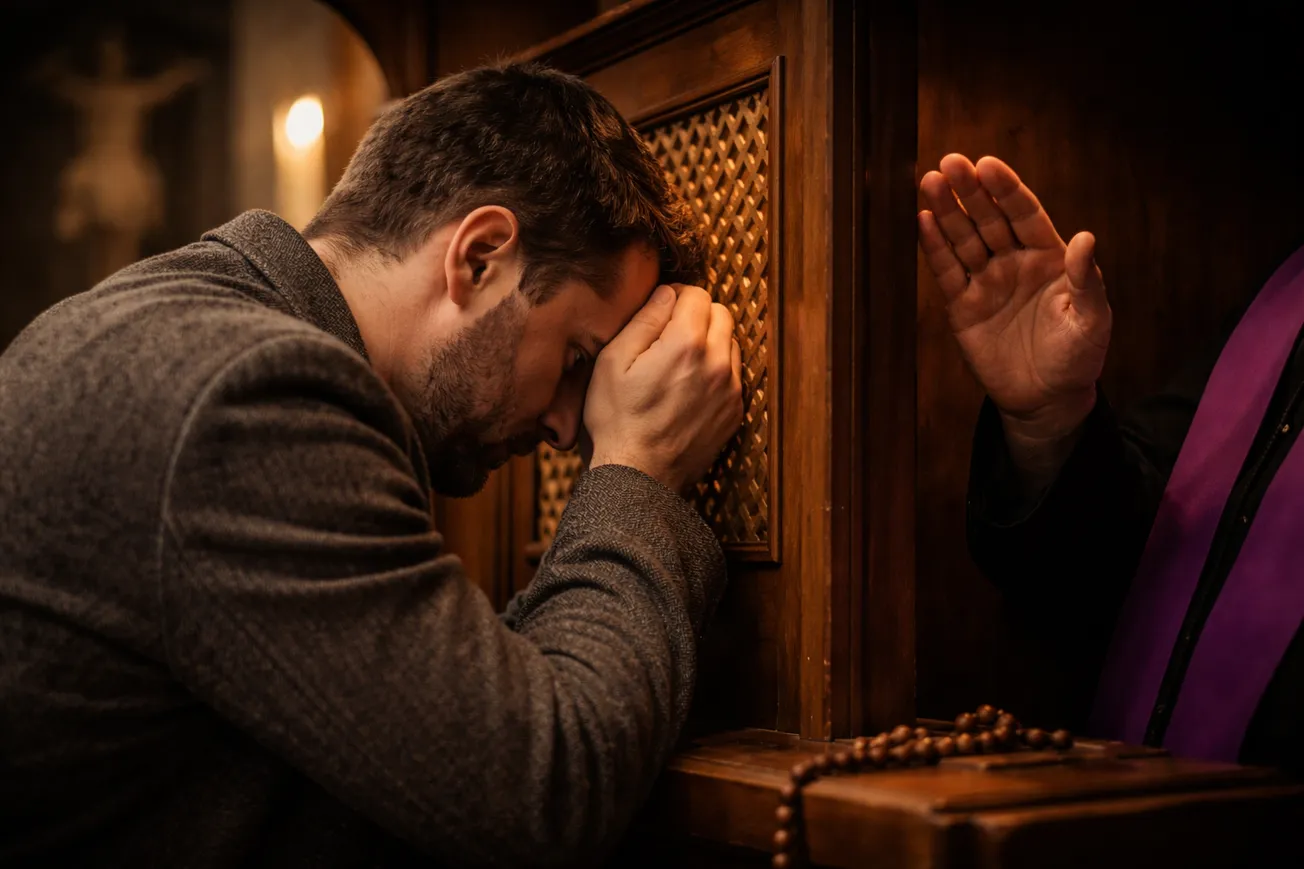
For Catholic professionals, this is also a leadership moment. Renewal in the Church will not come only from structures or strategies, but from personal conversion. And personal conversion begins, very often, in the confessional.
The Church asks the faithful to go to confession at least once a year. But lived authentically, the Christian life calls for much more. To approach this sacrament only once annually risks neglecting the care of one’s soul. A monthly rhythm of confession forms the conscience, strengthens virtue, and deepens freedom.
As Lent draws to a close, the invitation becomes even more urgent. This is a privileged time to return to the Father, to lay down burdens, and to receive grace anew. To enter Holy Week and Easter in a state of grace is not simply a recommendation. It is a gift waiting to be received.
The door is open. The mercy is ready. The only step left is ours.
P.S. Last year, as guests arrived at the venue for the Tepeyac Leadership Gala, we asked them a simple but important question. Their answers were thoughtful, candid, and deeply hopeful for the future of our Church and our society. In the video below, you will see a compilation of their responses.