Dear TLI family,
Much has happened around the world since last week. My prayers are with the people of Venezuela, asking the Lord to grant them wisdom, strength, and peace. I invite you to read the words from Pope Leo XIV on the matter, but I will not address this today.
Instead, I thought a good way to start 2026 for our community of lay Catholics, who seek to grow as leaders in civil society, would be to reset a bit and focus this week’s email on revisiting the meaning of leadership. What is leadership? Like Nicolás Maduro, there are many people with power who have called themselves leaders, but are they?
From a faithful Catholic perspective, this is an important question.
Leadership, in its fullest sense, is not simply the ability to organize, influence, or achieve ambitious goals. True leadership is inherently moral, it must be ordered toward the good, toward the flourishing of the people and communities we serve. Without that orientation toward the good, we may see great accomplishments, impressive structures, and sweeping influence, but these are not leadership in the truest sense.
When large goals or big objectives are achieved without reference to the good, we must be careful in how we describe them. Several terms may capture what is happening, but they stop short of the moral reality leadership implies. If the focus is on effectiveness or capacity to produce results, we might speak of power, capacity, or competence. These describe ability without making a moral claim. Someone may be extraordinarily competent and still fall short of true leadership if what they do does not serve the common good.
If the emphasis is on organizing people and resources to reach an end, words like coordination, direction, or management are more precise. These terms acknowledge skill and planning, but they remain morally neutral. They tell us what is being accomplished, not whether it is worthy. Similarly, if the achievement highlights ambition and scope, terms like achievement, execution, or goal attainment describe what was done, but not whether it should have been done.
Even influence over others, when detached from virtue, has its own vocabulary: authority, control, or dominion. These terms are often powerful in society, but they lack the essential moral ordering that makes leadership, or that make a leader.
In Catholic thought, this distinction is crucial. We can be highly effective, we can move mountains in business, civil service, or the nonprofit world, yet only those whose efforts are rightly ordered toward truth, justice, or charity are truly leaders. The rest, while capable and accomplished, are exercising what we might call skill, influence, or power, but not leadership in its full, virtuous sense.
As we enter 2026, I invite us as the TLI family to reflect deeply on this. Are the big things we are striving for aligned with the good, are our goals shaped by charity and service, or by selfish ambition and personal gain alone? Re-centering our understanding of leadership on its moral foundation is essential if we are to live out our vocation as lay Catholics leaders in civil society.
Next week, I hope to continue this reflection and explore practical ways we can cultivate leadership that is truly oriented toward the good in our families, workplaces, and communities. For now, let us start the year with a brief pause, consider our direction, and recommit to being leaders who do not just accomplish, but serve, uplift, and order society according to Christ’s example.
With gratitude and hope for this new year,
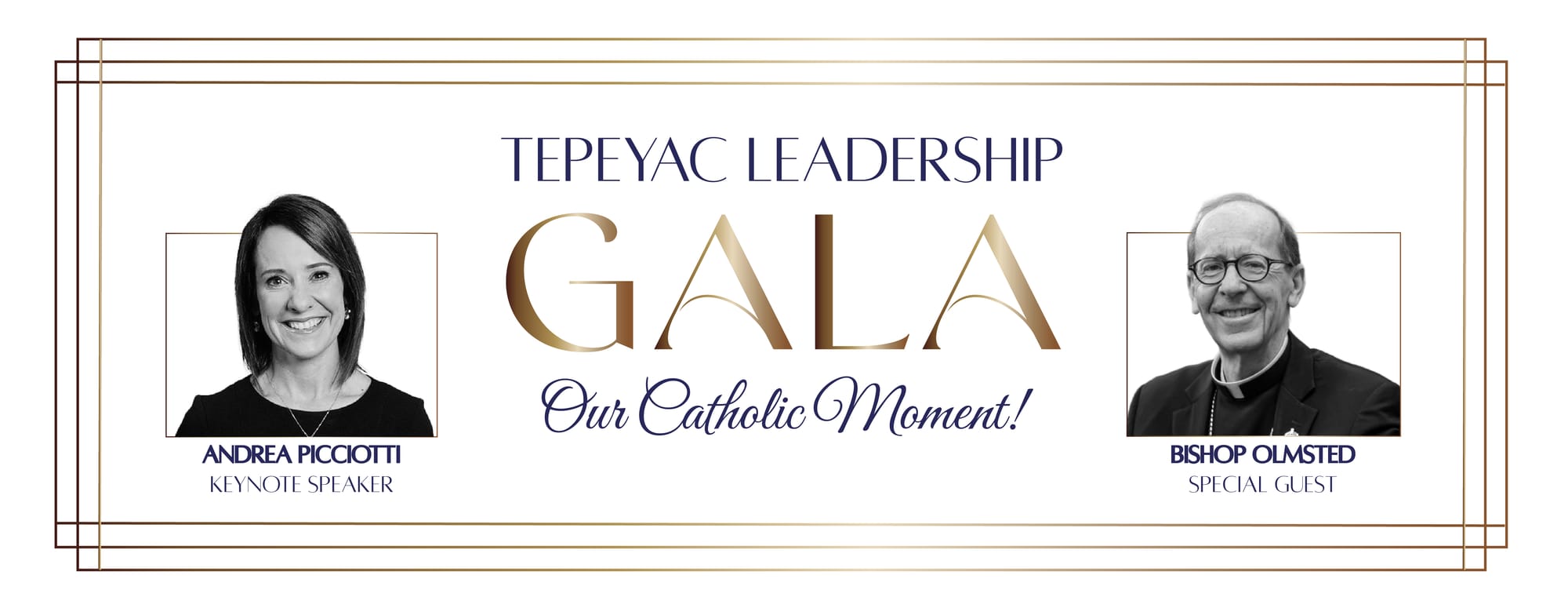
P.S. The countdown is on for the 2nd Tepeyac Leadership Gala, secure your tickets today by clicking below!