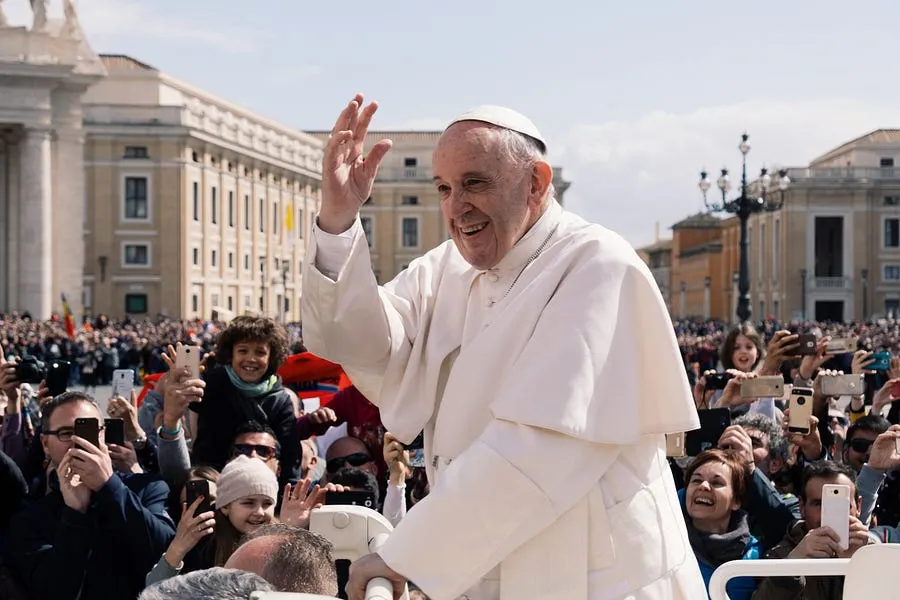
One of the things we’ve been saying from the beginning at Tepeyac Leadership, Inc. (TLI) is our message is not new. In fact, it’s inspired by a vision, handed to us, the laity, by the Second Vatican Council (or Vatican II): to renew the temporal order, to transform society from within! Needless to say, when we heard Pope Francis asked Catholics to spend 2023 studying the documents of the Second Vatican Council, we were excited. Tepeyac Leadership has been doing just that since 2018.
In fact, we’d like to suggest to you that a way to follow on the Pope’s request would be to participate in the TLI program. But more on that later. The Pope wants Catholics to prepare for the celebration of the Holy Year 2025 by focusing on the four constitutions issued by Vatican II in 2023 and focusing on prayer in 2024. A holy year or jubilee is a special time of prayer encouraged by the Church every 25 years. The four Vatican II documents the Pope wants us to study are the Constitution on the Sacred Liturgy, Sacrosanctum Concilium; the Dogmatic Constitution on the Church, Lumen Gentium; the Dogmatic Constitution on Divine Revelation, Dei Verbum; and the Pastoral Constitution on the Church in the Modern World, Gaudium et Spes. The last three of these are part of the TLI curriculum.
The need for lay Catholics to learn about the important message Vatican II has for them has been widely underestimated. In fact, most lay Catholics ignore the fact that the Second Vatican Council promulgated documents directed specifically to them. You might have experienced, as we have, that often when Catholics discuss what went on or came about because of Vatican II, the discussions tend to focus on two things only: the changes in the liturgy and the ecumenical aspects of the Council. But by far, many lay people, and even clergy, miss the mark on the bold—urgent—challenge Vatican II has for the laity. What is it? It is our charge to insert ourselves (lay people) into the secular fabric of society to transform it from within. This is a mission that our beloved priests, consecrated religious, even the Pope, cannot carry out, simply because of their state of life. This key aspect of Vatican II is at the core of the work we do and is so important, that it’s an entire chapter in Catholic Leadership for Civil Society.
Therefore, forgive us for the shameless plug, but we are simply responding to the Pope’s request. Let’s study the documents of the Second Vatican Council! Lay people: let’s us discover our mission and take on the leadership role that God has prepared for us in civil society. We invite you to take a look at our Tepeyac Leadership Initiative program. We think Pope Francis will be happy you did.
Check Out Our Sponsors:
Catholic Association of Latino Leaders
Catholic Cemeteries & Funeral Homes
Catholic Cemeteries & Mortuaries