
If you’ve kept up with the news lately, you’ve probably seen the videos of people kicking autonomous delivery robots, tipping them over, or spraying paint across their sensors. It’s easy to write this off as random street vandalism, but if you look a little closer, you’ll see something deeper going on. It’s a raw, frustrated reaction to cold, uninvited technology invading spaces where real people live and work.
If you sit in a corporate boardroom, you might think street robots have nothing to do with your quarterly strategy, but dismissing them misses the point entirely. The person pushing a robot into the street and the manager quietly pulling back at their desk are reacting to the exact same fear: feeling like human presence is being pushed out by algorithms without anyone ever asking for their input.
In the corporate world, pushback against artificial intelligence rarely looks like someone physically smashing a server. Instead, it shows up much more quietly through disengaged teams, sudden drops in morale, passive friction, or people simply giving up and walking away. When a company rushes to roll out generative AI tools just to cut headcounts or squeeze out an extra margin, it creates the exact same underlying hostility we see on city sidewalks.
This is where Catholic social teaching offers such a grounded reality check. Work isn’t just a line item on a ledger or a set of tasks meant to be automated away; it is how we exercise our talents, build virtues, and contribute to our communities. Technology is meant to serve the human person, never the other way around. When leaders treat people as replaceable units waiting to be swapped out for software and treat raw efficiency as the ultimate goal, work stops being a place for human creativity and becomes a source of deep alienation.
Ad: Advance your career and deepen your faith with the Tepeyac Leadership Initiative, an 18-week leadership development program designed to elevate your professional trajectory while strengthening your relationship with Christ. Gain the vision, skills, and network needed to lead effectively in today’s world. Visit to learn more and submit your application for admission by November 10.

Leaders often fall into the trap of thinking technology is completely neutral and always progressive. As Pope Francis warned in Laudato Si', a purely technocratic mindset tends to flatten complex human realities into cold metrics of speed and output. Bringing enterprise AI into an organization without thinking about how it affects team trust and human agency fundamentally breaks the company culture.
The moment employees feel like their hard-earned judgment, wisdom, and dignity take a back seat to an algorithm, their psychological commitment to the job evaporates. They stop taking initiative, keep quiet instead of offering creative solutions, and start looking at leadership with suspicion. What might look like a pristine digital transformation on a balance sheet quietly destroys workplace trust on the ground.
To navigate this as professionals striving to lead with wisdom, we must reclaim a genuinely human-centered vision of leadership. First, we need to focus on making people better rather than replacing them. Frame AI as a tool to handle repetitive drudgery, freeing up your team so they can focus on tasks that require human wisdom, empathy, and moral judgment, qualities no machine will ever possess.
Second, practice real transparency by talking openly with your teams about why tech changes are happening and where the boundaries lie. Invite them into the conversation from the very beginning. The anger toward street robots exists because communities were never consulted, and corporate leaders must not make that same mistake with their workforce. At the end of the day, those beat-up delivery robots serve as a clear warning sign that efficiency without empathy breeds hostility. By keeping human dignity at the center of every technological decision, we can help build a culture where technology genuinely serves the human vocation.
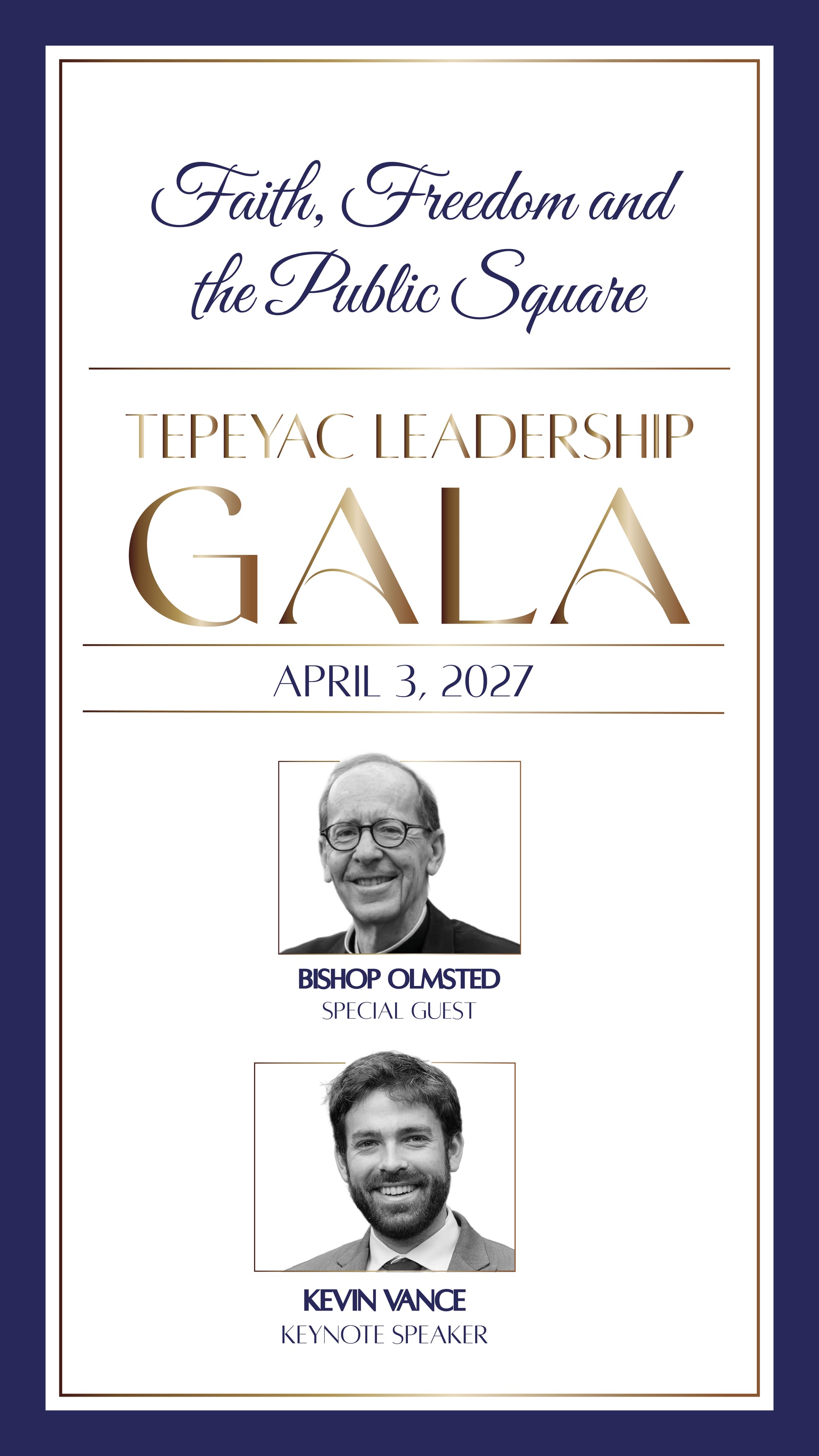
P.S. By joining us at the Tepeyac Leadership Gala, you directly invest in forming the next generation of lay Catholic leaders for civil society. This elegant evening is vital to funding our mission, and your presence ensures we can continue empowering faithful leaders to transform our culture. Reserve your seat today to support this transformative work.
Ad: Tepeyac Leadership’s Leadership for the World is a $2 million, three year mission to form lay Catholic leaders for the public square. Without formation, others fill the void. Will you step in or step aside now, when it matters most?