In 2026 the United States will mark a yearlong commemoration of its founding, popularly referred to as the Freedom 250. The roster of events is intentionally broad and civic in character, ranging from the Great American State Fair to the Patriot Games and even a UFC fight hosted at the White House. These celebrations invite Americans to reflect not only on history but on identity. For Catholics who live and lead in the public square, this anniversary raises a deeper question. What does authentic patriotism mean in light of the Gospel.
The Catholic Church has long affirmed the goodness of loving one’s country. Patriotism is a virtue when it flows from justice and charity rather than from pride. The Catechism teaches that love and service of one’s country follow from gratitude and belong to the order of charity. Catholics are called to honor legitimate civil authority, contribute to the common good, and participate responsibly in civic life. At the same time, the Church is clear that no nation is absolute. Our ultimate allegiance belongs to God, and every political community must be measured against the moral law.
This tension is not a weakness. It is a gift. The American experiment itself was built on the conviction that rights are not granted by the state but are endowed by a Creator. While the founders did not always live consistently with that truth, the principle remains foundational. Freedom is not merely the ability to choose whatever one wants. True freedom is ordered to the good and flourishes only when rooted in truth. This is where Catholic social teaching offers a vital contribution to the national conversation.
The Freedom 250 celebrations are deliberately popular and accessible. A state fair, athletic competitions, and a high profile sporting event at the White House reflect the everyday culture of the nation. For Catholic professionals, these are not distractions from faith but arenas for witness. Culture is not changed exclusively by documents or debates but to a great degree by presence. Lay leaders sanctify the world precisely by bringing the light of Christ into ordinary spaces, including civic celebrations that shape national memory and imagination.
Patriotism for Catholics does not mean uncritical celebration. It means honest remembrance. It means gratitude for blessings received and sober acknowledgment of failures that demand conversion. A mature love of country allows us to celebrate achievements while also working to heal wounds and correct mistakes. This posture mirrors the Church’s own understanding of herself as holy yet always in need of purification.
For Catholic leaders in business, law, education, media, and public service, the yearlong celebration of the nation’s founding is an invitation to renew their sense of mission. The Church does not ask lay people to withdraw from public life. On the contrary, she insists that the temporal order must be renewed from within. Catholic professionals are uniquely positioned to shape institutions, policies, and cultural narratives in ways that respect human dignity, protect the vulnerable, strengthen the family, and promote authentic freedom.
The Freedom 250 also reminds us that patriotism and evangelization are not opposed. When Catholics live the virtues of honesty, courage, solidarity, and sacrifice, they contribute to the moral fabric of the nation. When they defend religious liberty, the sanctity of life, and the dignity of work, they serve both God and country. In this sense, faithful citizenship becomes a form of discipleship.
As the United States marks 250 years of its founding, Catholics are called to bring memory, meaning, and hope to the celebration. The task is not to baptize a nation in name but to leaven it in fact. By loving their country rightly and God above all, lay Catholic leaders can help ensure that freedom remains ordered to truth and that the nation’s future is shaped by the enduring values of the Gospel.
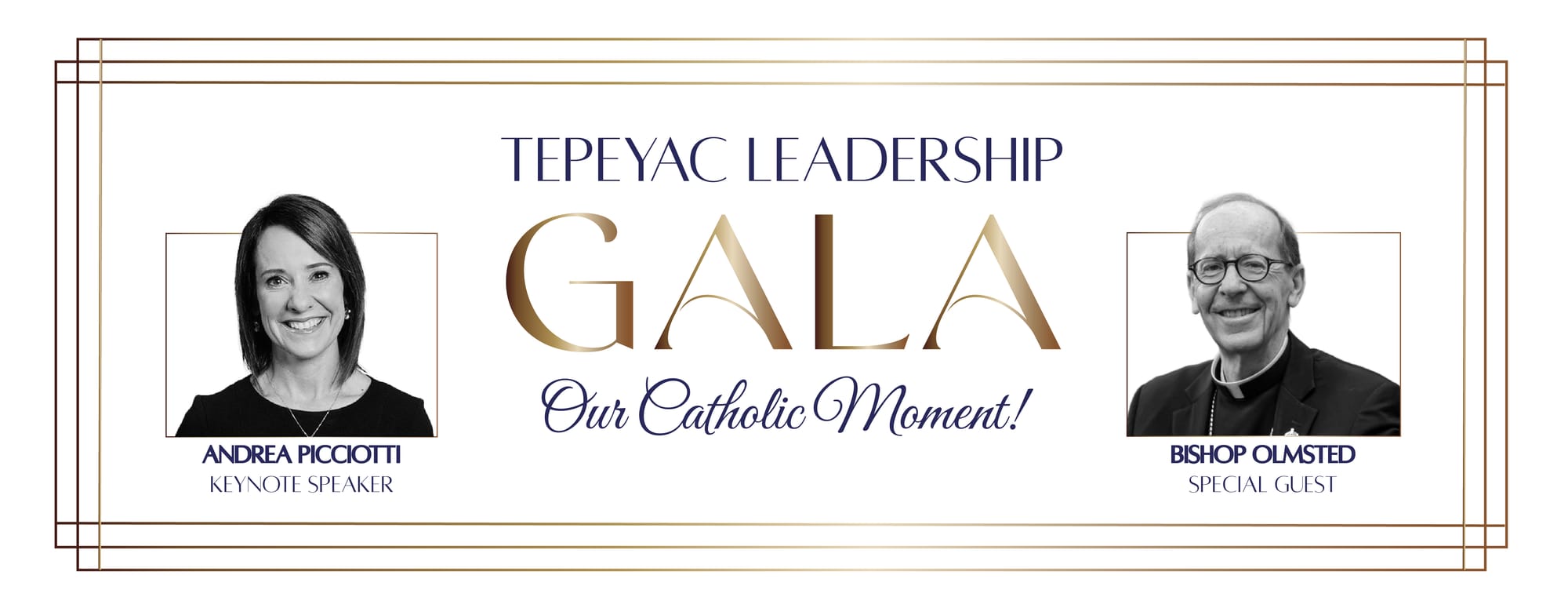
P.S. The date has been set for the 2nd Tepeyac Leadership Gala. Click below to register and mark your calendar to join us!