There is a quiet temptation in professional life to divide the world into sacred and secular. Prayer belongs to Sunday. Strategy belongs to Monday. Worship belongs to the chapel. Spreadsheets belong to the office. Yet the Christian vision of reality refuses that division. If Christ is Lord of all, then He is Lord not only of cathedrals, but of conference rooms. Not only of altars, but of analytics.
For the Catholic professional, holiness is not an escape from spreadsheets and strategy. It is found precisely within them.
The False Divide Between Faith and Work
Modern culture often assumes that faith is private and work is neutral. Numbers are numbers. Markets are markets. Strategy is strategy. As long as outcomes are achieved, the interior life is considered irrelevant.
But this is not how the Church understands the human person. Every action flows from a heart. Every decision reflects a vision of the good. Even a financial forecast or a five year plan carries moral weight because it affects people, families, communities, and the future.
The Second Vatican Council reminded the laity that their vocation is to sanctify the temporal order from within. That includes boardrooms, budgets, negotiations, and long term planning. The question is not whether spreadsheets can be holy. The question is whether the person using them is striving for holiness.
Excellence as a Moral Duty
Holiness in professional life does not mean pious language or religious décor. It means integrity, competence, and excellence offered to God.
When you double check your formulas, you are practicing diligence. When you present accurate data instead of manipulating numbers to impress a client, you are practicing truth. When you design a strategy that considers long term human impact rather than short term profit alone, you are practicing justice and prudence.
Competence is not vanity. It is charity. Sloppy work harms others. Careful work serves them.
The parable of the talents teaches that what has been entrusted to us must be multiplied, not buried. Skills in finance, management, marketing, operations, or law are not accidents. They are gifts. To develop them seriously is part of your response to grace.
Strategy in Light of the Eternal
Strategic thinking requires clarity about ends. What are we trying to achieve? Why does this organization exist? What kind of culture are we building?
A Catholic professional evaluates these questions not only in terms of growth metrics, but in light of the ultimate end of the human person. Success that deforms souls is not success. Growth that corrodes integrity is not growth.
This does not mean every company must be explicitly religious. It means every leader must act with a well formed conscience. It means resisting the normalization of practices that exploit workers, mislead customers, or erode trust.
Strategic plans are acts of foresight. Holiness demands that this foresight include moral consequences. A spreadsheet can project revenue. Only a conscience can judge whether the path to that revenue is worthy of a child of God.
The Interior Life of the Professional
Holiness in spreadsheets and strategy begins long before the meeting starts.
It begins with prayer. Offering the day. Asking for wisdom before a major decision. Examining your conscience after a difficult negotiation. Seeking the virtue of prudence when facing ambiguity.
The professional who prays does not become less rational. He becomes more free. Free from ego. Free from fear. Free from the idolatry of reputation and results.
When performance becomes identity, anxiety follows. When work is offered to God, peace becomes possible even in high pressure environments.
This interior freedom changes how you lead. You listen more carefully. You correct more justly. You admit mistakes more readily. You care not only about outcomes, but about the formation of the people entrusted to you.
Sanctifying the Ordinary
Most holiness in professional life will never be noticed publicly. It is hidden in small acts.
Choosing honesty when no one would detect the shortcut. Giving credit to a colleague. Taking responsibility when a project fails. Mentoring a younger employee patiently. Turning down a lucrative opportunity because it violates conscience.
These are not dramatic gestures. They are quiet victories of grace.
The world may never see them. Heaven does.
Spreadsheets and strategy are not obstacles to sanctity. They are instruments. Through them, you shape institutions, influence culture, and serve the common good. Through them, you either conform to the world or transform it.
Holiness is not reserved for monasteries. It is forged in meetings, refined in deadlines, and proven in decisions.
The next time you open a spreadsheet or outline a strategic plan, remember this: you are not merely managing resources. You are shaping souls, beginning with your own.
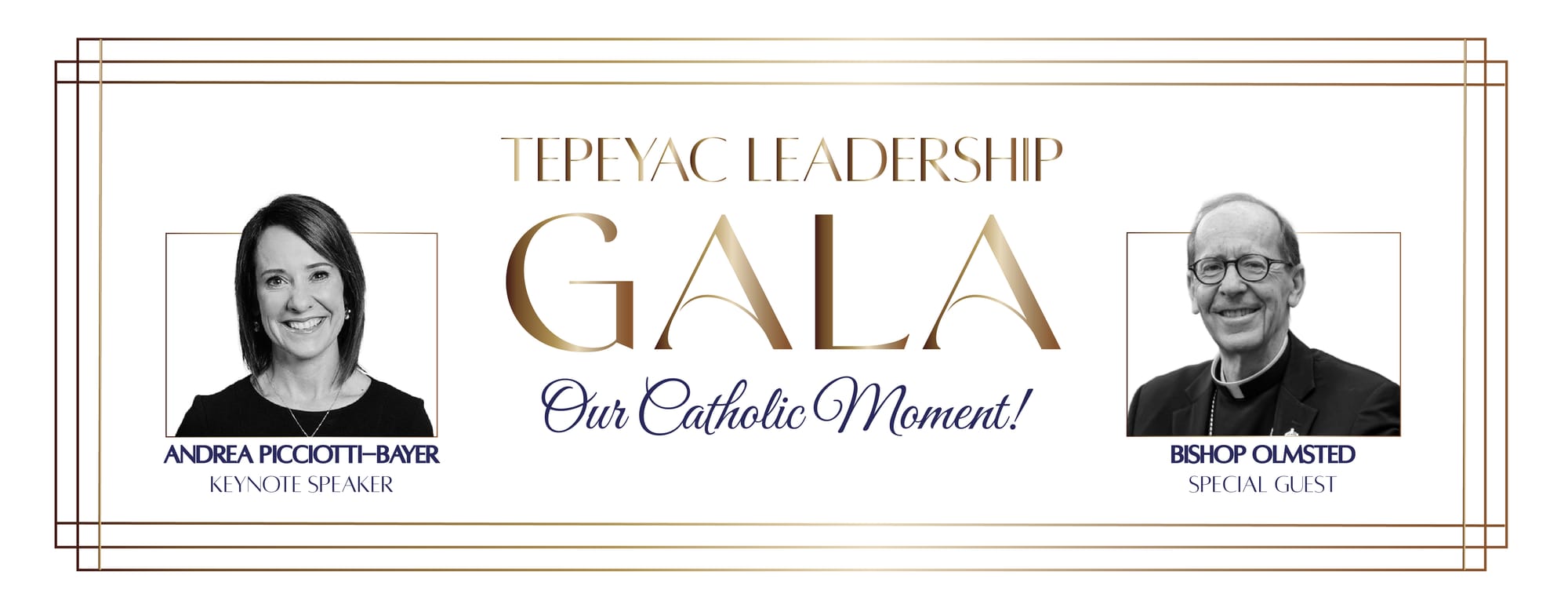
P.S. The countdown is on for the 2nd Tepeyac Leadership Gala, on March 28. Secure your tickets today by clicking below!