Table of Contents
Joan of Arc remains one of the most striking figures in history for anyone reflecting on leadership under pressure. Her life was brief, but the intensity of her conviction, clarity of mission, and willingness to act in the face of overwhelming opposition continue to offer lessons for professionals navigating complex environments today.
Clarity of Mission in Uncertain Times
Joan’s leadership began with an unshakable sense of purpose. In a world marked by political confusion and military decline for France, she believed she had been entrusted with a specific mission. Whether one interprets her calling through faith or historical impact, what stands out is her clarity. She did not lead because conditions were ideal, but precisely because they were not.
For modern professionals, clarity of mission is often the first casualty of constant demands and competing priorities. Joan’s example challenges leaders to ask whether they are reacting to circumstances or acting from a deeply held purpose. Effective leadership begins when a person can articulate not only what they are doing, but why it matters and whom it serves.
Courage That Acts Despite Fear
Joan of Arc did not wait for fear to disappear before acting. Her leadership was marked by decisive movement even in the presence of danger, skepticism, and personal risk. She entered spaces dominated by seasoned military leaders and political figures, many of whom doubted her legitimacy, and yet she persisted.
Professional environments today rarely involve physical battlefields, but they are no less demanding. Careers are often shaped by moments that require moral courage, speaking truth in meetings, defending ethical decisions, or pursuing initiatives without guaranteed success. Joan’s example shows that courage is not the absence of fear but the refusal to be governed by it.
Conviction That Does Not Bend to Popular Opinion
One of the most remarkable aspects of Joan’s leadership is her resistance to external pressure. She was questioned, examined, and challenged by powerful institutions of her time, yet she remained anchored in her convictions. This did not mean stubbornness for its own sake, but fidelity to what she believed to be true.
For professionals, the pressure to conform can be subtle yet persistent. Organizational culture, peer expectations, and reputational concerns can slowly dilute conviction. Joan’s life invites reflection on whether leadership is being shaped more by internal conviction or external approval. Sustainable leadership requires a core that does not shift with every change in opinion.
Service Over Self Promotion
Joan did not seek status or recognition. Her leadership was oriented toward a mission larger than herself. Even when she gained prominence, she did not use it for personal advancement. Her focus remained on the task she believed she had been entrusted with.
In contemporary professional life, where visibility often competes with substance, this orientation is especially relevant. Leadership that is rooted in service tends to build trust, while leadership driven primarily by self promotion tends to erode it. Joan’s example suggests that authority is most credible when it is exercised on behalf of others rather than for personal gain.
Resilience in the Face of Failure
Joan’s story does not end in worldly success. She was ultimately captured and executed, yet her legacy endured far beyond her lifetime. From a leadership perspective, this underscores an often overlooked truth. Outcomes do not always determine the value of faithful action.
Professionals frequently equate success with immediate results. Joan’s life challenges that assumption. Resilience in leadership means continuing to act with integrity even when outcomes are uncertain or unfavorable. It is the long view of purpose that sustains meaning in moments of setback.
A Legacy That Outlives Circumstance
The enduring influence of Joan of Arc lies not only in what she achieved but in what she embodied. She represents a form of leadership that is anchored, courageous, and service oriented. Her life suggests that true leadership is not defined by comfort or consensus, but by fidelity to a mission carried out with integrity.
For today’s Catholic professionals and leaders in any field, her witness invites a renewal of perspective. Leadership is not merely about managing systems or achieving metrics. It is about becoming the kind of person who can be trusted with responsibility when clarity is difficult, courage is costly, and conviction is tested.
Her story continues to challenge every generation to lead with purpose that does not fade under pressure.
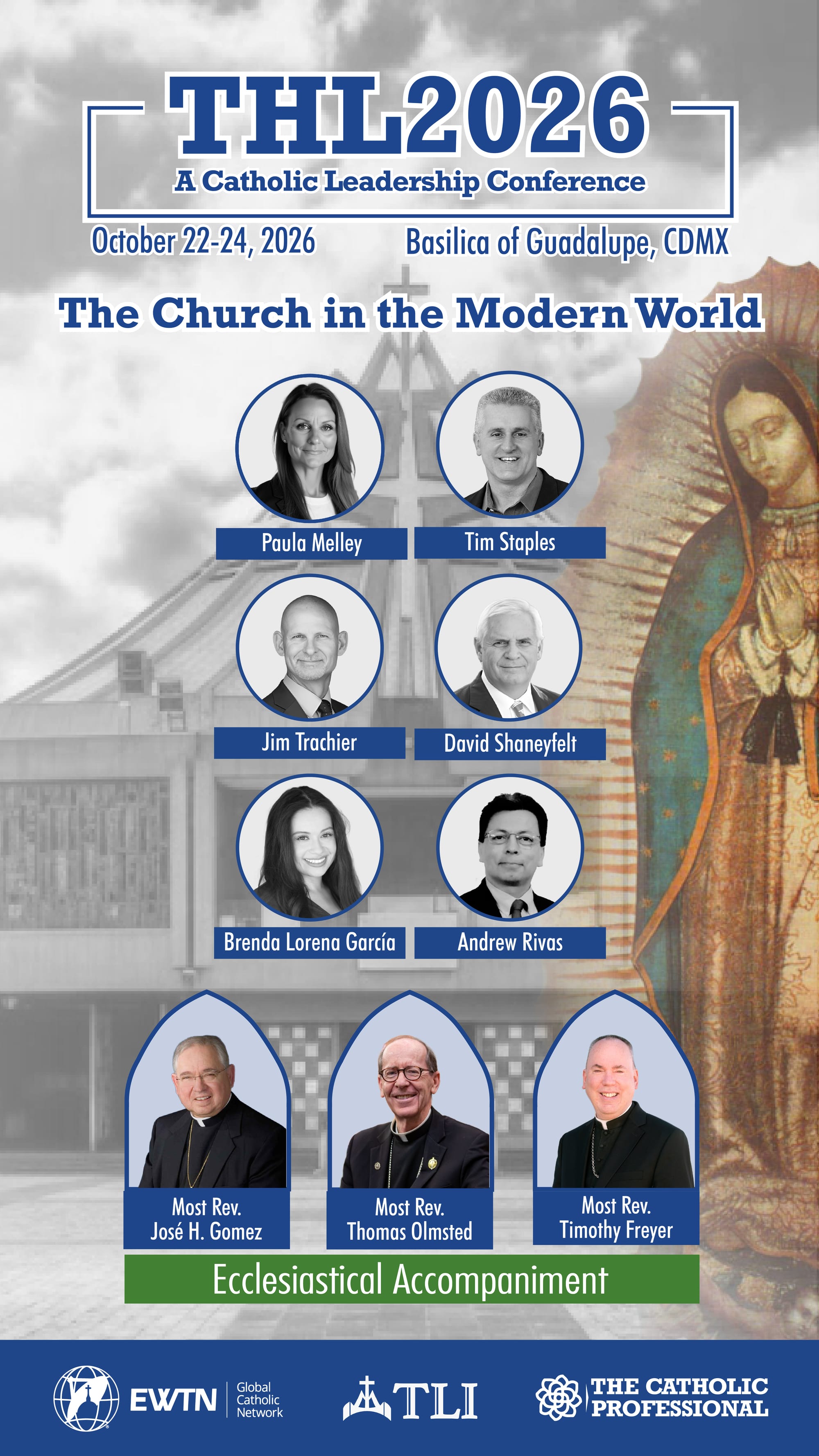
P.S. Discover the place where Our Lady of Guadalupe appeared to St. Juan Diego. See her image. And join Archbishop José Gómez, Bishop Thomas Olmsted and Bishop Timothy Freyer for The Hour of the Laity 2026 in Mexico City.