Table of Contents
When an organization’s longtime leader unexpectedly steps down, or a sudden crisis demands an immediate shift in governance, the temperature in the boardroom rises instantly. For a Catholic executive or board member, this moment is more than a strategic hurdle, it is a profound test of stewardship.
A sudden leadership vacuum threatens an enterprise's strategic momentum, donor or client confidence, and internal morale. Leading through such a storm requires a distinct blend of professional excellence and deep-seated virtue. To steady the ship, a board must navigate the anatomy of a transition with decisive, orderly action, anchored in three core principles.
Radical Candor Over Corporate Secrecy
When unexpected changes occur, a vacuum of information is instantly filled with rumor and anxiety. The first temptation of a board under pressure is to retreat into closed-door silence until every variable is perfectly resolved. This is a mistake.
While legal boundaries and personal privacy must always be strictly respected, a Catholic leader balances prudence with radical candor. Communicate with your stakeholders, whether they are employees, investors, or community members, swiftly and transparently. Acknowledge the transition directly. You do not need to have the next five years mapped out in forty-eight hours, but you must clearly communicate what is happening now, who is steering the ship in the interim, and the exact process being used to find a permanent successor. Authentic transparency breeds trust, and silence breeds panic.
Orderly Delegation and Interim Governance
A crisis cannot be managed by a chaotic committee. In the immediate aftermath of a sudden departure, the board chair or executive committee must instantly establish clear lines of authority.
If an interim leader is appointed from within the existing executive team or the board itself, their mandate must be explicit. The board must clarify whether the interim leader is a placeholder meant simply to maintain the status quo, or if they possess the full authority to make critical strategic decisions.
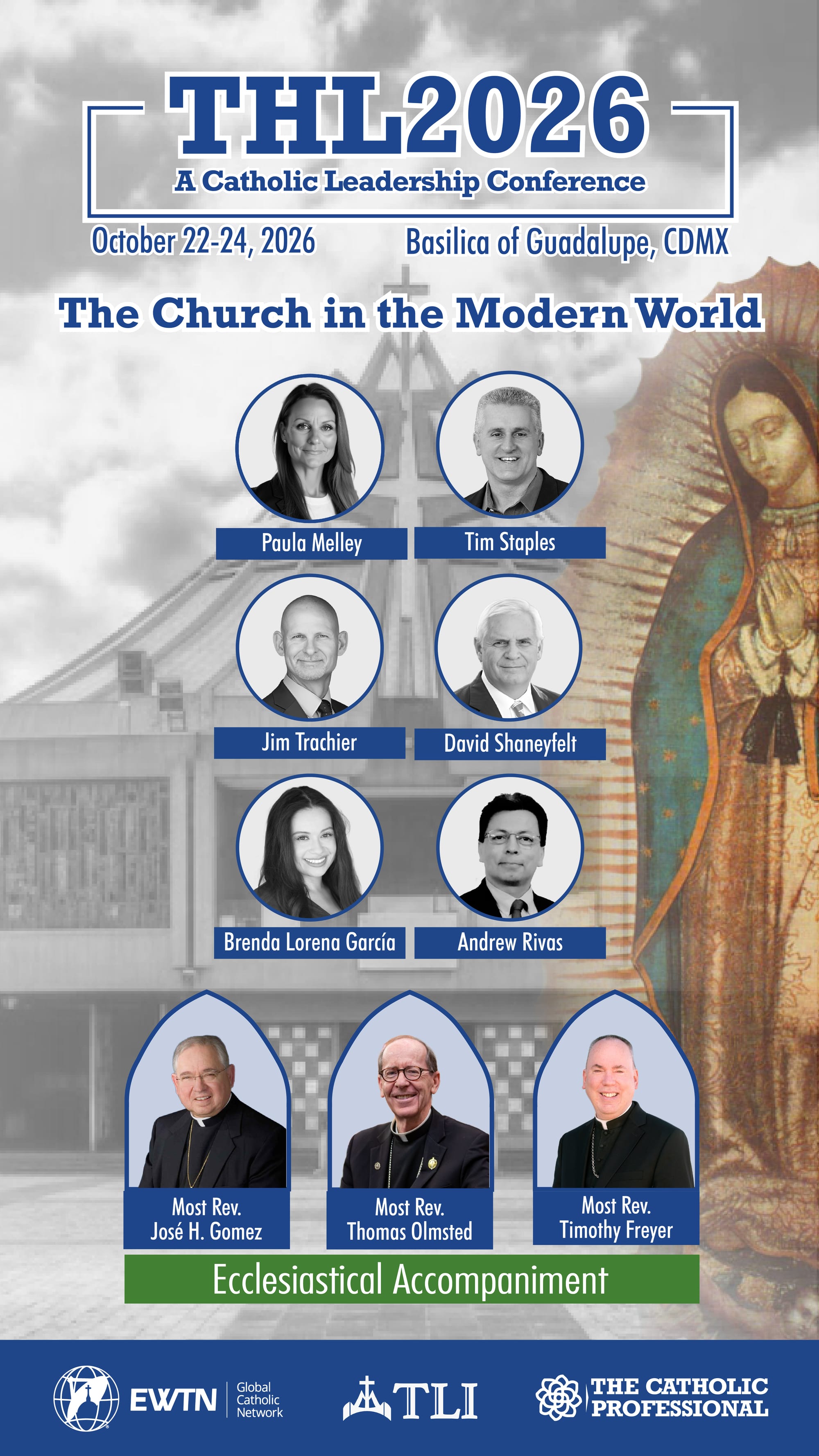
Ad: Discover the place where Our Lady of Guadalupe appeared to St. Juan Diego. See her image. And join Archbishop José Gómez, Bishop Thomas Olmsted and Bishop Timothy Freyer for The Hour of the Laity 2026 in Mexico City.
Simultaneously, the board should form a dedicated, agile transition committee to handle the search for permanent leadership. This allows the rest of the board to focus on supporting the current staff and protecting organizational operations. Order is the prerequisite for peace and ensuring that every team member knows exactly who holds the operational reins prevents internal fracturing during a delicate window.
Grounding Strategy in Spiritual Rootedness
For the secular world, a leadership crisis is resolved purely through public relations, legal maneuvering, and headhunters. For the Catholic professional, these are merely tools, because the true anchor lies deeper.
A board transition is an opportune moment to realign the enterprise with its foundational mission. When the human leadership changes, we are reminded that we are merely stewards of an initiative that ultimately belongs to God. True boardroom discernment requires bringing organizational balance sheets, anxieties, and strategic plans into a space of interior rest. Before debating, search criteria or press releases, a board should commit the transition to focused prayer, seeking the wisdom of the Holy Spirit to guide their deliberations. When a board operates from a place of spiritual groundedness, decisions are made with supernatural clarity rather than reactionary fear.
The True Measure of Stewardship
A leadership transition is rarely convenient, and it is never easy. However, history shows that organizations anchored by virtuous, clear-eyed board members often emerge from transitions stronger, more unified, and more sharply focused on their core purpose.
By prioritizing transparent communication, establishing rigorous operational order, and rooting every decision in prayerful discernment, you can guide your organization through the anatomy of a crisis and into a season of renewed fruitfulness.
Ad: Tepeyac Leadership’s Leadership for the World is a $2 million, three year mission to form lay Catholic leaders for the public square. Without formation, others fill the void. Will you step in or step aside now, when it matters most?

Click to discover why THL2026 is a must-attend event!