Karol Nawrocki’s recent victory in Poland’s presidential election marks a significant moment not only for Polish politics but also for Catholic leadership worldwide. As a layman deeply rooted in Catholic values, Nawrocki’s ascent to the presidency could serve as an emerging example of how faith-informed leadership can engage the public square while upholding democratic processes.
At 42, Nawrocki is a historian and former amateur boxer, known for his strong convictions and clear stance on cultural and moral issues. He won the presidency with 50.89% of the vote in a closely contested runoff, narrowly defeating liberal Warsaw mayor Rafał Trzaskowski, who garnered 49.11%. The final result, announced Monday, ended one of the tightest races in Poland’s post-communist history.
Nawrocki ran on a platform emphasizing traditional Catholic values, cultural conservatism, and the importance of family and faith in national life. Throughout the campaign, he committed to defending Poland’s restrictive abortion laws and opposing the legalization of same-sex civil unions—positions that reflect Catholic social teaching. His policy agenda is clearly shaped by a desire to maintain the moral foundations of Polish society. “Poland’s strength lies in its faith and family values,” Nawrocki declared at a campaign rally.
This perspective positions Nawrocki in stark contrast with his opponent, who campaigned on progressive reforms and closer ties with the European Union. Trzaskowski supported abortion law liberalization, LGBTQ+ civil partnerships, and a more secular vision of European integration.
The Polish presidency, while largely ceremonial, holds substantial power through the ability to veto legislation. Given that Prime Minister Donald Tusk’s coalition does not possess the 60% parliamentary majority required to override a veto, Nawrocki’s role becomes critical in shaping the country's legislative direction. Analysts expect him to use this authority to resist liberal reforms and reinforce the role of faith in public life.
Nawrocki’s campaign also stood out for its symbolism. During one high-profile moment, he publicly shredded a copy of Gender Queer: A Memoir, a gesture that emphasized his opposition to progressive social ideologies. His actions were not just political but cultural, aiming to reassert a national identity rooted in faith and tradition.
“Poland’s strength lies in its faith and family values,” he repeated throughout his campaign, positioning his presidency as a safeguard against secular influences. He also framed faith as “a cornerstone of national culture,” indicating that his leadership would not merely reflect private religious beliefs but integrate them into public service.
For Catholic professionals around the world, Nawrocki’s presidency offers a living case study in lay Catholic engagement with civic life. His rise demonstrates that it is possible to remain faithful to Church teaching while participating fully in democratic institutions. However, as with any such experiment, time will tell how successfully he balances the demands of governance with the expectations of the Catholic faithful and the broader Polish population.
Nawrocki’s inauguration is scheduled for August 6, when outgoing President Andrzej Duda’s term ends. As the world watches Poland’s evolving political landscape, many will be observing how Nawrocki navigates the complex intersection of faith, governance, and civil responsibility.
Like what we do? Share this piece, and follow us on Instagram and LinkedIn.
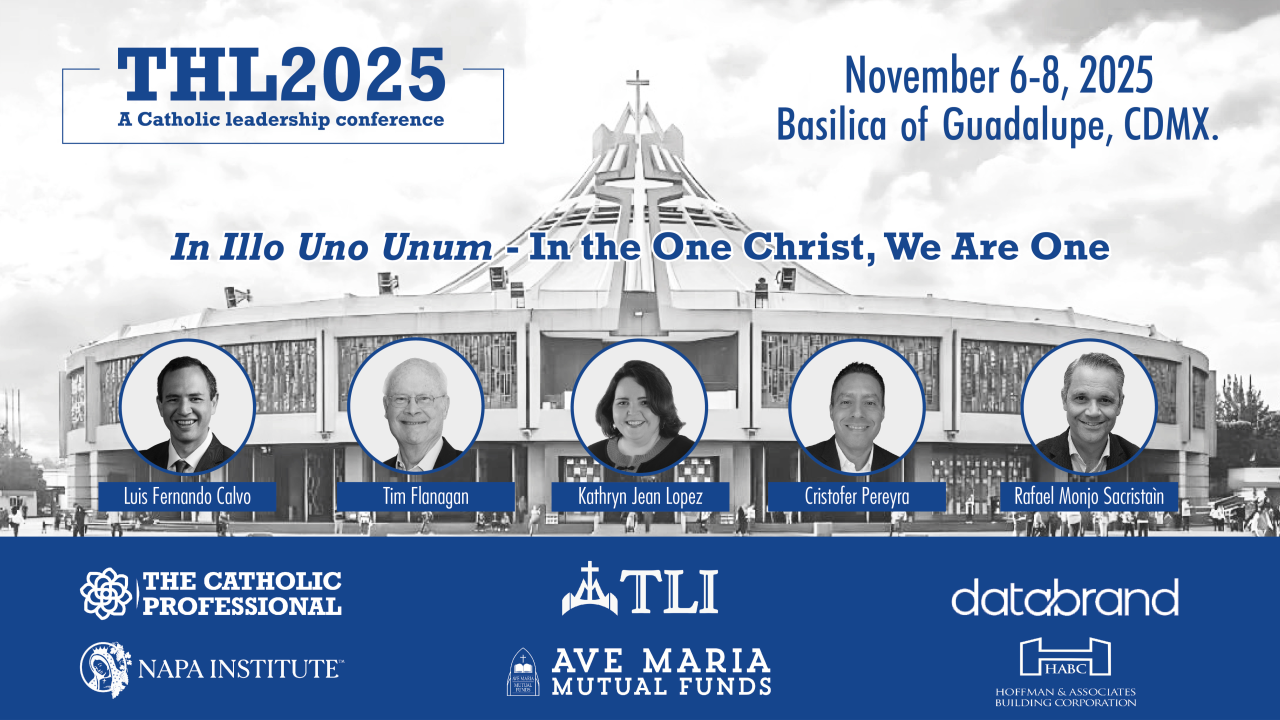
Learn about the vision behind the THL.
Click to watch highlights from THL2024.