As we step into 2025, there is renewed hope on the horizon for Catholics committed to defending Faith, family, and freedom.
Recent legislative efforts—such as the Families' Rights and Responsibilities Act introduced by members of Congress—signal a growing recognition of the need to protect the fundamental rights of parents to guide the upbringing of their children without undue government interference. This bill, sponsored by Senators Tim Scott, James Lankford, and Rep. Virginia Foxx, affirms that parents, not the government, have the primary authority over their children's education and health care.
Senator Scott put it clearly: “Parents have a fundamental right to control the upbringing of their child, whether it’s in the classroom or at home.” We are witnessing a critical push to reassert these rights at the national level, and it’s encouraging to see many in public office recognizing the role of parents as the lead decision-makers in their children’s lives.
Rep. Foxx also spoke to the heart of this movement: “Parents deserve to raise their children without the looming threat of government infringement.”
As Catholics, we not only stand in solidarity with this vision, for the sake of the family and the preservation of society, lay Catholic involvement in the public square is what TLI has been advocating for since 2018. The bill represents a turning tide, and though they are signs of progress, we must remember: this is not a time to rest on our laurels.
2025 must be a year of increased action, not complacency. The challenges we face in defending the family, the sanctity of life, and religious freedom are far from over. While we celebrate these victories, we must continue to engage more deeply in the public square—bringing Christ back to every space of secular life.
We are called to lead by example, to be effective lay Catholic leaders who shape civil society with courage, wisdom, and the light of the Gospel.
As Catholic leaders, it is crucial that we strengthen our interior life in this year ahead. We must deepen our sacramental and prayer lives, nurturing a relationship with God that empowers us to meet the challenges of our time. Only through this ongoing spiritual formation can we be properly prepared to be effective leaders in our communities, workplaces, and beyond.
We invite you to commit, as a family of faithful professionals, to growing in holiness, to strengthening your prayer life, and to living out your faith boldly and fearlessly in every corner of society. With faith, hope and determination, we can make a difference—not just by what we do, but by who we are, as disciples of Christ and leaders in a world in need of His light.
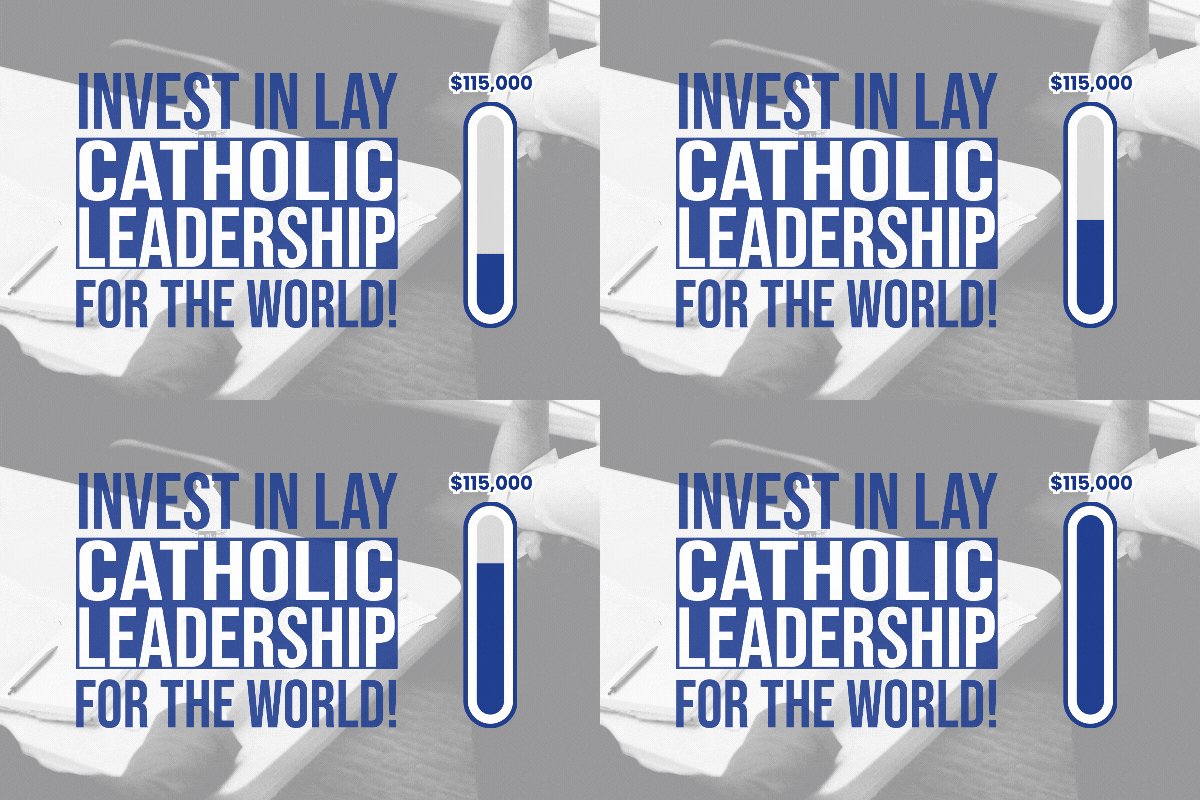
P.S. Today we begin our countdown to the first Tepeyac Leadership Gala. We have the goal of raising $115,000. You can be part of this effort by registering to attend the Gala or making a gift now. No amount is too small or large. THANK YOU!