Table of Contents
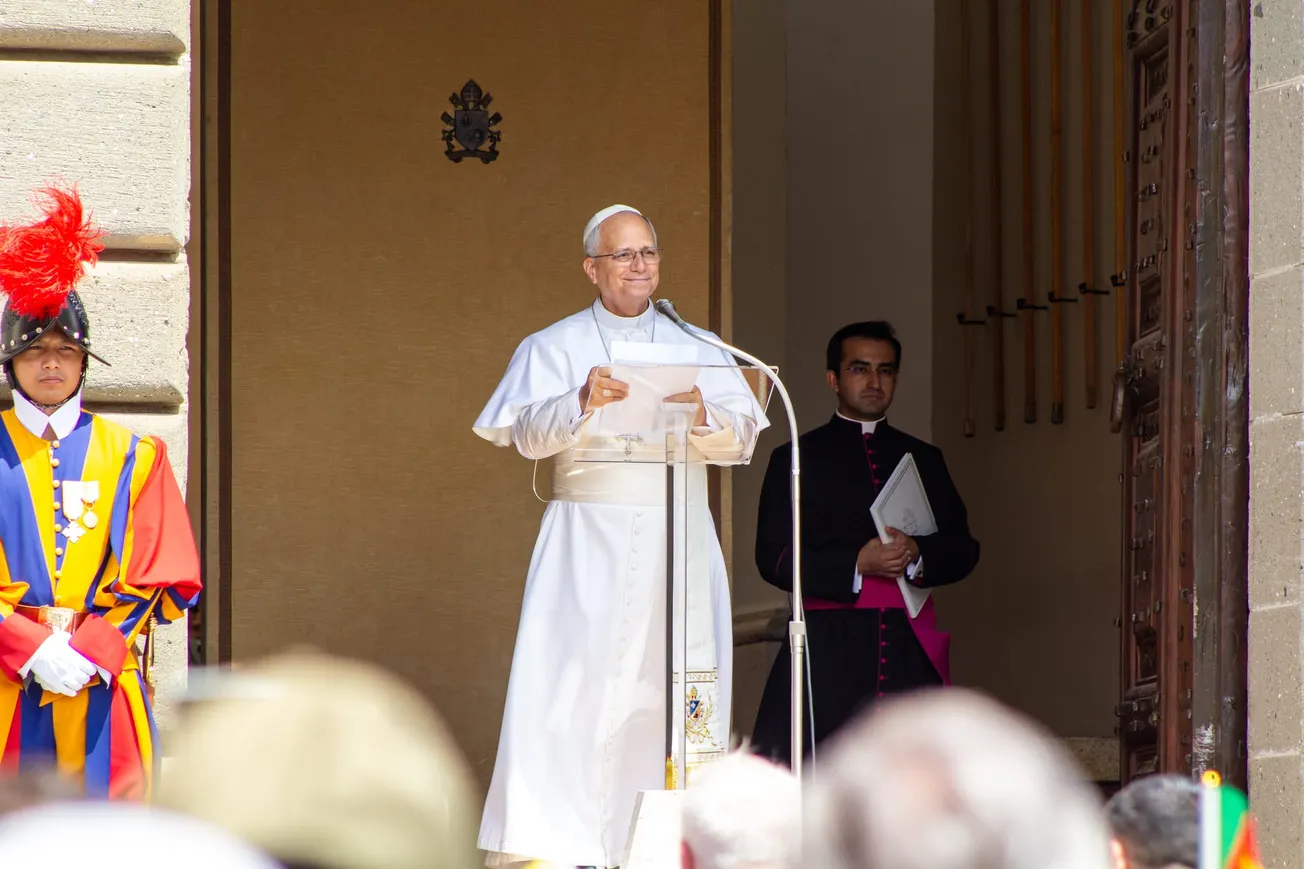
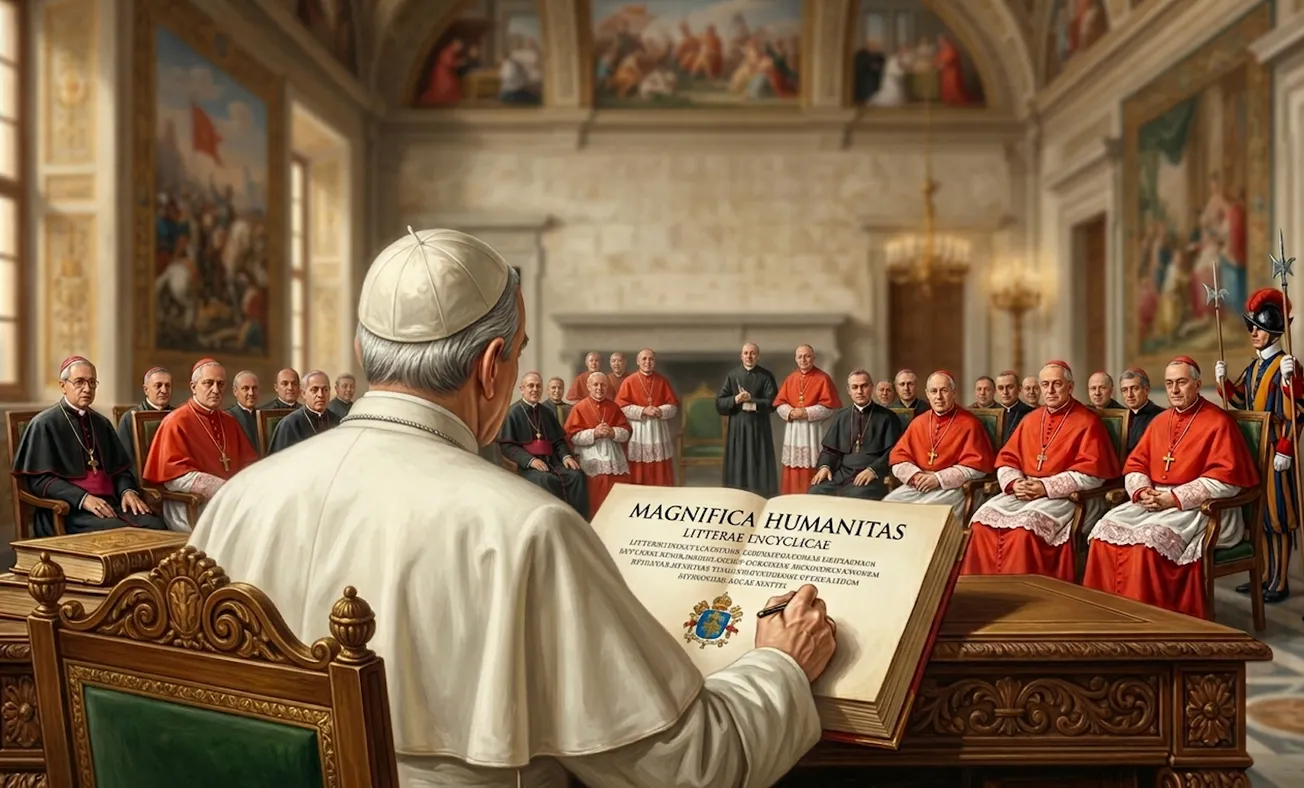
Pope Leo XIV’s first encyclical, Magnifica Humanitas, marks one of the most significant interventions by the Catholic Church into the ethical, social, and spiritual questions surrounding artificial intelligence. Released on May 25, 2026, the document is subtitled “On Safeguarding the Human Person in the Time of Artificial Intelligence,” immediately signaling its central concern: the defense of human dignity in an increasingly technological age.
Drawing inspiration from Rerum Novarum, the foundational social encyclical issued during the Industrial Revolution, Pope Leo XIV frames artificial intelligence as the defining social and moral challenge of our own era. Just as the Church once confronted the upheavals caused by industrialization, exploitative labor systems, and economic inequality, the Pope argues that Catholics today must confront the transformative power of AI with wisdom, courage, and moral clarity.
The Human Person at the Center
At the heart of the encyclical is a deeply Christian vision of the human person. Pope Leo insists that every technological development must serve the human person, rather than reduce humanity to data, productivity, or economic utility. He repeatedly warns against what he calls a “culture of power,” in which technological advancement becomes disconnected from moral responsibility. In such a culture, efficiency and control begin to outweigh truth, solidarity, and human flourishing.
One of the encyclical’s strongest themes is the danger of concentrating technological power in the hands of a few corporations and governments. Pope Leo expresses concern that AI systems are increasingly shaping public discourse, economic structures, and even moral assumptions without sufficient transparency or accountability. He warns that when only a small number of actors control algorithms, data, and digital infrastructure, society risks creating new forms of domination and inequality.
Technology Is Never Neutral
The Pope strongly rejects the idea that artificial intelligence is morally neutral. Instead, he argues that AI systems inevitably reflect the values, assumptions, and intentions of those who create them. For this reason, developers, policymakers, educators, and business leaders all carry a profound ethical responsibility.
Technology, the encyclical maintains, is never merely technical. It always shapes culture, relationships, and the way people understand themselves and others. Pope Leo therefore calls for a renewed moral framework capable of guiding innovation toward the common good rather than private gain or ideological control.
This section of the encyclical is especially relevant for Catholic professionals working in business, media, education, and technology. The Pope challenges leaders not merely to ask whether something can be done, but whether it should be done, and whether it genuinely serves the dignity of the human person.
The Future of Work and Economy
Pope Leo also devotes significant attention to the future of work. Echoing the Church’s long tradition of defending the dignity of labor, he warns that unchecked automation could produce massive economic displacement and social fragmentation. While acknowledging that AI can improve productivity and eliminate dangerous tasks, he insists that society cannot sacrifice workers in pursuit of profit or efficiency.
The encyclical calls for economic systems that prioritize the human person above technological or financial gain. In particular, the Pope criticizes business models that treat workers as disposable while concentrating wealth among technological elites. He urges governments and institutions to invest in retraining, education, and policies that protect workers from becoming victims of rapid technological change.
For Catholic professionals, this section offers a direct challenge to build workplaces and industries rooted in justice, solidarity, and respect for human dignity. Pope Leo makes clear that innovation without compassion ultimately undermines authentic progress.
Artificial Intelligence and the Threat of War
Another major concern addressed in Magnifica Humanitas is the use of AI in warfare and surveillance. Pope Leo speaks forcefully against autonomous weapons systems and technologies capable of making lethal decisions without meaningful human control. He warns that such developments threaten to normalize war and distance humanity from moral responsibility for violence.
In one of the encyclical’s most striking arguments, the Pope suggests that traditional understandings of “just war” must be reconsidered in light of modern technological realities. When warfare becomes increasingly automated and impersonal, societies risk losing their moral sensitivity to the value of human life.
The Pope also condemns the use of AI driven surveillance systems that undermine privacy, freedom, and human dignity. He warns against societies in which citizens are constantly monitored, categorized, and manipulated by digital systems designed primarily for control.
Truth, Communication, and Human Relationships
The encyclical also addresses the growing crisis of truth in the digital age. Pope Leo condemns the use of AI to manipulate information, spread disinformation, and deepen political polarization. He argues that truth itself is endangered when algorithms are designed primarily to maximize engagement, outrage, or profit.
According to the Pope, societies shaped by manipulation and digital tribalism risk losing their capacity for authentic dialogue and genuine human encounter. He warns that technology can never replace the depth of personal relationships, empathy, and real community.
This concern extends especially to younger generations growing up in highly digital environments. Pope Leo calls parents, educators, and Church leaders to help young people develop habits of reflection, discernment, and authentic human connection.
A Balanced Vision of Innovation
Importantly, Pope Leo does not reject technology itself. Throughout the encyclical, he acknowledges the enormous potential of AI to advance medicine, education, communication, and scientific discovery. Rather than calling for fear or retreat, he advocates discernment and ethical stewardship.
Technology, he argues, must remain a tool at the service of humanity and never become an ideology that replaces humanity. This balanced approach gives the encyclical much of its strength. Pope Leo avoids both naïve optimism and apocalyptic pessimism. Instead, he presents a deeply Catholic vision rooted in the belief that human beings are created in the image of God and therefore possess an inherent dignity that no machine can replicate or replace.
The document also contains one of the most historically significant moments of Pope Leo’s young pontificate. In reflecting on exploitation and systems of domination, the Pope asks forgiveness for the Church’s historical failures regarding slavery and colonization, acknowledging that Christians, including Church leaders, did not always defend human dignity impeccably.
For readers of The Catholic Professional, Magnifica Humanitas offers a timely examination of the responsibilities facing Catholics in business, technology, education, media, and public life. The encyclical is not directed only at governments or tech companies. It challenges every Catholic to consider how technology shapes daily life, relationships, work, and moral decision making.
In the end, Pope Leo XIV presents artificial intelligence not simply as a technological issue, but as a spiritual and anthropological one. The central question of the encyclical is not what machines can do, but what kind of people human beings are becoming. In an age fascinated by efficiency, automation, and digital power, the Pope calls the world back to the irreplaceable value of the human person, the importance of moral responsibility, and the enduring truth that authentic progress must always serve the common good.
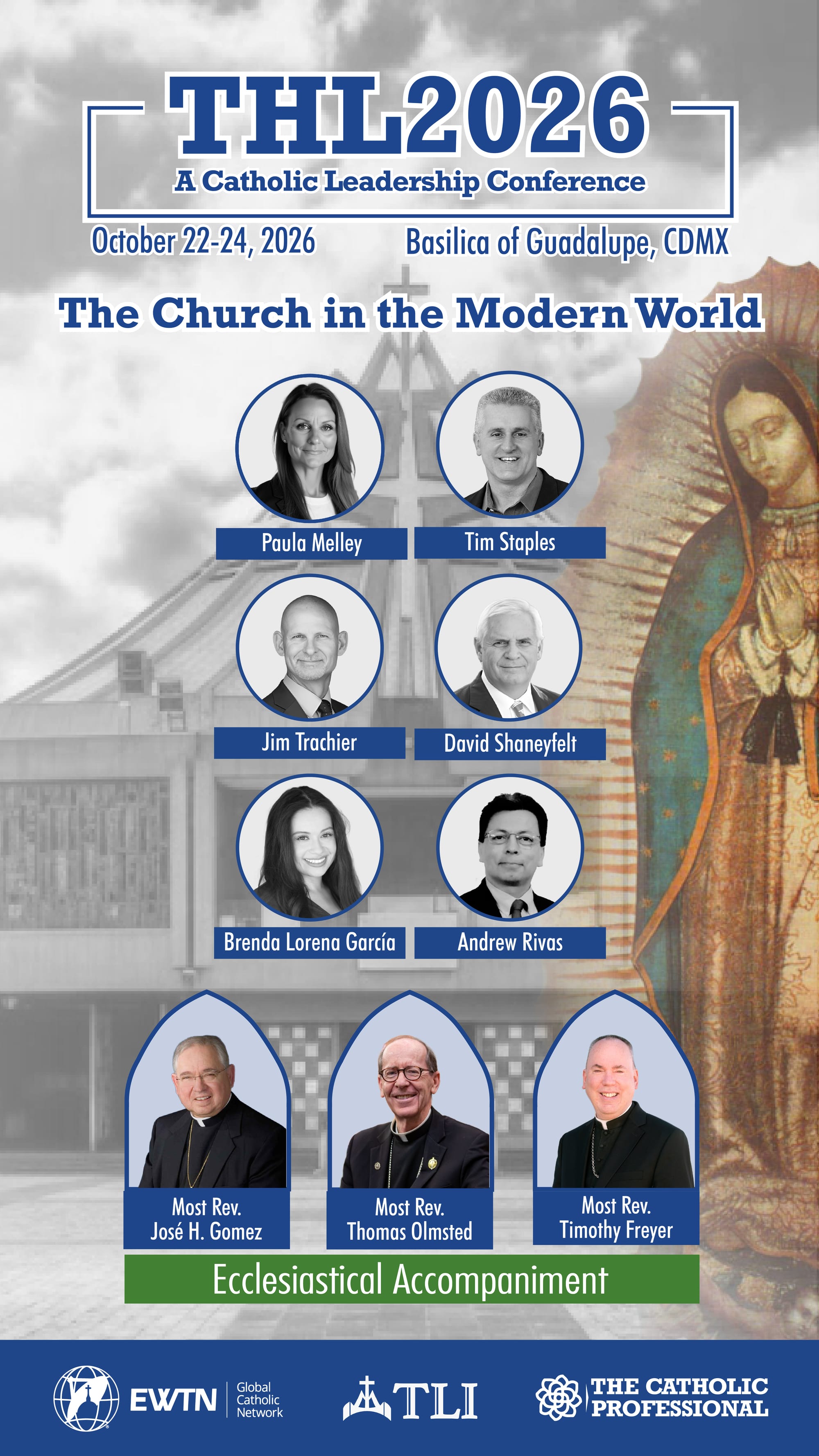
P.S. Discover the place where Our Lady of Guadalupe appeared to St. Juan Diego. See her image. And join Archbishop José Gómez, Bishop Thomas Olmsted and Bishop Timothy Freyer for The Hour of the Laity 2026 in Mexico City.