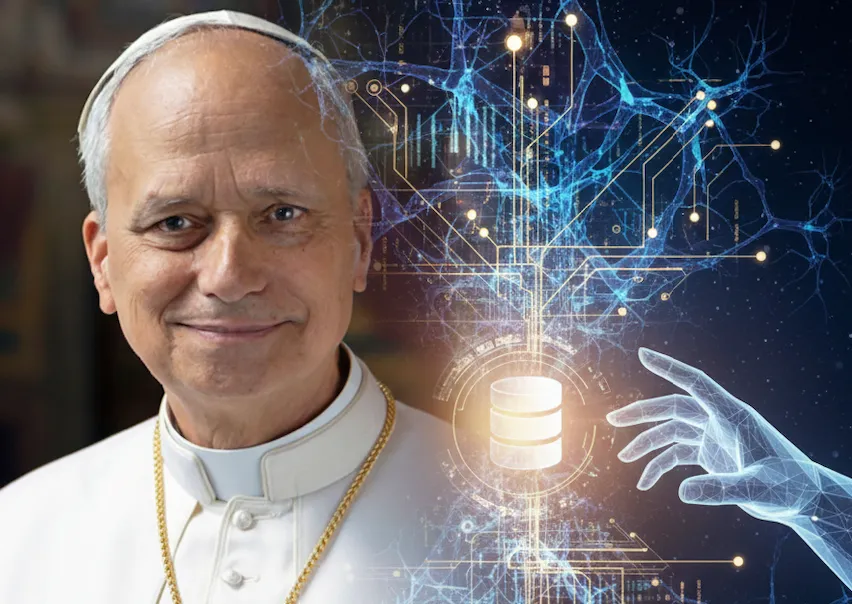
In an age where digital innovation reshapes nearly every aspect of life, Pope Leo XIV’s message for the 60th World Day of Communications offers a profound Catholic perspective, technological progress must never come at the expense of human dignity, authentic relationship, or the vocation to think and speak as persons created in the image of God.
The Face and Voice as Sacred Markers of Humanity
At the heart of the Holy Father’s message is a powerful affirmation of the human person. For Pope Leo XIV, the face and voice are not mere biological features, but sacred markers of personal identity, relationship, and presence. Just as the Word of God became flesh in Christ, our embodied ways of communicating, looking into another’s eyes and hearing another’s voice, reveal the personal and relational nature of the human being.
This Catholic anthropology challenges any reduction of the human person to data, algorithms, or digital simulations. The Pope warns that technologies capable of imitating voices and faces, including artificial intelligence, risk replacing authentic human encounter with imitation. In doing so, they could subtly erode the relational fabric that undergirds family, work, culture, and community.
Anthropological and Technological Challenges
Pope Leo XIV reminds the faithful that the real challenge posed by modern communication technologies is not technological in itself, but anthropological. It concerns the very way we see ourselves and others. Tools such as artificial intelligence can be helpful, but when they promise effortless answers, instant personalization, or emotional companionship without real human effort, they risk enticing us to abandon our own thinking, reflection, and discernment, gifts rooted in our creation in the image of God.
The Holy Father warns that algorithms designed solely for engagement and efficiency often reward rapid emotional reactions and discourage the slower work of understanding, patience, and reflection. This dynamic can weaken our ability to listen deeply, think critically, and participate in civil discourse, all essential virtues for Catholics and professionals committed to the common good.
Artificial Intelligence, Aid, Not Substitute
As Catholic professionals, especially those working in communications, education, technology, and leadership, Pope Leo XIV’s insights invite us to adopt discernment rather than fear. Artificial intelligence and digital platforms are not intrinsically evil. They can be powerful tools for creativity, connection, and service. But the Pope insists that we must not relinquish our own thought to them.
This means insisting on transparency in how technologies operate, advocating that content generated by artificial intelligence be clearly identified as such so that human authorship is honored, and ensuring that innovation serves human flourishing rather than replacing it.
Pillars for Responsible Digital Engagement
Pope Leo XIV outlines a blueprint that resonates deeply with Catholic social teaching and the mission of the professional baptized into Christ’s mission.
1. Responsibility
Whether in business, media, education, or civic life, professionals must steward technology in ways that uphold human dignity. Integrity, honesty, and an orientation toward the common good should govern innovation as much as profit or efficiency.
2. Cooperation
No single sector can navigate the digital frontier alone. Technology developers, policy makers, educators, journalists, and families must work together to build a culture of communication rooted in truth, respect, and solidarity.
3. Education
Perhaps the most urgent task is fostering digital and media literacy grounded in wisdom and critical thinking. Catholic professionals are called to help others, especially the young and the vulnerable, discern truth in a world where imitation and misinformation can spread easily.
Catholic Witness in the Digital Era
For the faithful Catholic, Pope Leo XIV’s message is both an encouragement and a challenge. It affirms that authentic communication, rooted in presence, respect, and truth, is essential to living out our vocation as disciples of Christ. It also reminds us that technology should never replace the effort of thinking, listening, and loving as persons made in God’s image.
In the workplace, in the academy, in our parishes, and in the public square, Catholic professionals are uniquely positioned to steward digital innovation in ways that serve human dignity and flourish with the richness of human creativity. Let us commit, with courage and clarity, to use our God given minds and voices wisely, ensuring that no tool or technique obscures the face of Christ in those we serve.
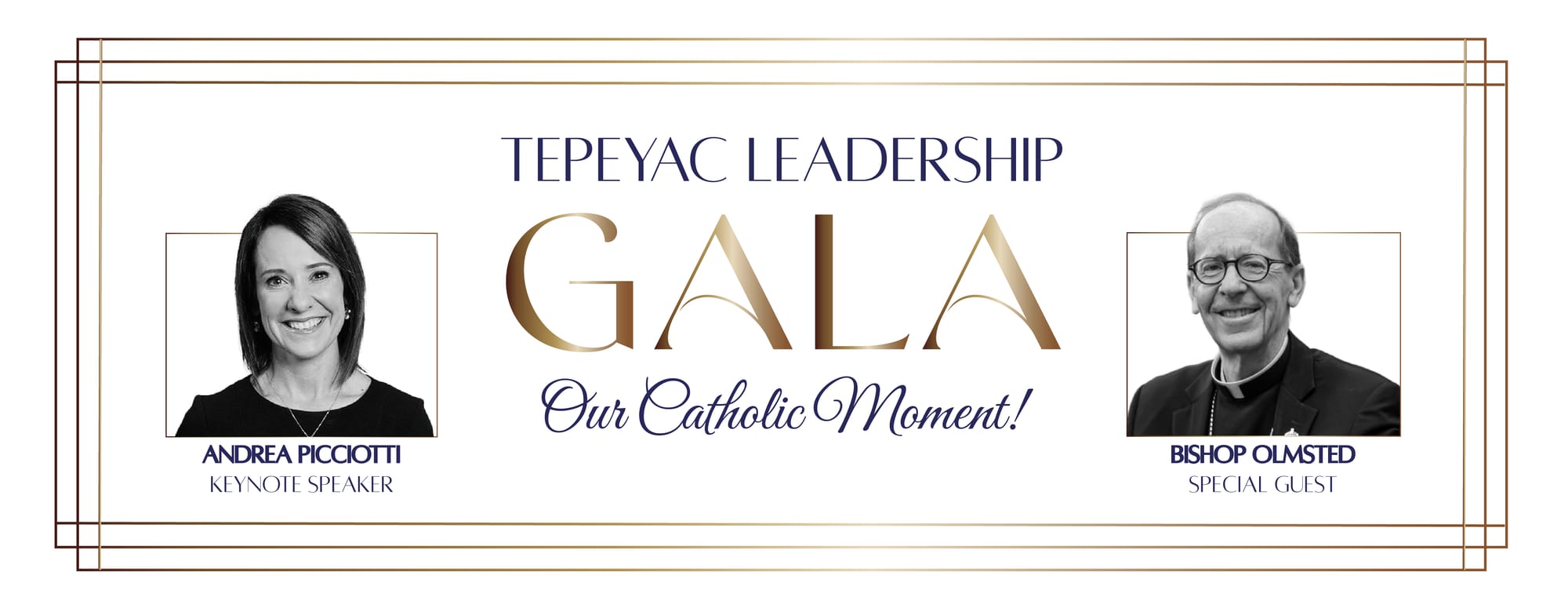
P.S. The countdown is on for the 2nd Tepeyac Leadership Gala, secure your tickets today by clicking below!