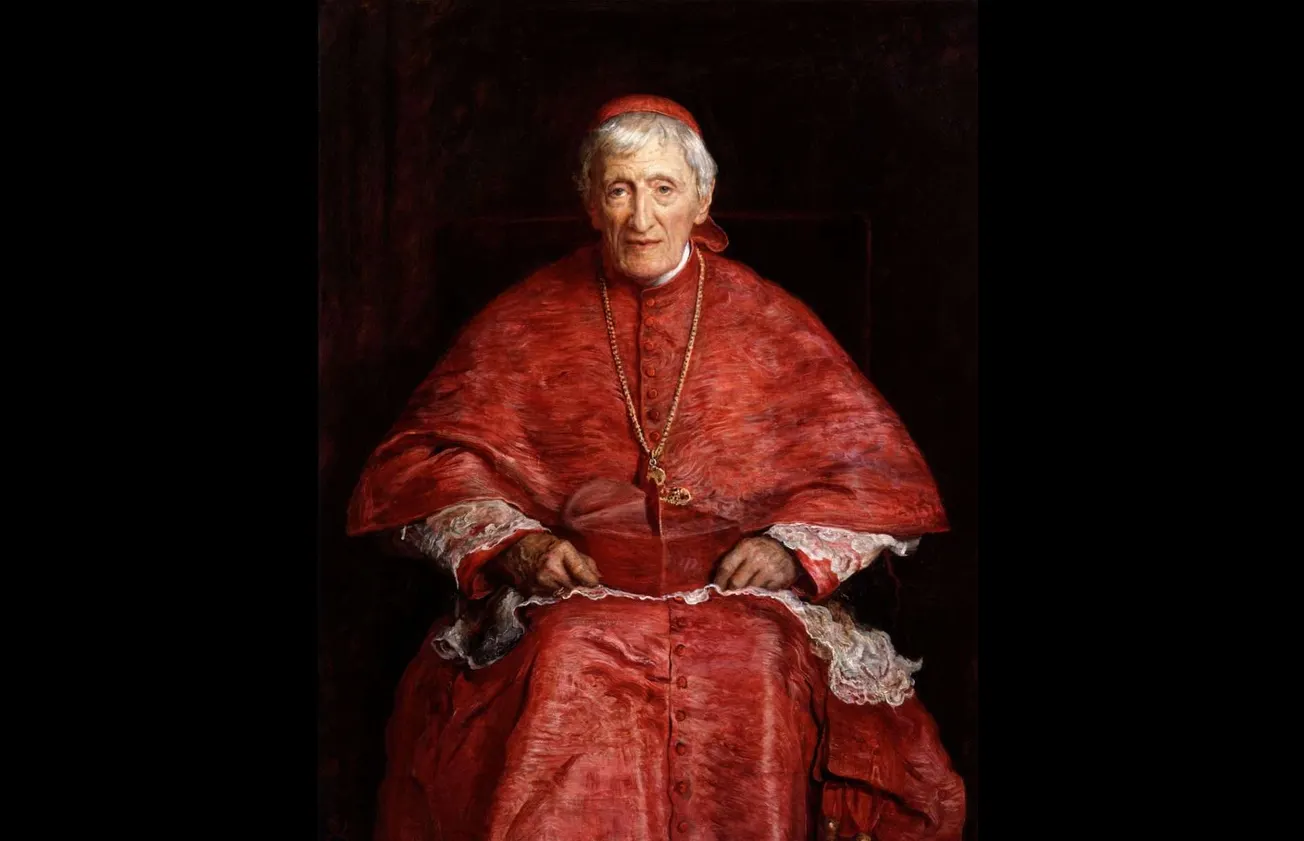
On November 1, the solemnity of All Saints, Pope Leo XIV will proclaim St. John Henry Newman a Doctor of the Church. This recognition places him among a select group of saints whose theological insight and spiritual witness have shaped Catholic thought in ways that continue to resonate today. For Catholic professionals striving to lead with integrity in civil society, Newman offers a treasure of lessons that are as practical as they are profound.
The Primacy of Conscience
Newman is perhaps best known for his teaching on conscience. He insisted that conscience is not a subjective feeling or personal preference but the voice of God echoing in the human heart. For Catholic professionals navigating complex environments, this means that moral integrity must never be compromised. In moments of ethical ambiguity, when career advancement, social approval, or financial gain tempt us to bend principles, Newman reminds us that obedience to truth is non-negotiable. To follow conscience is to choose authenticity over convenience and integrity over expedience.
The Call to Intellectual Rigor
Newman was a scholar of towering intellect. His writings, from the Grammar of Assent to the Idea of a University, reveal a mind deeply committed to the pursuit of truth. For Catholic professionals, his example challenges us to avoid superficial thinking. Whether in law, business, medicine, politics, or education, Newman teaches that true leadership requires intellectual discipline. To be persuasive in public life, Catholics must engage ideas at their roots, articulate them clearly, and defend them charitably. Professional competence alone is insufficient. We are called to be men and women of thought who elevate discussions rather than reduce them.
The Harmony of Faith and Reason
In an age marked by polarization between religious belief and secular rationalism, Newman’s insistence on the harmony of faith and reason is crucial. He demonstrated that faith does not diminish the intellect but perfects it. Catholic professionals can draw strength from this vision. We do not need to leave our faith at the door of the workplace. Instead, we can allow it to enrich our reasoning, inform our ethical decisions, and broaden our understanding of human dignity. Newman calls us to witness to a unity of life where belief and professional excellence are integrated seamlessly.
Leadership Through Influence, Not Power
Newman’s influence came not through public office or wealth but through the power of his thought, the integrity of his witness, and his ability to form others. He lived at a time of upheaval in the Church and in society, yet he chose to lead through persuasion rather than coercion, dialogue rather than domination. Catholic professionals today can imitate this style of leadership. True influence lies not in titles but in the ability to inspire others through character, clarity of thought, and consistency of action.
The Value of Personalism
At the heart of Newman’s spirituality was a profound sense of the individual soul before God. He wrote, “God has created me to do Him some definite service. He has committed some work to me which He has not committed to another.” This conviction speaks directly to Catholic professionals who sometimes struggle to find meaning in competitive and fast-paced careers. Newman assures us that each person has a vocation, unique and irreplaceable, and that professional life is not separate from this divine call. Our daily work is part of our path to holiness.
Practical Courage in a Secular World
Newman’s journey from Anglicanism to Catholicism was costly. He lost friends, status, and security. Yet he chose fidelity over comfort. This courage is a model for professionals who face subtle or overt pressures to conform to secular norms that conflict with the Gospel. Newman teaches that fidelity may demand sacrifice, but it also bears fruit in freedom and authenticity.
Conclusion
By proclaiming Newman a Doctor of the Church on the solemnity of All Saints, Pope Leo XIV confirms what many have long recognized: Newman is a guide for the modern Catholic. His witness offers Catholic professionals a framework for leadership rooted in conscience, intellectual rigor, harmony of faith and reason, influence through character, personal vocation, and courage in the face of opposition.
In a world often confused about truth, leadership, and integrity, Newman stands as a beacon. He shows us that to sanctify the world, we must begin with sanctifying our own minds and hearts, allowing God’s grace to form us into leaders who serve not only with competence but with holiness.
P.S. Click below to register for THL2025 now!