Table of Contents
There is a kind of applause that never fully satisfies.
For many professionals, affirmation has become a silent currency. Promotions, compliments, titles, followers, invitations, and recognition begin to shape not only our confidence, but also our identity. At first, this pursuit seems harmless. Excellence matters. Good work deserves acknowledgment. Gratitude from clients and colleagues can encourage us to continue serving well.
But somewhere along the way, professional validation can quietly become addictive.
The danger is not ambition itself. The danger is allowing external approval to determine our interior peace.
The Modern Workplace Rewards Visibility
Today’s professional world rewards those who are constantly visible. We are encouraged to build personal brands, maintain polished online profiles, share accomplishments publicly, and remain perpetually relevant. Even outside traditional corporate environments, professionals often feel pressure to project success.
This creates an exhausting cycle.
A project succeeds, and the satisfaction lasts only briefly before the next benchmark appears. A compliment from leadership feels meaningful until criticism arrives the following week. A social media post performs well, and suddenly future posts become emotional tests of relevance and worth.
Without realizing it, many professionals begin checking for affirmation the way others check for notifications.
The heart slowly becomes dependent on external reinforcement.
For Catholics, this presents a profound spiritual challenge because human dignity does not come from productivity, status, or visibility. It comes from being created in the image of God.
When we forget this truth, work ceases to be an offering and becomes a performance.
The Subtle Spiritual Consequences
The addiction to validation rarely announces itself dramatically. It usually appears in quieter ways.
We become unusually discouraged by small criticism. We compare ourselves constantly to peers. We resent the success of others. We overwork to prove our value. We feel anxious when our efforts go unnoticed. We begin saying yes to opportunities that inflate our image but damage our family life, prayer life, or health.
In some cases, professionals lose the ability to rest because rest feels unproductive, and unproductive feels worthless.
This interior instability reveals something important. Validation has started occupying a place in the heart that belongs to God alone.
The saints understood this danger well. They worked diligently, often heroically, but they were detached from applause. Their peace did not depend on public recognition. They desired faithfulness more than admiration.
That freedom is increasingly rare in modern professional culture.
Why Validation Never Fully Satisfies
Professional affirmation feels powerful because it temporarily answers a deep human desire to be seen and valued. Yet worldly recognition has limits. It fades quickly, changes unpredictably, and depends heavily on circumstances outside our control.
The promotion eventually becomes normal. The award is forgotten. The praise stops. New people arrive. Expectations rise.
What once felt extraordinary becomes insufficient.
This is why professional validation, by itself, cannot sustain the human heart. We were made for something deeper than reputation management.
Catholic spirituality offers an entirely different foundation. Instead of asking, “Am I impressive enough?” the Christian asks, “Am I faithful?”
That shift changes everything.
A faithful professional may still pursue excellence, leadership, and influence, but those goals no longer define personal worth. Success becomes something to steward, not worship.
Recovering Interior Freedom
The solution is not to reject achievement or pretend that encouragement does not matter. Gratitude and recognition can be good gifts. The problem begins when they become necessities.
Professionals need spaces where they are valued apart from performance. Family life, authentic friendship, parish life, prayer, and service to others help restore perspective. Silence is also essential because constant noise often hides unhealthy attachments.
One practical spiritual exercise is to examine emotional reactions honestly. Why does criticism linger so deeply? Why does being overlooked feel unbearable? Why does comparison consume so much energy?
These questions often reveal where identity has become entangled with professional image.
Christ invites us into a quieter freedom. A freedom where work is done with excellence and integrity, but without desperation for applause. A freedom where success is received humbly and failure endured peacefully. A freedom where our worth remains stable whether others notice us or not.
In a culture obsessed with visibility, there is something profoundly countercultural about a professional who no longer needs constant validation to know who they are.
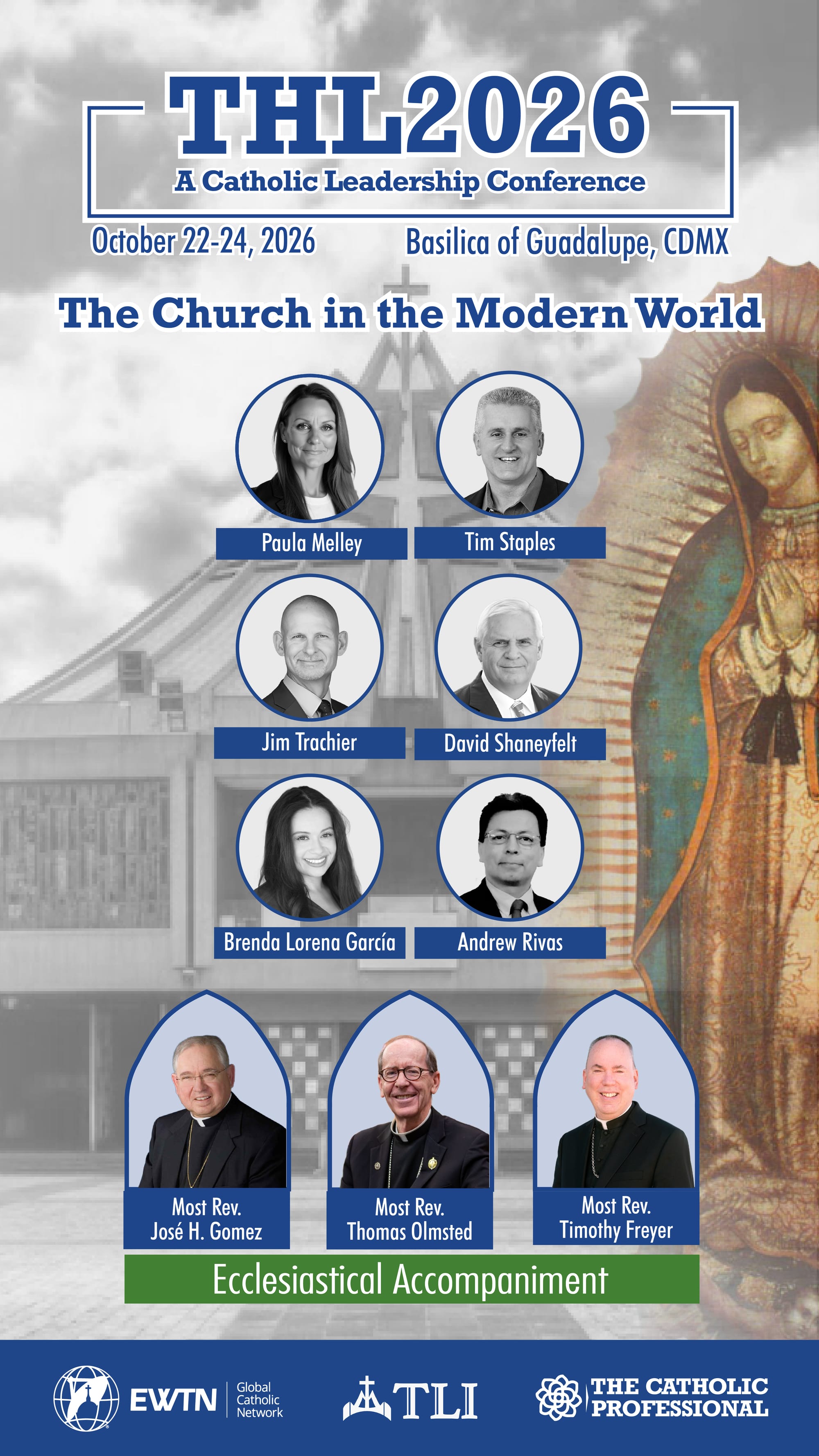
P.S. Discover the place where Our Lady of Guadalupe appeared to St. Juan Diego. See her image. And join Archbishop José Gómez, Bishop Thomas Olmsted and Bishop Timothy Freyer for The Hour of the Laity 2026 in Mexico City.