Table of Contents
In an age where messages arrive faster than we can discern them, the inbox has become more than a tool of communication. It has quietly become a mirror. What we allow to accumulate there, what we open first, what we ignore, and what we repeatedly postpone can reveal something deeper than productivity habits. It can reveal the state of our interior life.
For the Catholic professional, this is not merely about efficiency. It is about formation. The soul is not separate from daily routines. The way we manage attention, urgency, and responsibility is often a reflection of how we are ordering our loves before God.
The Inbox as a Place of Attention
Attention is one of the most precious resources of modern life. Every unread message is a small claim on the mind. When the inbox is constantly full, fragmented attention often becomes the norm. We may find ourselves reacting rather than discerning, responding rather than choosing.
Spiritually, this can mirror a life that is overly reactive to the world and under attentive to the voice of God. The discipline of tending to communication with order and intentionality can become a small but real practice of custody of the heart. When we decide what deserves immediate response and what requires silence, we are exercising a form of discernment that also applies to prayer and moral life.
What We Delay Often Reveals What We Avoid
Many people carry emails that linger for days, weeks, or even longer. Some are small tasks. Others are difficult conversations or decisions that require courage. What we delay is often more revealing than what we complete.
In the spiritual life, avoidance is rarely neutral. It often signals discomfort, fear, or lack of clarity. The inbox becomes a subtle record of our hesitations. Bringing order to it is not only administrative. It can be an act of truthfulness. Naming what needs to be addressed and responding with honesty can mirror the Christian call to walk in truth rather than avoidance.
Noise and the Loss of Interior Silence
A crowded inbox can contribute to a crowded mind. When external communication is constant, interior silence becomes harder to maintain. Yet silence is essential for discernment. Without it, the voice of God is easily drowned out by urgency and distraction.
The Catholic tradition has always valued silence not as emptiness, but as receptivity. Just as prayer requires stillness, so too does thoughtful work. Creating rhythms of checking messages rather than constant monitoring can become a small form of fasting from immediacy. In that space, clarity often returns.
Order as a Form of Stewardship
Order is not merely aesthetic. It is moral. To bring structure to one’s inbox is to acknowledge that time, attention, and responsibility are gifts entrusted to us. Stewardship is not only about finances or talents. It extends to how we manage the flow of daily obligations.
When communication is approached with order, there is less confusion and more peace. This does not mean rigid control, but intentional care. Each message is given its appropriate place rather than competing equally for urgency. This quiet discipline can reflect an interior life that is being shaped by prudence rather than impulse.
A Quiet Examination of the Heart
If examined honestly, the inbox can become a gentle diagnostic tool for the soul. Is there avoidance present. Is there disorder that reflects inner restlessness. Is there constant reactivity that leaves little room for reflection.
These questions are not meant to produce anxiety, but awareness. The goal is not perfection in digital organization, but integration of life. When external habits begin to align with interior conviction, peace becomes more stable and less dependent on circumstance.
Learning to Respond with Freedom
Ultimately, the goal is not to master the inbox but to remain free within it. Freedom means the ability to respond rather than be driven, to choose rather than react, to prioritize what truly matters.
For the Catholic professional, this freedom is rooted in a deeper reality. The heart that is ordered toward God is less easily scattered by the noise of constant communication. In that sense, even something as ordinary as an inbox can become a small classroom for virtue, patience, and clarity of purpose.
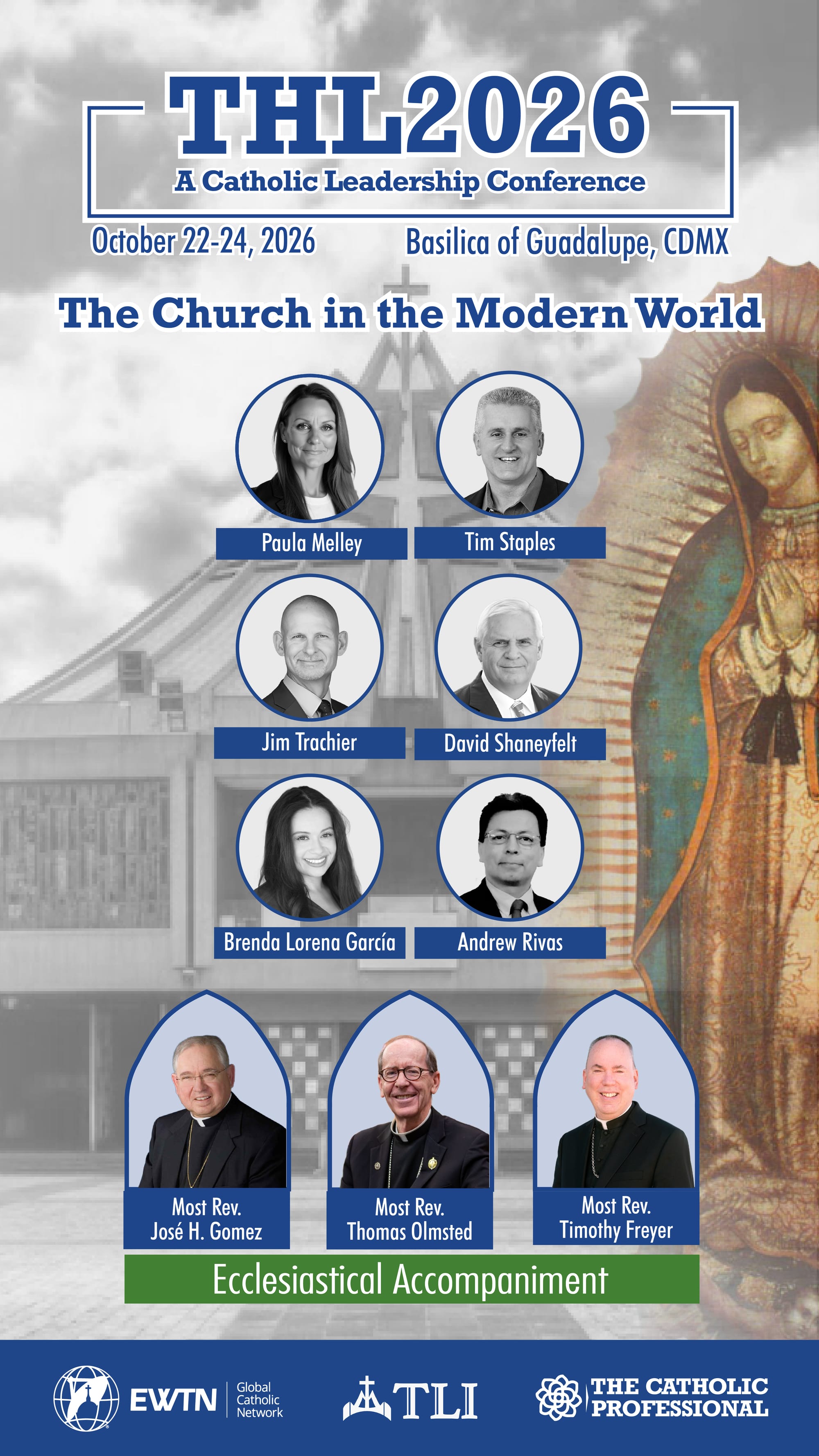
P.S. Discover the place where Our Lady of Guadalupe appeared to St. Juan Diego. See her image. And join Archbishop José Gómez, Bishop Thomas Olmsted and Bishop Timothy Freyer for The Hour of the Laity 2026 in Mexico City.