Table of Contents
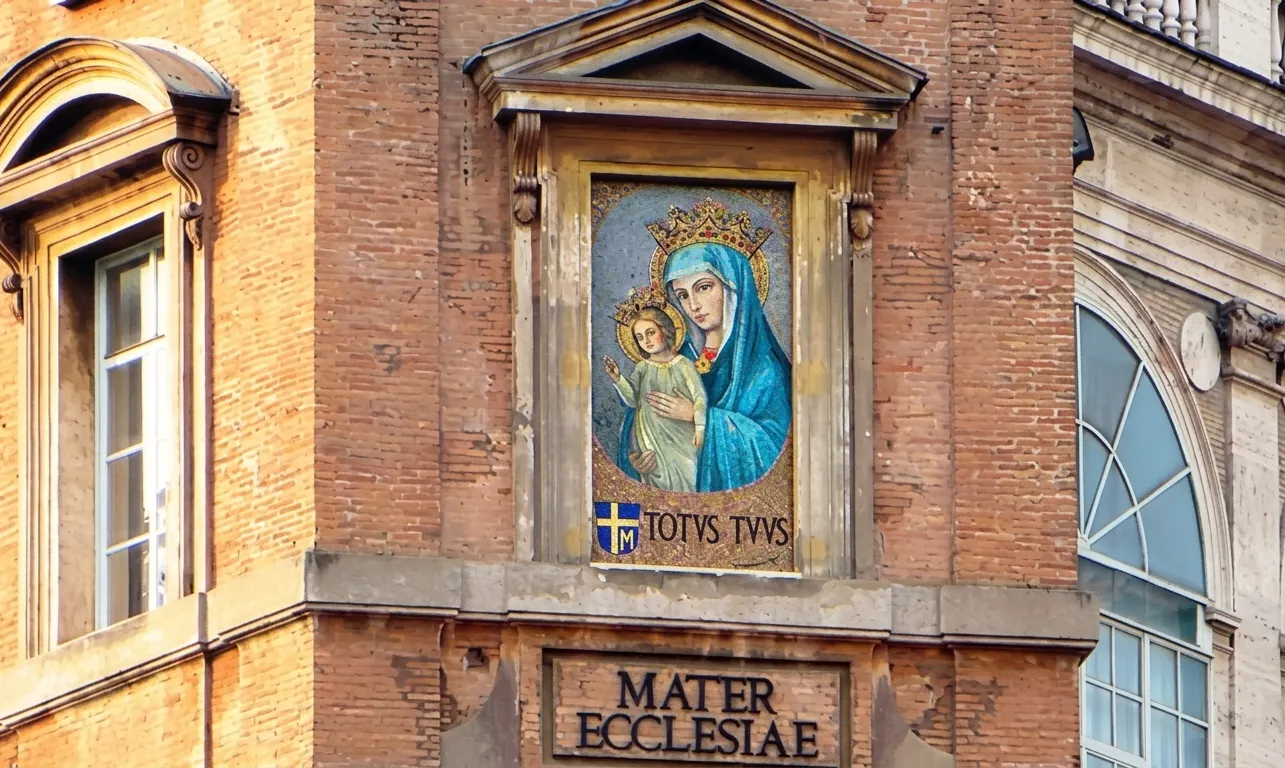
The title Mother of the Church is not a later devotional invention but a truth that grows directly from Scripture and the life of the early Christian community. It expresses how closely Mary is united to the saving work of Jesus Christ and how her maternal care continues within the life of believers. When the Church calls Mary Mother of the Church, it is describing what God Himself began in salvation history and revealed through His Word.
Mary at the Foot of the Cross and the Birth of the Church
One of the most important biblical foundations for this title is found in the Gospel according to John. As Jesus is dying on the cross, He says to His mother, Woman, behold your son, and then to the beloved disciple, Behold your mother. John 19:26 to 27. In this moment, Christ is not only providing care for Mary or John. He is revealing a spiritual reality that extends beyond that single relationship.
The beloved disciple represents all disciples of Christ. By entrusting Mary to him, Jesus entrusts her to all who would become part of His Church. At the same time, the Church is born from the sacrifice of Christ on the cross, as grace flows from His pierced side. Mary is present at this moment of birth, standing in faithful union with her Son. In this way, she is given a maternal role in the very moment the Church comes into being.
Mary in the Life of the Early Church
The Acts of the Apostles gives another key biblical witness. After the Ascension of Jesus, the disciples gather in prayer in the upper room. Among them is Mary. Acts 1:14 tells us that she was with the apostles, persevering in prayer as they await the Holy Spirit.
This detail is deeply significant. Mary is not outside the Church or above it in isolation. She is within the praying community, supporting the first believers with her presence. Her motherhood is not only tied to the physical life of Jesus but continues in the spiritual life of His disciples. She is present at Pentecost, when the Holy Spirit descends and the Church is strengthened for mission.
Theological Meaning in Light of Scripture
Scripture also helps us understand Mary as the New Eve. In Genesis 3:15, God speaks of the woman whose offspring will strike at the serpent. Early Christians saw in this promise a foreshadowing of Mary and Christ. Where Eve cooperated in disobedience, Mary cooperates in faith. Her yes at the Annunciation in Luke 1:38 allows the Word to become flesh.
This cooperation does not place Mary on the same level as Christ. Only Jesus is the Savior. Yet God chose to involve a human mother in the coming of salvation. This reveals a pattern in God’s plan. He works through human cooperation, and Mary is the most perfect example of this openness to His will.
The Church’s Understanding of Mary’s Motherhood
The Church has consistently reflected on these biblical foundations. The Second Vatican Council teaches that Mary is truly the mother of the members of Christ because she cooperated in love so that believers might be born in the Church. This teaching draws directly from Scripture and shows that Mary’s motherhood is not symbolic only but real in the order of grace.
Pope Paul the Sixth later confirmed this understanding by officially calling Mary Mother of the Church. This title does not add anything to Christ’s unique role as Redeemer. Instead, it clarifies how Christ chose to share His life with His followers, including giving them His own mother.
Mary’s Ongoing Maternal Role for Believers
Mary’s motherhood continues today through her intercession and spiritual care. Just as she was present at the beginning of the Church, she remains present in its life. Her role is always directed toward Christ. She never replaces Him but always leads people to Him, as seen at the wedding at Cana in John 2, where she tells the servants, Do whatever He tells you.
For believers, especially those navigating the demands of professional life, Mary’s motherhood is a source of strength. She shows what faithful trust looks like in concrete human circumstances. She teaches attentiveness to God, patience in difficulty, and perseverance in prayer.
Mary is called Mother of the Church because Scripture reveals her unique place in salvation history and the lived experience of the early Christian community. Her motherhood is rooted in the cross, revealed in the upper room, and continues in the life of every believer who seeks to follow Christ with faith and trust.
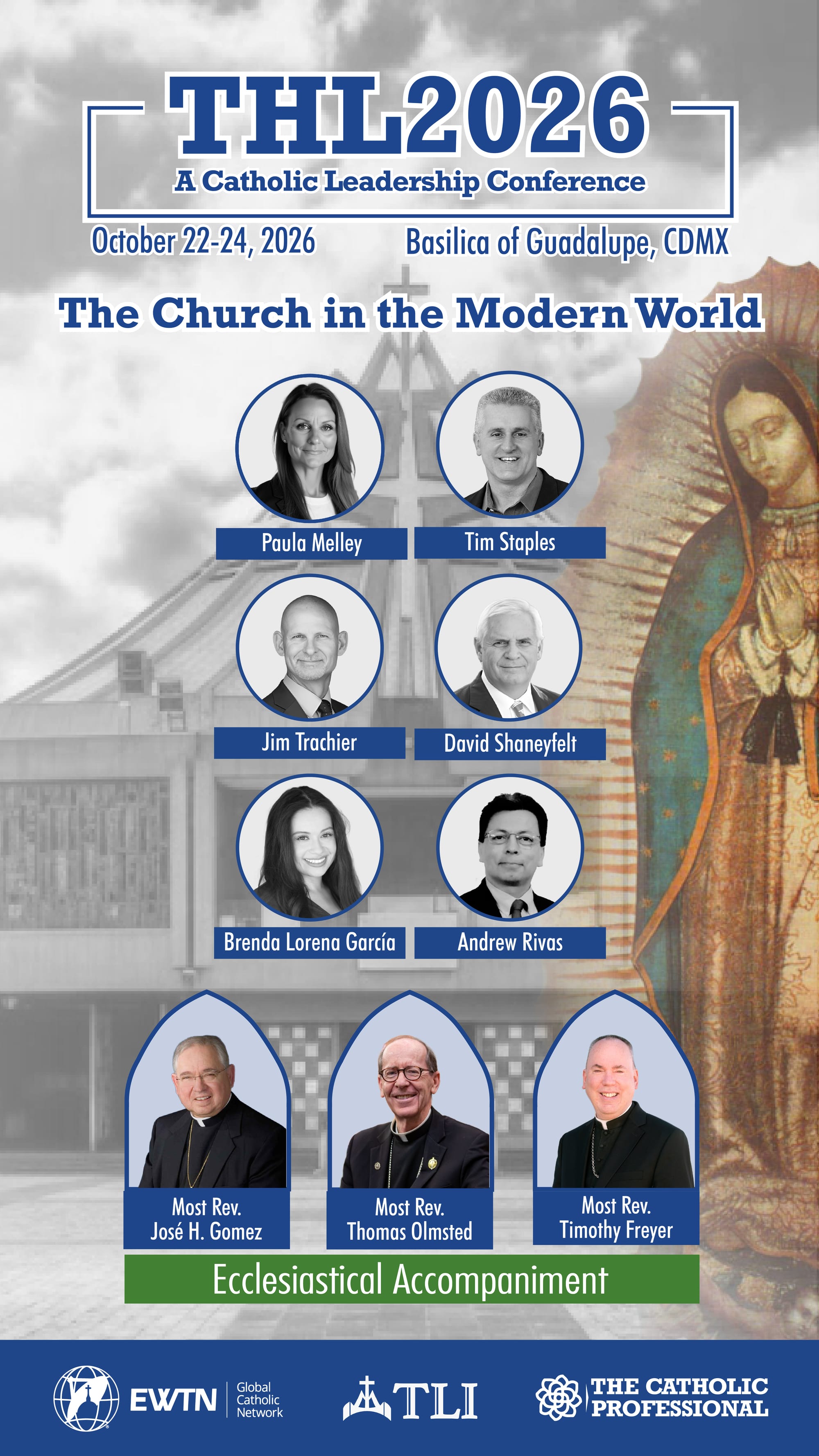
P.S. Discover the place where Our Lady of Guadalupe appeared to St. Juan Diego. See her image. And join Archbishop José Gómez, Bishop Thomas Olmsted and Bishop Timothy Freyer for The Hour of the Laity 2026 in Mexico City.