Table of Contents
Following the death of Welsh singer Bonnie Tyler on Wednesday, July 8, 2026, at the age of 75, audiences around the globe have once again found themselves enveloped by her monumental 1983 power ballad, "Total Eclipse of the Heart." Written by Jim Steinman, it remains a sweeping, desperate masterpiece about a love that has grown cold, leaving two people trapped in shadows, merely going through the motions of a hollow relationship.
Decades before Tyler ever stepped up to the microphone, Peter Maurin, the eccentric, brilliant co-founder of the Catholic Worker movement, issued a stark indictment of Catholic institutional life using a vastly different, yet equally striking, metaphor. He famously observed that Catholic scholars had taken the raw "dynamite" of the Church, wrapped it up in nice phraseology, placed it in a hermetically sealed container, and sat on the lid.
Though separated by eras and genres, these two cultural artifacts converge upon the same tragic diagnosis of contemporary Catholic life: a leadership pipeline and a community that too often trade the explosive, world-changing power of the Risen Christ for the safe, suffocating comfort of institutional risk management.
The Containment of Dynamis
Maurin’s critique was fundamentally about underutilized spiritual capital; specifically, the concept of dynamis, the ancient Greek word for explosive power used throughout the New Testament to describe the Resurrection. To lead an apostolate, parish, or organization built on a risen God is to possess a disruptive, transformative grace capable of tearing down social hierarchies, upending economic injustices, and radically renewing human hearts.
Yet, as Maurin observed, institutional leadership frequently functions as a containment unit rather than a launching pad. Out of a desire for cultural respectability, predictability, and the mitigation of public relations risks, leadership routinely takes this supernatural deposit of faith and seals it away. We wrap it in dense theological jargon, trap it within rigid bureaucratic structures, and sit firmly on the lid to ensure it never disrupts our comfortable status quo.
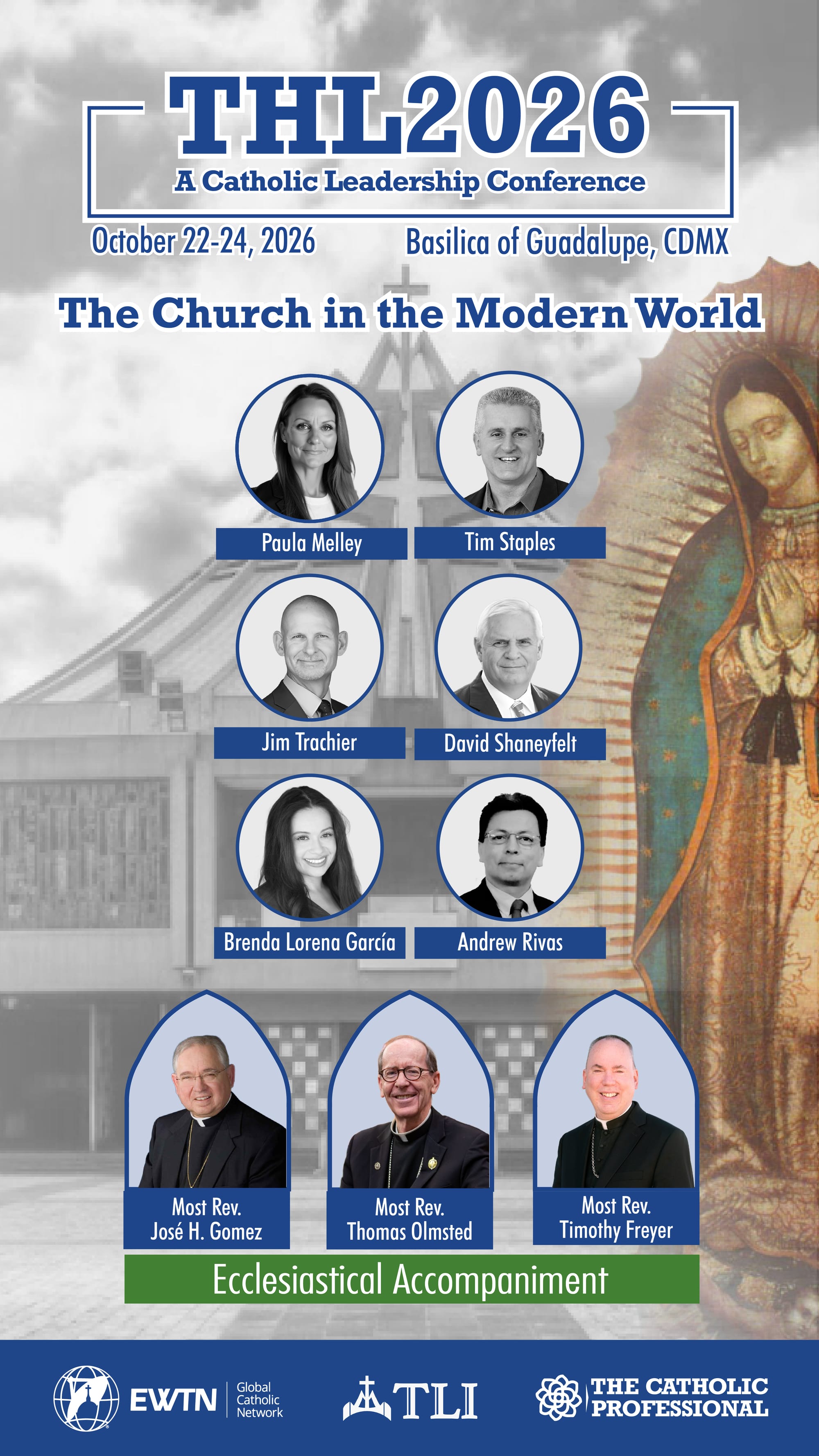
Ad: Discover the place where Our Lady of Guadalupe appeared to St. Juan Diego. See her image. And join Archbishop José Gómez, Bishop Thomas Olmsted and Bishop Timothy Freyer for The Hour of the Laity 2026 in Mexico City.
The Anatomy of Operational Inertia
This is precisely where the haunting refrain of Tyler’s signature anthem reveals its profound relevance to ministry and leadership. The song opens with a cyclical plea:
"Turnaround, bright eyes... every now and then I get a little bit lonely and you're never coming 'round."
This lines up perfectly with the spiritual and psychological state of a stagnant organization. When leaders reduce their driving mission to mere cultural habit, attending meetings out of obligation, reciting mission statements from memory, and treating their founding charism as a historical artifact rather than a living strategy, they enter a state of operational inertia.
They live in the shadow of what used to be a burning venture, going through mechanical motions while experiencing deep cultural and spiritual disengagement. The "bright eyes" of the early movement, which once looked upon the horizon of evangelization with terrifying wonder, become dim and heavy with institutional boredom.
Sitting on a Powder Keg
The tragedy deepens as Tyler sings, "We're living in a powder keg and giving off sparks." This is the supreme irony of modern institutional faith. The Church sits upon the ultimate powder keg, the promise of eternal life and the radical call to universal communion, yet it often settles for generating a few harmless, localized sparks.
By keeping the dynamite hermetically sealed, risk-averse leaders ensure that these sparks never catch fire or catalyze a wider renewal. The explosive, unconditional demands of the Gospel are rendered safe, domesticated, and carefully budgeted. We prefer the predictable glow of a sanctuary candle to the consuming fire of the Holy Spirit, precisely because a fire cannot be controlled, managed, or forecasted on a quarterly spreadsheet.
Moving Beyond the Shadow
When executive and spiritual leaders cease to deploy the power of the Resurrection to actively evangelize, expand into the margins, and disrupt the darkness of the world, an organizational culture inevitably curdles. As the song climaxes:
"Once upon a time I was falling in love, now I'm only falling apart / There's nothing I can do, a total eclipse of the heart."
The total eclipse occurs when the rigid, self-made container of institutional comfort entirely blocks out the radiant light of the Son. The organization falls apart internally because it refuses to expand and innovate externally.
Both Peter Maurin and Bonnie Tyler issue the same urgent, prophetic warning to anyone at the helm of a mission: living in the residual memory of a fire is not the same thing as burning. If Catholic leadership is to overcome its current eclipse, it must get off the lid, break open the container, and finally let the dynamite of the Gospel do what it was built to do.
Ad: Tepeyac Leadership’s Leadership for the World is a $2 million, three year mission to form lay Catholic leaders for the public square. Without formation, others fill the void. Will you step in or step aside now, when it matters most?