Table of Contents
Mental Health Awareness Month is observed each year in May, offering a timely invitation to reflect on the dignity of the human person and the importance of caring for the mind as well as the body and soul. For Catholics, this month is not simply a public health campaign. It is a call to integrate faith, reason, and compassion in a way that honors the whole person in both personal life and professional practice.
Understanding the Purpose of Mental Health Awareness Month
Established in 1949, Mental Health Awareness Month seeks to reduce stigma, promote education, and encourage those who are struggling to seek help. While society has made progress in speaking more openly about mental health, many individuals still carry silent burdens. Anxiety, depression, burnout, and loneliness affect people across all professions, including those deeply committed to their faith.
For Catholics, this awareness aligns with the Church’s long-standing emphasis on human dignity. Each person is created in the image of God, with an inherent worth that includes emotional and psychological well-being. Recognizing mental health as an essential part of overall health reflects a deeper understanding of the unity of body and soul.
A Catholic Vision of Mental Health
The Catholic tradition does not separate spiritual life from emotional life. Instead, it recognizes that grace builds upon nature. This means that caring for mental health is not a sign of weak faith, but rather a responsible and even virtuous act. Seeking counseling, therapy, or medical support can be part of cooperating with God’s grace.
Scripture offers numerous examples of individuals experiencing distress, fear, and sorrow. The Psalms give voice to the full range of human emotion. Christ Himself, in His humanity, experienced anguish in the Garden of Gethsemane. These moments remind us that emotional suffering is not foreign to the life of faith.
At the same time, the Church encourages practices that strengthen both spiritual and mental resilience. Prayer, the sacraments, and community life provide real sources of healing and stability. When combined with sound psychological care, they form a holistic approach that respects the complexity of the human person.
The Role of Catholic Professionals
Catholic professionals are uniquely positioned to bring a balanced perspective to the workplace. Whether in business, healthcare, education, or public service, they can model a culture that respects mental well-being without losing sight of moral and spiritual truths.
This can take practical forms. Leaders can foster environments where employees feel safe discussing challenges. Colleagues can practice attentive listening and genuine concern. Organizations can provide resources that support mental health without reducing the person to a set of symptoms.
Importantly, Catholic professionals are called to avoid extremes. On one hand, dismissing mental health struggles as purely spiritual issues can lead to harm. On the other hand, ignoring the spiritual dimension of the person can leave a deeper need unmet. The vocation is to hold both realities together with wisdom and charity.
Breaking the Stigma with Truth and Charity
Despite increased awareness, stigma remains one of the greatest barriers to care. Many people fear being judged, misunderstood, or seen as incapable. This is where Catholic teaching on charity becomes essential.
To accompany someone who is struggling requires patience, humility, and a willingness to listen without rushing to fix. It also requires truth. Not every difficulty has a quick solution, and not every suffering can be immediately removed. Yet the presence of another person who reflects Christ’s love can make a profound difference.
In professional settings, this means advocating for policies and practices that treat mental health with seriousness and respect. It also means being attentive to one’s own limits and seeking help when needed.
Moving Forward with Hope
Mental Health Awareness Month is more than a date on the calendar. It is an opportunity to renew a commitment to care for the whole person considering the Gospel. Catholic professionals are called to lead with clarity, compassion, and conviction, recognizing that true well-being involves harmony between mind, body, and soul.
By approaching mental health with both faith and reason, they can help build a culture that affirms human dignity and offers authentic hope to a world in need.
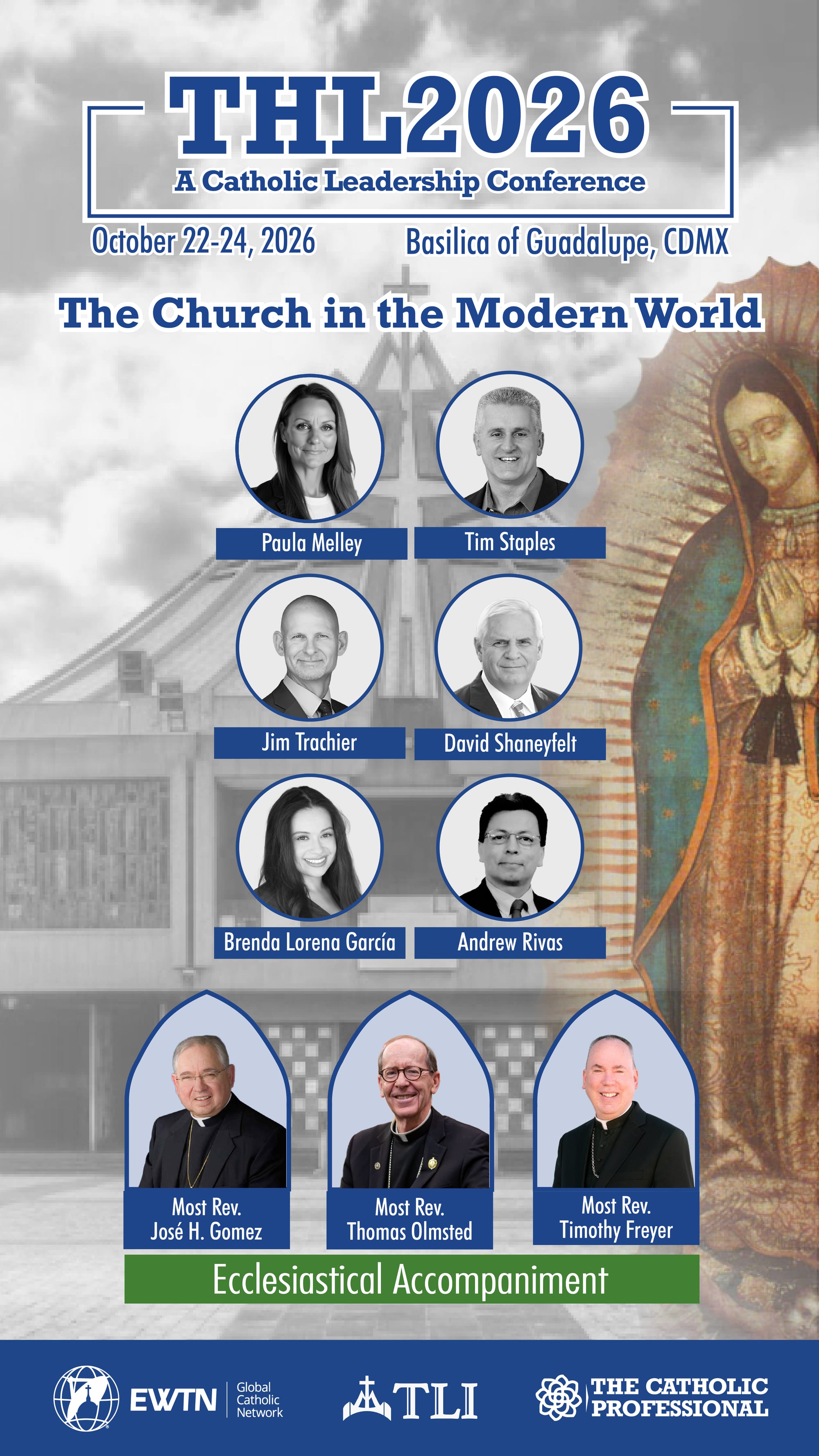
P.S. Discover the place where Our Lady of Guadalupe appeared to St. Juan Diego. See her image. And join Archbishop José Gómez, Bishop Thomas Olmsted and Bishop Timothy Freyer for The Hour of the Laity 2026 in Mexico City.