Little House on the Prairie has come back around, finding a new home and audience on modern streaming platforms. The classic books by Laura Ingalls Wilder remain literary staples, and anyone who grew up in the 1970s and ’80s will instantly remember the beloved television series that ran for nearly a decade.
Those of us old enough to have experienced the show weekly felt as though we grew up alongside the spirited, snaggle-toothed Laura (played by Melissa Gilbert) and took comfort in the steady, quiet wisdom of her Pa (played by Michael Landon). Today’s viewers don't have to wait a week between episodes; they can binge-watch the series in its entirety. Whether we watch it in syndication or stream it online, I highly recommend it—especially for families. It feeds a timeless place in the soul where we long for family love, community, and stability.
While our modern daily lives look vastly different, we can easily recognize ourselves in the Ingalls family's adventures. Pa longed for new beginnings, frequently moving his family in search of opportunity and fresh challenges. His family, though willing, often bore the brunt of being uprooted, forced to rebuild their lives in unfamiliar and sometimes daunting landscapes. It is a narrative that fits squarely within our modern, highly mobile sensibility.
But we can also learn deeply from their response to these trials. The Ingalls family recognized almost immediately that they could not survive the frontier alone; they needed a community. To thrive, they had to turn strangers into neighbors, and neighbors into friends, with deliberate speed. In their era, the stakes were physical survival. For us, the stakes are often spiritual and emotional survival.
As professionals, we are part of a highly mobile society. My experience of living and working in the same community for over forty years is increasingly the exception rather than the norm. When we retire, relocate for a new career opportunity, or move closer to family, we are forced to adapt to entirely new environments.
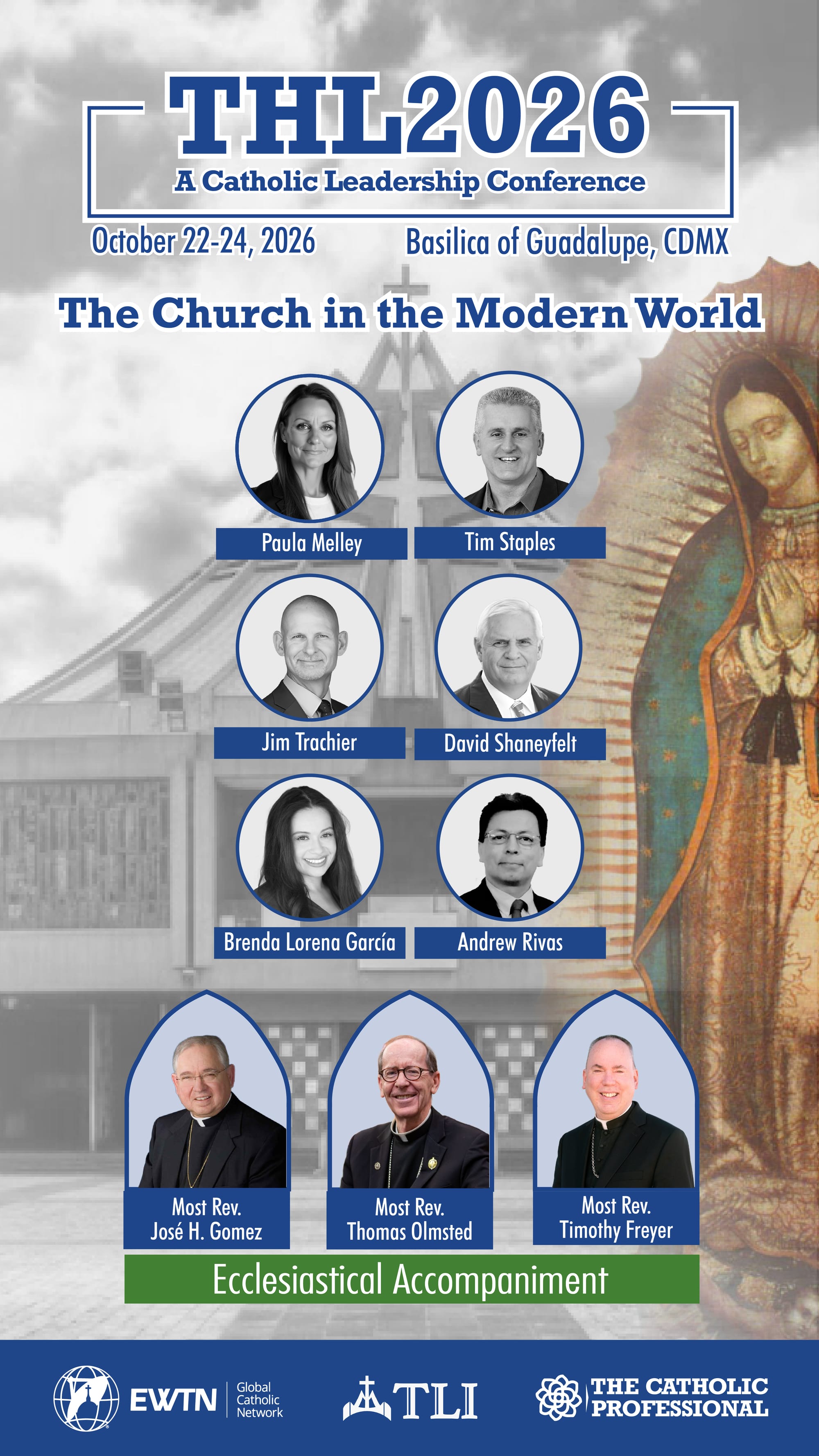
Ad: Discover the place where Our Lady of Guadalupe appeared to St. Juan Diego. See her image. And join Archbishop José Gómez, Bishop Thomas Olmsted and Bishop Timothy Freyer for The Hour of the Laity 2026 in Mexico City.
I felt this acutely very recently. After relocating hundreds of miles away from the community I had called home for four decades, I felt entirely adrift. Attending Mass at my new parish—while spiritually fulfilling—was a lonely experience. I looked out at a sea of unfamiliar faces. People were polite and said hello, but I quickly realized that if I wanted a home, it was up to me to build it.
Spotting a notice for a summer women's gathering in the parish bulletin, I decided to throw caution to the wind and attend. What I found there was warmth, welcome, and the beginnings of genuine friendship. I received immediate invitations to get involved in parish life, which I eagerly accepted.
For the first time since my move, I found a circle of connection that didn't revolve around professional networking or career identity. I found people who share my faith, my values, and my humanity.
As Catholic professionals, we often rely on online networks for connection. But digital spaces cannot replace the grace of real-life fellowship. Like the pioneers, we must be brave enough to step out of our wagons, walk into the clearing, and introduce ourselves. Our parishes are waiting to become our hometowns—we just have to take the first step.
P.S. Join Archbishop José Gómez, Bishop Thomas Olmsted and Bishop Timothy Freyer for The Hour of the Laity 2026 in Mexico City. In the videos bellow you will see what they have to say about THL2026.
Ad: Tepeyac Leadership’s Leadership for the World is a $2 million, three year mission to form lay Catholic leaders for the public square. Without formation, others fill the void. Will you step in or step aside now, when it matters most?