Table of Contents
We live in an age where silence is no longer simply rare; it is actively avoided. Phones vibrate in pockets, notifications accumulate across devices, and the expectation of immediate response has become embedded in professional culture. For many Catholic professionals, this condition is accepted as the price of efficiency, relevance, and competitiveness. Yet beneath the surface of constant connectivity lies a quieter reality: the gradual erosion of interior life.
The human person was not created for uninterrupted stimulation. Catholic tradition has long recognized that interior silence is not emptiness but space for communion with God. In the rhythm of prayer, reflection, and discernment, the soul becomes capable of hearing what is not loud. Constant connectivity, however, fractures that capacity. It fills every pause with input and every silence with interruption. Over time, this reshapes not only attention but also desire.
The Fragmentation of Interior Life
One of the most subtle effects of perpetual digital engagement is the loss of interior recollection. Recollection is the ability to gather oneself before God, to recognize one’s own thoughts, motives, and movements of the heart. When attention is constantly dispersed, the self becomes fragmented. Professionals may remain highly productive but increasingly disconnected from the deeper questions of meaning that give work its moral and spiritual coherence.
This fragmentation has consequences for discernment. Catholic moral and spiritual life depends on the capacity to pause, evaluate, and respond freely rather than reactively. Constant connectivity reduces the space between stimulus and response. Emails demand immediate answers. Messages create implicit urgency. The result is a life increasingly governed by external pressure rather than interior conviction. Over time, this can dull the faculty of prudence, which requires reflection, patience, and clarity.
Relationships Shaped by Divided Attention
There is also a cost to relationships. While digital tools promise connection, they often produce a thinner form of presence. A person may be available to many yet fully attentive to none. In professional environments, this can subtly weaken trust. Colleagues sense when attention is divided, when responses are hurried, or when presence is partial.
The Catholic tradition understands presence as a moral reality, not simply a physical one. To be present to another is to recognize their dignity with undivided attention. When attention is constantly split, relationships begin to reflect that fragmentation. Conversations become transactional, meetings become rushed and even acts of service can lose their personal depth.
The Erosion of Prayer and Interior Recollection
The spiritual cost becomes even clearer in relation to prayer. Many professionals begin and end their days with screens rather than silence. The first impulse upon waking is often to check messages; the last before sleep is to scroll. This pattern reshapes the imagination. It trains the mind to seek external input rather than interior dialogue with God.
Over time, prayer can feel more difficult not because God is absent, but because attention has been conditioned to rest elsewhere. The capacity for sustained silence weakens, and with it the ability to remain before God without distraction. What is lost is not simply time, but a certain quality of interior availability.
Recovering Interior Freedom in a Connected World
Yet the solution is not technological rejection. The Church does not call professionals to withdraw from modern tools, but to order them rightly. The issue is not connectivity itself but its dominance. Technology becomes problematic when it ceases to serve human freedom and begins to define it.
Reclaiming interior space begins with small but deliberate acts of resistance to fragmentation. Moments of silence before opening devices. Intentional boundaries around availability. The restoration of uninterrupted time for reflection, prayer, and family presence. These are not efficiency losses; they are acts of spiritual recovery.
For Catholic professionals, the deeper question is not how connected one is, but what that connectivity is forming within the soul. A life saturated with constant input risks producing external competence without interior depth. Yet it is precisely interior depth that allows professional life to become integrated with faith.
In the end, the challenge is not to disconnect from the world, but to reconnect with what is most real within it: the presence of God, the dignity of the people in our lives, and the interior freedom that makes authentic love and responsible action possible.
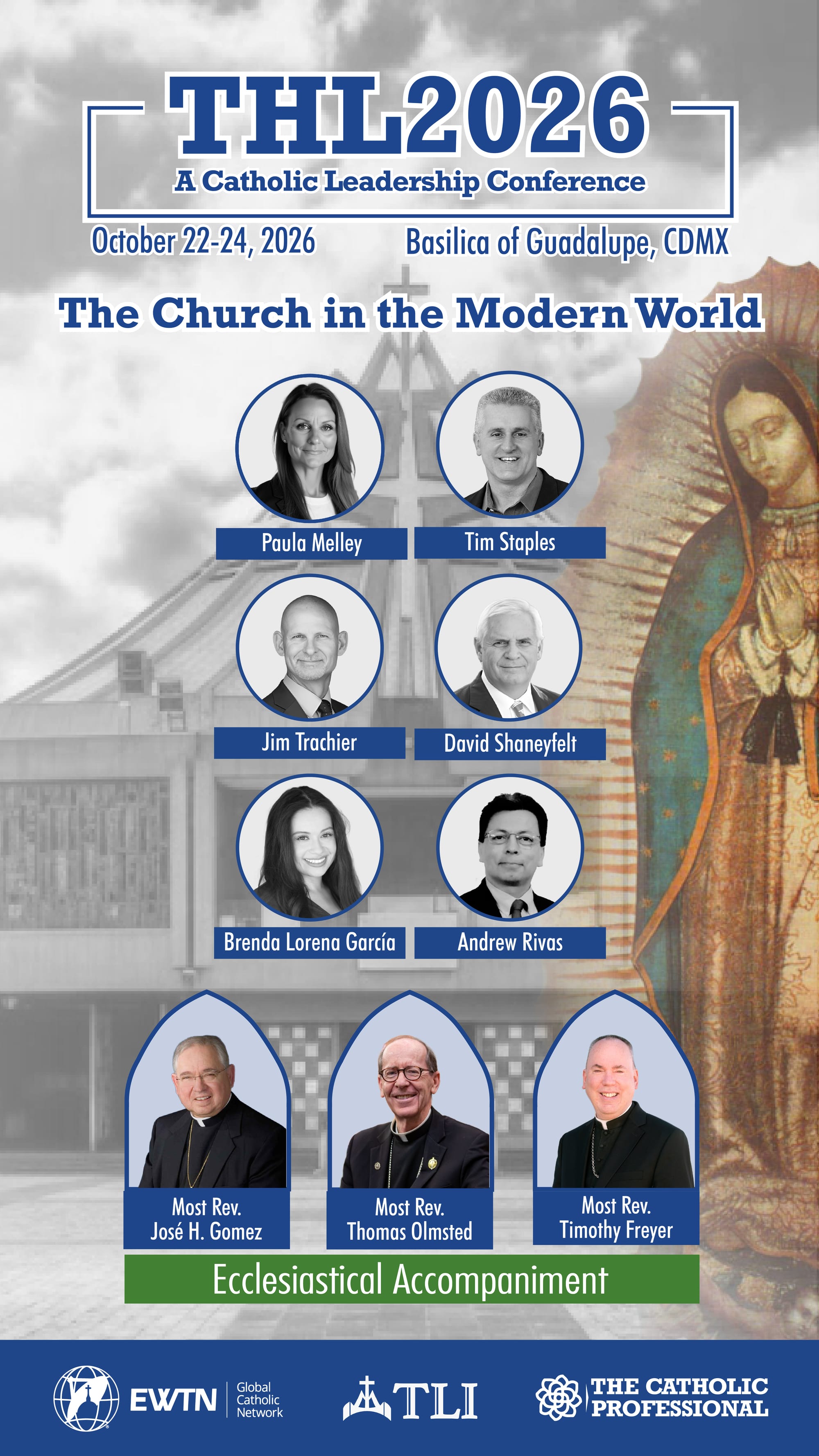
P.S. Discover the place where Our Lady of Guadalupe appeared to St. Juan Diego. See her image. And join Archbishop José Gómez, Bishop Thomas Olmsted and Bishop Timothy Freyer for The Hour of the Laity 2026 in Mexico City.