Every manager knows the knot in the stomach that precedes a difficult performance review. You are preparing to sit across from an employee who is well-liked, deeply dedicated, but consistently missing the mark.
In that quiet moment before the meeting, modern corporate culture offers you a false binary:
Option A: Put on your "performance armor." Be the hard-nosed executive. Deliver the cold, unvarnished metrics, state the consequences, and treat human emotion as an inconvenient distraction.
Option B: Tell a "soft lie." Soften the feedback so thoroughly that the employee leaves believing everything is fine, preserving surface harmony while quietly undermining the team's mission and the employee’s professional growth.
We are routinely told that we must choose between being respected or being liked, between directness and compassion, between truth and kindness. But scripture offers a radically different paradigm for executive excellence: "Kindness and truth shall meet; justice and peace shall kiss" (Psalm 85:10).
For the Catholic professional, these virtues are not opposing forces to be balanced; they are inseparable realities that define true Christian leadership.
The High Cost of Soft Lies
In Catholic theology, Pope Benedict XVI reminded us in Caritas in Veritate that charity without truth degenerates into sentimentality, an empty shell that can be filled with whatever emotion feels convenient.
In the workplace, sentimentality looks like avoiding tough conversations under the guise of "being nice."
When a leader withholds truthful feedback to avoid conflict or protect an employee’s immediate feelings, it isn't kindness. It is fear. It deprives the person of the opportunity to grow, damages the integrity of the organization, and creates systemic resentment across the team. Kindness without truth is deception.
Conversely, truth without kindness is brutal. Delivering correct data or pointing out failures without regard for the human dignity of the person sitting across from you is not strength, it is a failure of virtue.
In the Incarnation, Christ did not compromise truth for kindness or set aside justice for peace. He integrated them perfectly. As executives and leaders called to sanctify our daily work, our goal is to model that same unified witness.
Ad: Advance your career and deepen your faith with the Tepeyac Leadership Initiative, an 18-week leadership development program designed to elevate your professional trajectory while strengthening your relationship with Christ. Gain the vision, skills, and network needed to lead effectively in today’s world. Visit to learn more and submit your application for admission by November 10.

Three Practices for Integrating Truth and Kindness
How do we move Psalm 85 from a poetic reflection into our Monday morning meetings?
1. Reframe Feedback as an Act of Stewardship
Shift your mindset from "evaluating" a subordinate to stewarding a fellow human being's gifts. When you view feedback as an investment in another person's professional and personal development, direct honesty becomes an act of care rather than an act of confrontation.
2. Separate the Person from the Performance
Ensure your feedback clearly distinguishes between an individual's intrinsic human dignity, which is absolute, and their work product, which requires improvement. Be explicit: "I am sharing this directly because I believe in your potential and want to help you succeed here."
3. Replace Conflict Avoidance with Clarity
Clarity is kindness. Ambiguity causes anxiety, misaligned expectations, and ultimate failure. Be precise about where performance falls short, but be equally clear and supportive about the pathway forward and how you will support them in reaching it.
The Witness of Unified Virtue
Sanctifying the executive suite does not mean lowering our standards or soft-pedaling expectations. High professional standards honor the work God has entrusted to us.
When we hold firm to truth while anchoring every interaction in genuine Christian charity, we offer a powerful witness to a business culture starved for authentic leadership. Where kindness and truth meet, true executive excellence begins.
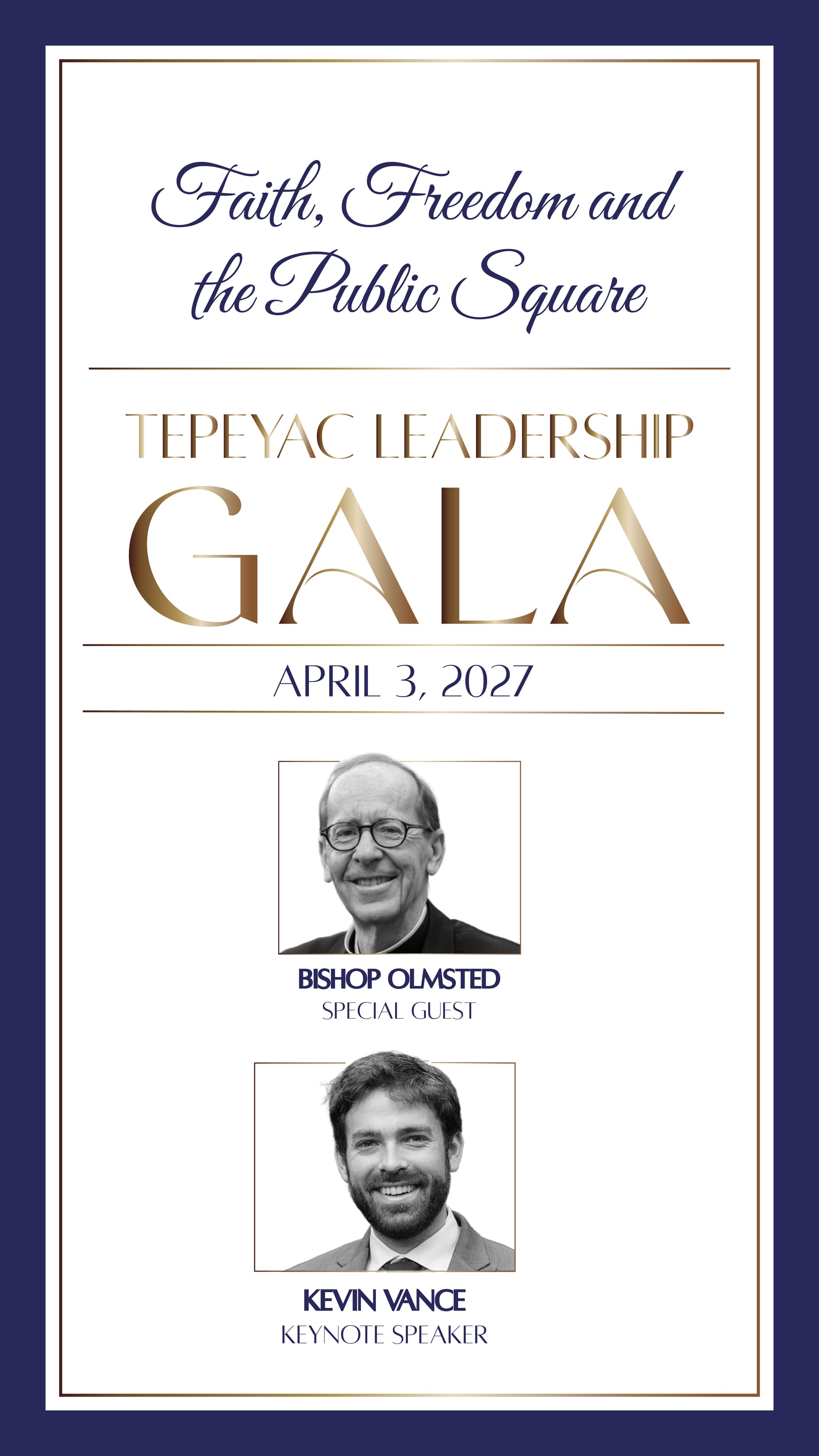
P.S. By joining us at the Tepeyac Leadership Gala, you directly invest in forming the next generation of lay Catholic leaders for civil society. This elegant evening is vital to funding our mission, and your presence ensures we can continue empowering faithful leaders to transform our culture. Reserve your seat today to support this transformative work.
Ad: Tepeyac Leadership’s Leadership for the World is a $2 million, three year mission to form lay Catholic leaders for the public square. Without formation, others fill the void. Will you step in or step aside now, when it matters most?