Table of Contents
Hybrid work has matured into something far more significant than a temporary adjustment or a workplace trend. For seasoned professionals, it has become a structural reality that reshapes how organizations think about productivity, culture, leadership, and human connection. What began as a response to disruption is now an ongoing redesign of work itself, requiring wisdom, discipline, and a renewed understanding of the human person in professional life.
Hybrid Work Becomes a Permanent Reality
Across industries, hybrid work is no longer experimental. It is embedded in organizational strategy. Leaders are now tasked with coordinating teams that operate across physical offices and remote environments, often spanning multiple time zones and cultures. The challenge is no longer whether hybrid work is effective, but how to make it sustainable and fruitful.
For experienced professionals, this shift requires a deeper level of intentionality. Communication must be clearer, expectations must be more defined, and outcomes must take precedence over physical presence. At its best, hybrid work can expand access to talent, increase flexibility, and allow professionals to integrate work and life in more humane ways. At its worst, it can create fragmentation, isolation, and a loss of shared identity if not guided with care.
Redesigning Work Through Human Dignity
From a Catholic perspective, the redesign of work must always begin with the dignity of the human person. Work is not merely a system of outputs. It is a participation in creation, a space where human beings grow in responsibility, virtue, and service.
Hybrid environments can either support or weaken this vision. When work becomes overly transactional or fragmented, the human person risks becoming disconnected from purpose and community. However, when designed well, hybrid systems can actually enhance human dignity by allowing greater flexibility for family life, personal development, and deeper focus.
Seasoned professionals play a key role in ensuring that technology serves the person, not the other way around. This means resisting purely efficiency driven models and instead asking whether structures foster collaboration, trust, and meaningful contribution.
Leadership, Subsidiarity, and Trust
The principle of subsidiarity offers a powerful lens for understanding hybrid work redesign. Decisions should be made at the most appropriate level, empowering individuals and teams rather than concentrating control unnecessarily at the top.
In hybrid environments, this becomes especially important. Leaders are called to trust their teams more deeply, delegating responsibility while maintaining clarity of vision. This requires a shift from oversight based on visibility to leadership grounded in outcomes and accountability.
Trust becomes the central currency of organizational life. Without daily physical presence, trust must be built intentionally through communication, consistency, and integrity. Seasoned professionals who understand this dynamic are better positioned to lead organizations that are both flexible and coherent.
Culture Across Distance and Technology
One of the most complex challenges in hybrid work is the preservation of culture. Culture is not sustained by proximity alone. It is formed through shared values, habits, and rituals that must now be intentionally cultivated across digital and physical spaces.
This requires more than technology. It demands leadership presence, even when not physically present. It also calls for meaningful moments of gathering, whether in person or virtual, where shared identity is renewed and strengthened.
Organizations that succeed in this space are those that treat culture as something to be nurtured deliberately, not assumed automatically. For seasoned professionals, this often means becoming more attentive to how values are communicated, reinforced, and lived out in daily operations.
Building Communities That Endure Beyond Space
The future of work is not defined by where people sit, but by how they relate, collaborate, and grow together in purpose. Hybrid work, when approached with wisdom, becomes an opportunity to reimagine professional life in a way that respects human dignity, strengthens trust, and deepens authentic community.
For experienced leaders, the task is clear. It is not simply to manage distributed systems, but to help build workplaces where people can flourish, contribute meaningfully, and remain connected to something greater than themselves, even across distance.
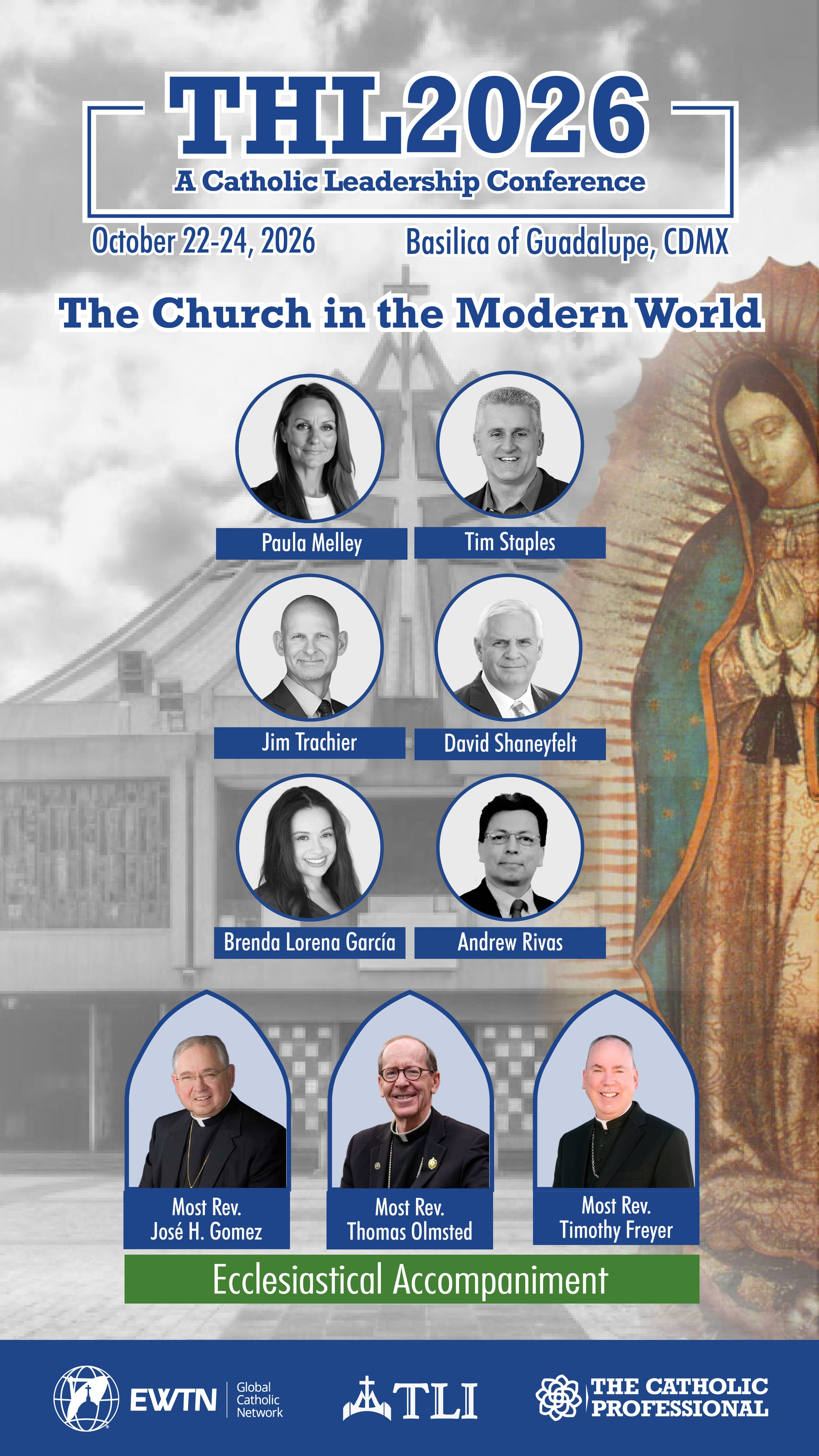
P.S. Discover the place where Our Lady of Guadalupe appeared to St. Juan Diego. See her image. And join Archbishop José Gómez, Bishop Thomas Olmsted and Bishop Timothy Freyer for The Hour of the Laity 2026 in Mexico City.