Table of Contents
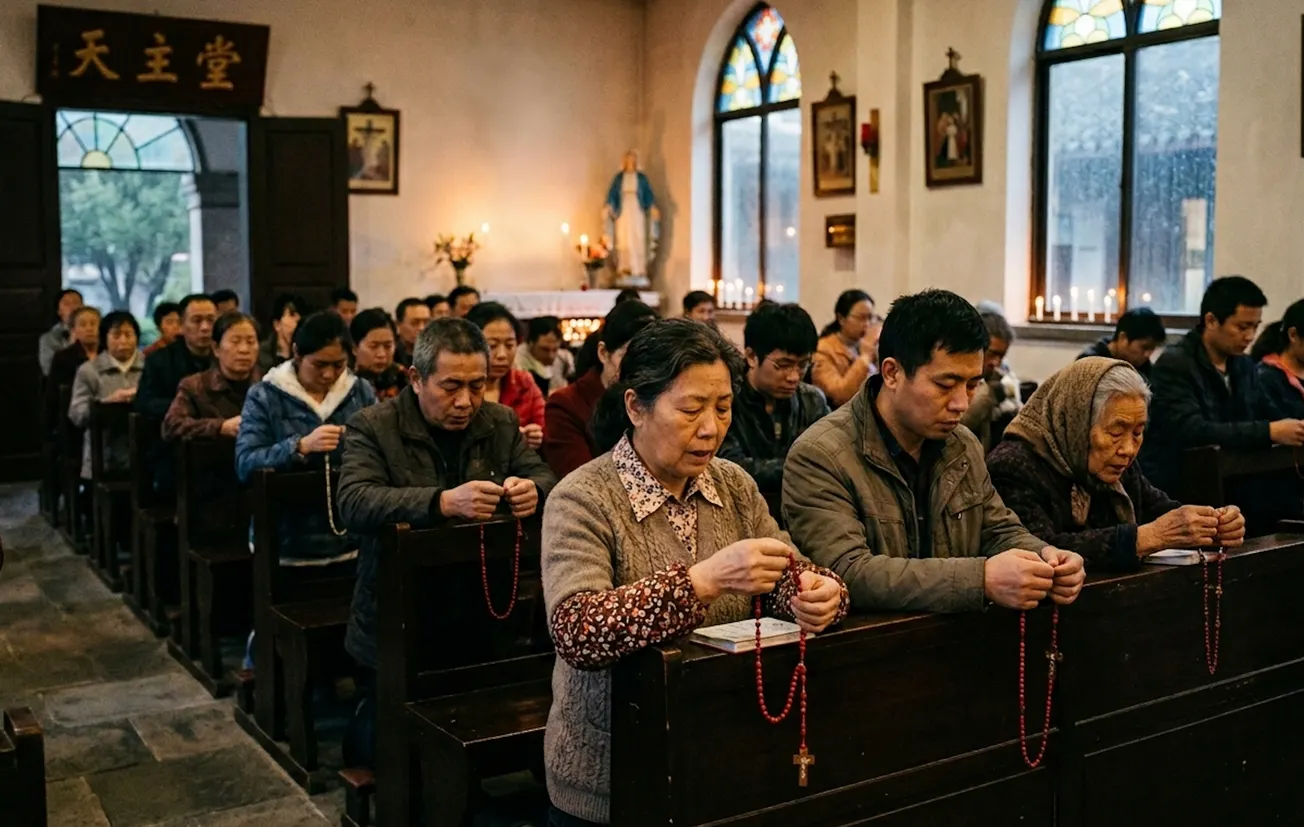
In many parts of the world, religious freedom is often assumed to be a settled right, protected by law and respected by society. Yet for millions of Catholics in China, the practice of the faith is becoming increasingly costly. A recent report from Human Rights Watch reveals that Chinese authorities are escalating pressure on underground Catholic communities, tightening surveillance, increasing ideological control, and restricting the freedom of clergy and lay faithful alike.
For Catholics around the world, this is not merely an international news story. It is a reminder that the freedom to live one’s faith publicly is not guaranteed, and that the witness of persecuted believers continues to challenge the complacency of those who enjoy religious liberty.
A Church Under Pressure
For decades, Catholics in China have lived within a divided ecclesial reality. On one side is the state sanctioned Chinese Catholic Patriotic Association, a government-controlled body that operates under the oversight of the Communist Party. On the other side are underground Catholic communities that remain faithful to the Holy See and resist state interference in the life of the Church.
The Human Rights Watch report argues that the 2018 provisional agreement between the Holy See and Beijing, originally intended to ease tensions over the appointment of bishops, has unintentionally provided new leverage for the Chinese government to pressure underground Catholics into joining the official state church. Since the agreement, reports have documented cases of bishops and priests being detained, placed under house arrest, forcibly disappeared, or otherwise intimidated into compliance.
Control Beyond the Sanctuary
Beyond these direct acts of coercion, authorities have also expanded ideological oversight in the official Church. Priests are reportedly required to submit their teachings for state approval, clergy are subjected to frequent political training sessions, and church activities are monitored with increasing scrutiny. In some cases, children have been barred from entering churches, and Catholic charitable institutions have faced severe restrictions.
These realities reveal something deeply significant: the Chinese government does not merely seek to regulate religion; it seeks to subordinate faith to political ideology.
The Witness of Fidelity
This is where the witness of China’s Catholics becomes profoundly instructive. Despite pressure, intimidation, and surveillance, many continue to practice the faith with courage and perseverance. They remind the universal Church that fidelity is not dependent on comfort. Their witness reflects the same truth that Christians have lived from the earliest centuries: the Gospel cannot be extinguished by external force.
For Catholics, this testimony matters deeply. In societies where religious liberty is largely protected, the temptation is not persecution but privatization. Faith can slowly become confined to personal devotion, detached from public witness. Yet the example of persecuted Catholics exposes the poverty of a faith that is hidden by convenience rather than by coercion.
A Call to Solidarity
When believers in China risk detention to remain faithful to the Church, it challenges professionals elsewhere to ask whether they are willing to risk discomfort to live their convictions openly. If others are denied the freedom to profess Christ, how seriously do we take the freedom we possess?
The crisis in China also reminds us that the Church’s mission has always unfolded under pressure. Political systems may seek to control institutions, regulate worship, and silence conviction, but they cannot extinguish the human longing for truth. Every attempt to force the Church into ideological conformity ultimately reveals the enduring power of authentic faith.
This moment calls for solidarity. Catholics are not powerless spectators. Through prayer, advocacy, and public awareness, they can stand with those whose freedom is denied. They can also renew their own commitment to living faith with integrity in workplaces and societies where that freedom still exists.
The underground Church in China bears witness to a truth that every Catholic must remember: faith is never merely private. It shapes identity, forms conscience, and demands fidelity.
And where fidelity carries a cost, the courage of believers becomes a light for the whole Church.
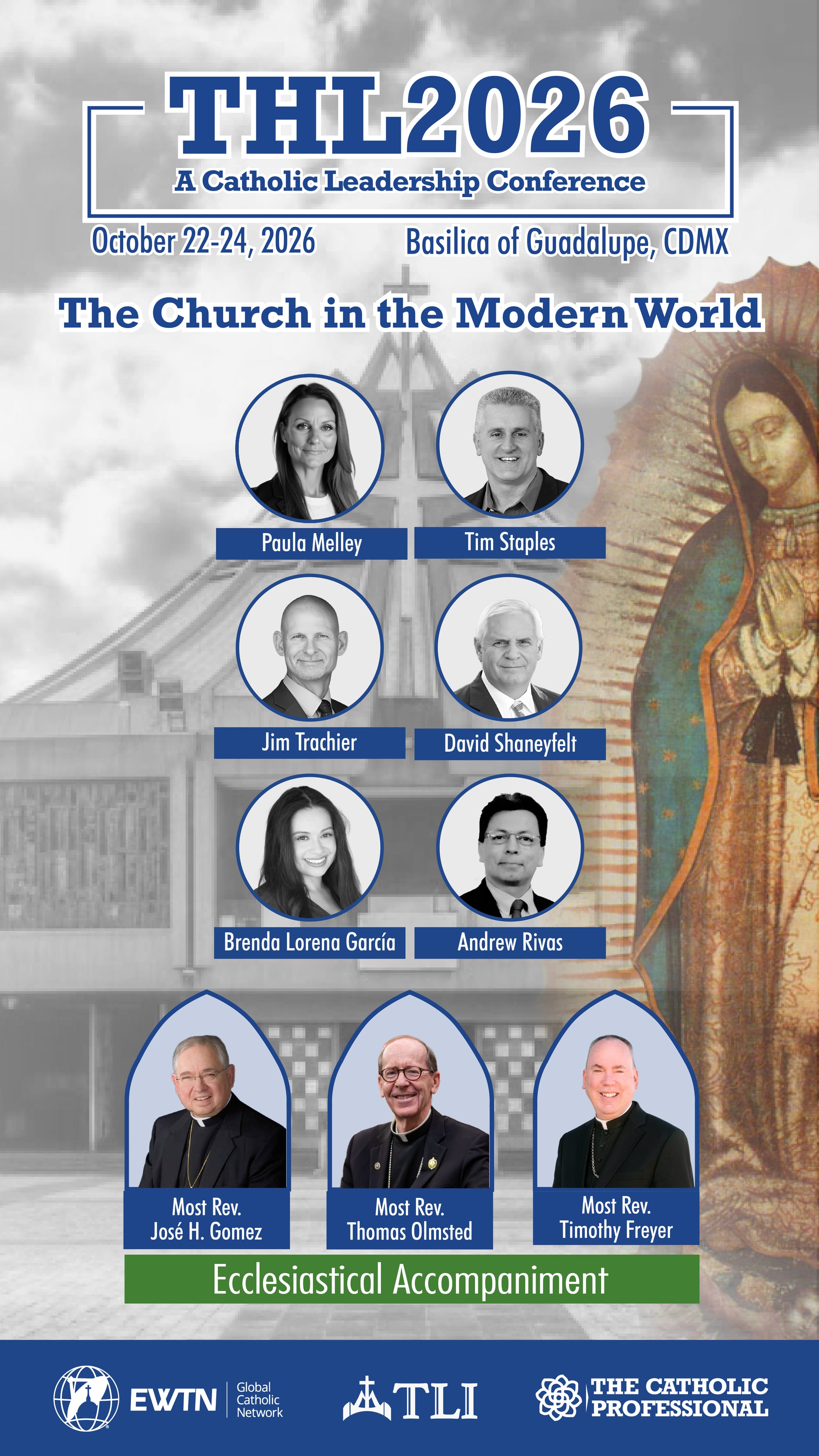
P.S. Discover the place where Our Lady of Guadalupe appeared to St. Juan Diego. See her image. And join Archbishop José Gómez, Bishop Thomas Olmsted and Bishop Timothy Freyer for The Hour of the Laity 2026 in Mexico City.