Table of Contents
In today’s digital marketplace of ideas, The Catholic Professional launches the new Friendly Apologetics Series, designed to equip Catholic professionals to engage questions of faith with clarity, confidence, and genuine charity. Few topics arise as frequently, or as passionately, as the issue of authority in Christianity. The question often surfaces in a simple form: “Why isn’t the Bible alone enough?” Beneath that question lies a deeper concern about truth, trust, and who has the right to interpret God’s Word.
The Catholic response, when offered with clarity and charity, becomes an opportunity not only to explain doctrine, but to invite others into a richer understanding of how God continues to guide His people.
The Unity of Scripture and Tradition
Catholics affirm without hesitation that Sacred Scripture is the inspired Word of God. At the same time, the Church teaches that Divine Revelation is transmitted through both Sacred Scripture and Sacred Tradition. These are not competing sources, but two modes of the same revelation, flowing from the same divine origin.
The New Testament itself points to this reality. St. Paul exhorts the faithful to “stand firm and hold to the traditions which you were taught by us, either by word of mouth or by letter” in 2 Thessalonians 2:15. Here, the apostolic teaching is transmitted both in written form and orally, with equal authority.
Before a single New Testament book was written, the Gospel was already being preached, lived, and handed on. As St. John acknowledges, “there are also many other things which Jesus did, were every one of them to be written, I suppose that the world itself could not contain the books” in John 21:25. This reminds us that not everything was reduced to writing, yet it was still part of the living faith of the Church.
Why the Bible Alone Falls Short
The principle of Scripture alone, also called sola scriptura, raises important challenges. If the Bible is the sole authority, then interpretation becomes the responsibility of the individual reader or community. This has led, over time, to many differing interpretations on essential matters of faith and morals.
The question is not whether Scripture is authoritative, it certainly is, but whether it is self-interpreting. Scripture itself cautions against private interpretation. As we read in 2 Peter 1:20, “no prophecy of scripture is a matter of one’s own interpretation.”
We also see the need for guidance in Acts 8:30–31, when Philip encounters the Ethiopian eunuch reading Isaiah. When asked if he understands what he is reading, the eunuch replies, “How can I, unless someone guides me?” This passage highlights that Scripture often requires an authoritative interpreter.
The Role of the Magisterium
Here the Catholic understanding offers a coherent answer. Christ entrusted His authority to the apostles, and through them to their successors. This teaching authority, known as the Magisterium, serves the Word of God by authentically interpreting both Scripture and Tradition.
Jesus Himself establishes this authority when He tells the apostles, “He who hears you hears me” in Luke 10:16. This identification between Christ and His appointed messengers points to a living authority within the Church.
Likewise, in Matthew 16:18–19, Christ gives Peter a unique role, saying, “You are Peter, and on this rock I will build my Church… I will give you the keys of the kingdom of heaven.” This passage has long been understood as conferring real authority to lead and govern.
The Church is also described as “the pillar and bulwark of the truth” in 1 Timothy 3:15, underscoring its role in safeguarding and proclaiming the truth of the Gospel.
A Living Authority for a Living Church
Authority, in the Catholic sense, is not about control, but about communion. It is about ensuring that the message of Christ remains intact, accessible, and transformative in every age.
In conversations with others, a helpful approach is to shift the focus from restriction to gift. Rather than asking why Catholics do not rely on the Bible alone, we can ask what Christ intended for His Church. Did He leave behind only a book, or did He establish a living community with the authority to teach in His name?
The Catholic answer embraces both the written Word and the living Tradition, interpreted through the Magisterium. Together, they form a harmonious whole that protects the integrity of the Gospel.
Rooted in Truth, Guided Through Time
Engaging this topic with a spirit of friendliness means recognizing that many who hold to Scripture alone do so from a genuine desire to honor God’s Word. The goal is not to win an argument, but to share a fuller picture.
Authority, rightly understood, is not a burden but a blessing. It is the means by which Christ continues to guide His Church, ensuring that His truth remains clear in a world often marked by confusion.
For the Catholic professional, embracing and explaining this truth with clarity and charity becomes a powerful witness, one that points beyond ourselves to the enduring wisdom and unity found in the Church Christ founded.
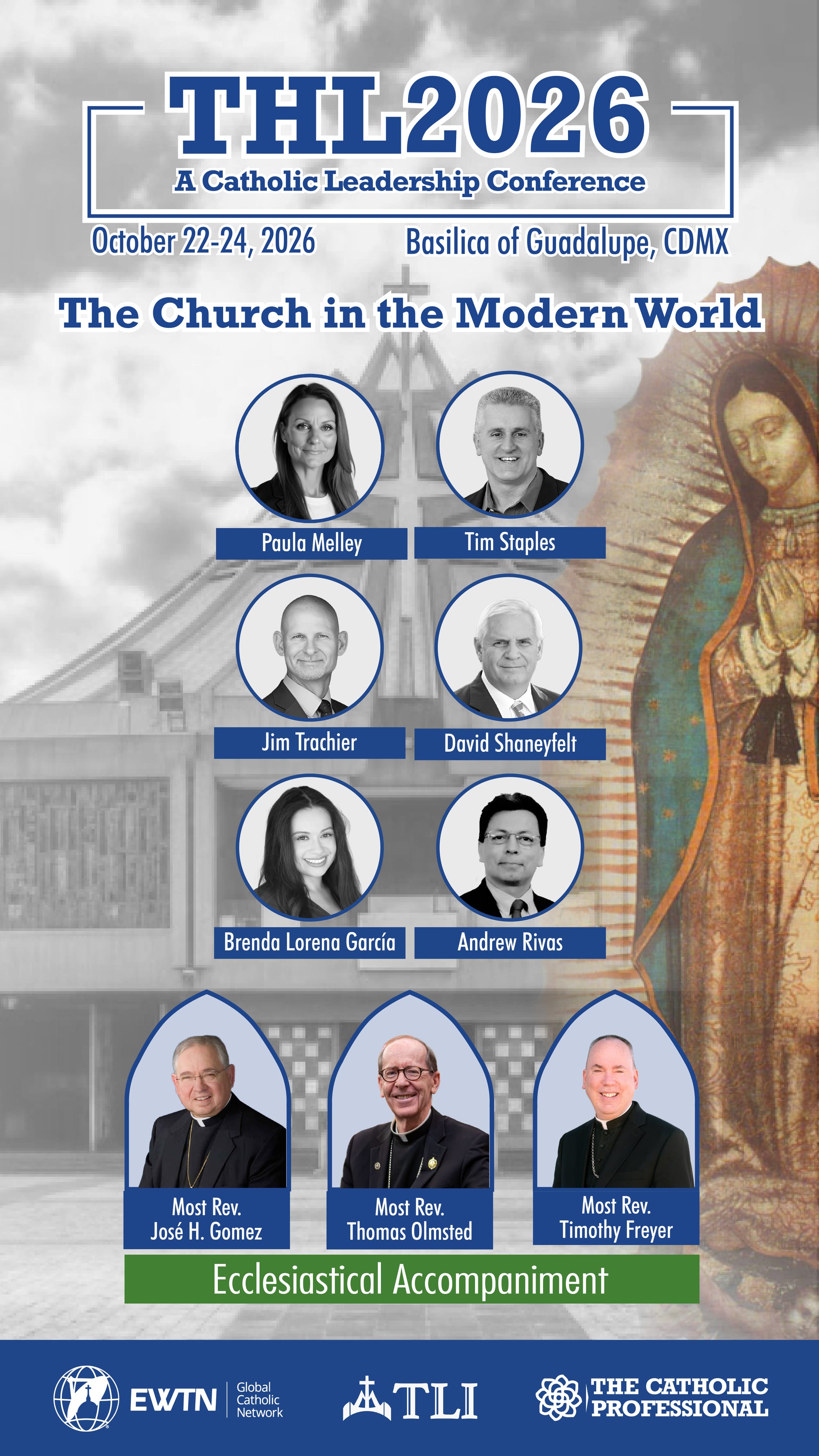
P.S. Discover the place where Our Lady of Guadalupe appeared to St. Juan Diego. See her image. And join Archbishop José Gómez, Bishop Thomas Olmsted and Bishop Timothy Freyer for The Hour of the Laity 2026 in Mexico City.