Table of Contents
Every year, millions of pilgrims travel to Mexico City to visit the Shrine of Our Lady of Guadalupe. While most Catholics know the core story, the 1531 apparitions to St. Juan Diego and the miraculous image left on his tilma, the history, science, and architecture surrounding Tepeyac Hill hold deep layers of mystery.
Here are 10 lesser-known facts about this sacred site.
- 1. The Original Aztec Sacred Ground Long before 1531, Tepeyac Hill was a sacred site dedicated to Tonantzin, the Aztec mother goddess. The apparition of Our Lady as an expectant mother of indigenous descent transformed a place of pagan devotion into a bridge for Christian conversion.
- 2. A Miraculous Survival of Nitric Acid In 1791, a worker cleaning the silver frame accidentally spilled a container of nitric acid across the top right side of the tilma. By all physical laws, the strong acid should have eaten through the organic agave fibers. Instead, it left only a faint watermark that remains barely visible today.
- 3. The 1921 Bomb Explosion During a period of religious persecution in 1921, an anti-clerical operative hid a bomb inside a vase of flowers directly beneath the tilma. The blast blew out windows half a mile away, shattered the church's marble altar, and twisted a massive brass crucifix into a curve. Yet, the thin glass protecting the tilma and the delicate fabric itself remained completely undamaged.
- 4. Reflections in the Virgin's Eyes Ophthalmologists examining the image under high magnification made an incredible discovery: human figures are reflected in the Virgin's corneas. Using the same distortion laws present in a living human eye, researchers identified what appears to be St. Juan Diego, Bishop Zumárraga, and an indigenous family present during the tilma's unveiling.
- 5. The Tilma Defies Natural Science Juan Diego’s cloak is woven from rough agave fibers (ayate), a coarse material with a natural lifespan of roughly 20 years. Unprotected for its first century, touched by millions, and exposed to harsh conditions, it has survived nearly 500 years without decaying. Furthermore, infrared tests show no brush strokes, underlying sketches, or traditional animal or vegetable pigments.
- 6. Starlit Constellations on the Mantle The stars on Mary's blue mantle are not randomly placed. Astronomical mapping shows that the constellation arrangement matches the exact night sky over Mexico City on the morning of December 12, 1531—from the reverse perspective of someone looking down from Heaven.
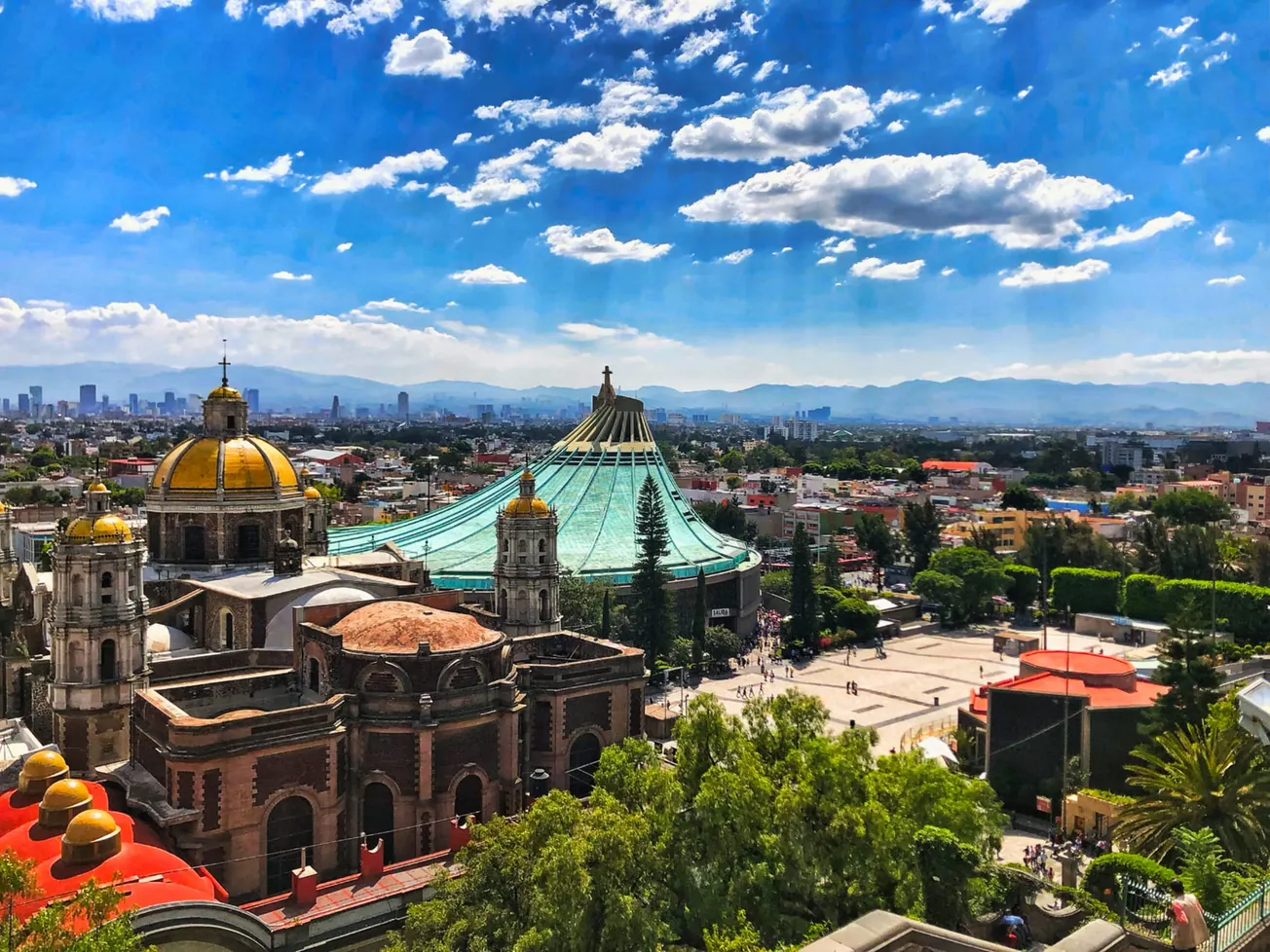
- 7. The "Sinking" Old Basilica The 18th-century Old Basilica (Templo Expiatorio a Cristo Rey) sits on Mexico City’s soft, marshy lakebed. Over centuries, the immense weight caused the Baroque structure to sink unevenly, creating a dramatic lean. Major structural stabilization in the late 20th century saved it from collapse, but the tilt remains visible to visitors.
- 8. A Tent-Like Modern Marvel To accommodate up to 10,000 worshippers inside and keep the tilma visible from any seat, Mexican architect Pedro Ramírez Vázquez designed the circular New Basilica in 1976. Its distinct green roof is designed to resemble a tent, recalling the Old Testament Tabernacle.
- 9. Moving Walkways for Pilgrims Because the shrine receives tens of millions of visitors each year, engineers installed moving walkways beneath the main altar. This design allows continuous streams of pilgrims to view the tilma suspended above without creating logjams inside the sanctuary.
- 10. A Name Rooted in Two Worlds The origin of the name "Guadalupe" remains debated. Spanish priests connected it to the famous Marian shrine in Spain. However, many scholars believe Mary used the local Nahuatl phrase Coatlaxopeuh (pronounced similar to "Guadalupe"), which translates to "she who crushes the serpent"—a reference to defeating ancient pagan practices.
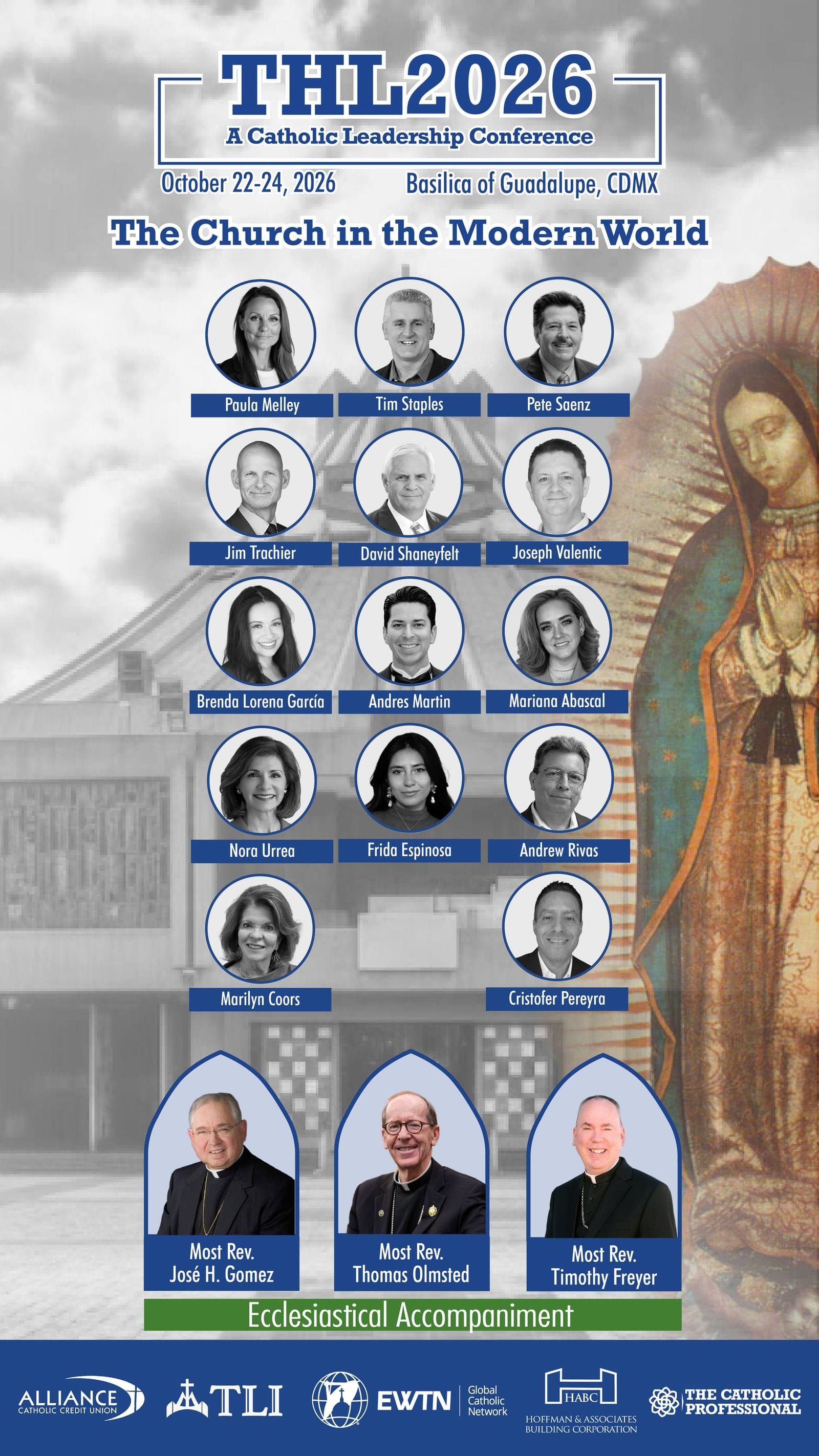
When planning your pilgrimage to see the Tilma and experience Tepeyac Hill, THL2026 offers the ultimate journey. By pairing deep spiritual formation with an unforgettable visit to Mexico City, it provides an ideal, seamless route for Catholic professionals. Plus, you can save $100 on your registration by using the promo code SAINT when you sign up to attend the conference.
P.S. Join Archbishop José Gómez, Bishop Thomas Olmsted and Bishop Timothy Freyer for The Hour of the Laity 2026 in Mexico City. In the videos bellow you will see what they have to say about THL2026.
Ad: Tepeyac Leadership’s Leadership for the World is a $2 million, three year mission to form lay Catholic leaders for the public square. Without formation, others fill the void. Will you step in or step aside now, when it matters most?