Table of Contents
Walk into almost any modern corporate office, and you are immediately greeted by a wall of sound. Keyboard clacking, the hum of the HVAC, impromptu huddles, overhead music, and the sharp ping of Slack notifications create a relentless auditory landscape. For the professional striving to maintain an interior life, the open-office plan can feel like a spiritual desert, a place where contemplation goes to die.
We often imagine holiness requiring the physical isolation of a Carthusian cell or the quiet stone walls of a rural monastery. Yet, the vast majority of lay Catholics are called to find God not in isolation, but in the thick of the marketplace. If we cannot change our physical architecture, we must change our spiritual architecture. We must learn to build an “interior sanctuary” right at our desks.
This is not a new challenge, merely a modern iteration of an ancient one. The Desert Fathers of the fourth century fled to the physical wilderness to escape the noise of Rome, but they quickly realized that the loudest noises were the ones they carried inside their own minds. Saint Benedict later designed his Rule to ensure that monks could maintain internal stillness even while performing intense manual labor. The secret, they discovered, was custody of the mind.
To build this interior sanctuary amid the open-office chaos, we must first practice what the spiritual tradition calls custody of the senses. In an open workspace, your eyes and ears are constantly bombarded. While noise-canceling headphones are a helpful modern tool and can even be used to listen to sacred music or Gregorian chant, the deeper work happens behind the eyes. It involves a conscious decision to stop “scanning” the room. When we look up at every passing coworker or look at every screen shift in our peripheral vision, we invite the world to scatter our inner peace. By intentionally tethering our gaze to our work, we create the first defensive wall of our interior cloister.
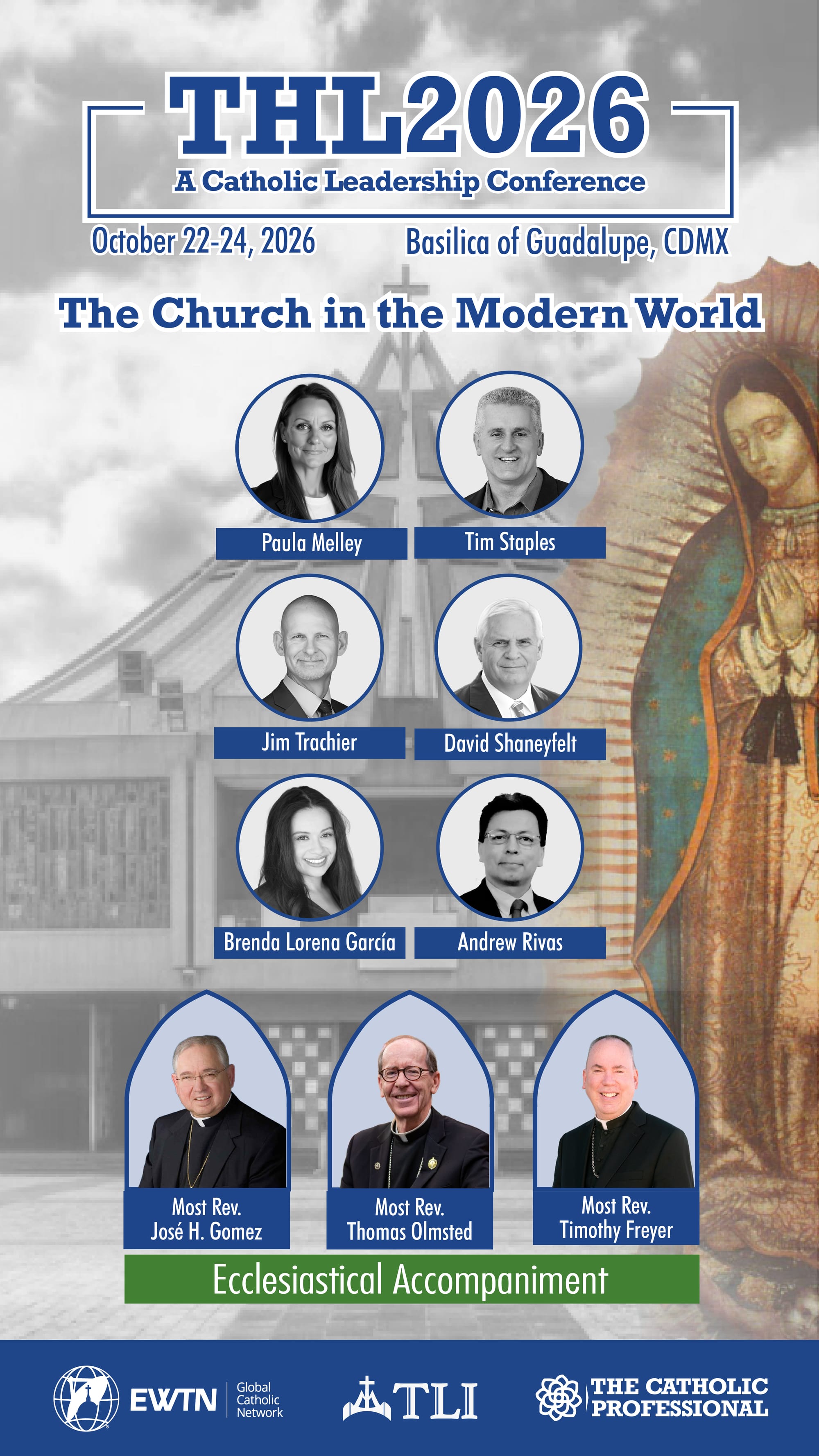
Ad: Discover the place where Our Lady of Guadalupe appeared to St. Juan Diego. See her image. And join Archbishop José Gómez, Bishop Thomas Olmsted and Bishop Timothy Freyer for The Hour of the Laity 2026 in Mexico City.
Next, we must learn to leverage the micro-moments of the workday as spiritual bells. In a monastery, the Tintinnabulum rings to interrupt work and call the monks to prayer, reminding them that their labor is subordinate to God. As laity we don’t live monastic lives, but in the corporate world, we can transform our digital interruptions into spiritual alarms. When a notification pings, before clicking it, take one conscious, deep breath and pray a brief aspiration: “Jesus, I offer my work to You,” or “Lord, give me patience.” This fraction of a second creates a buffer zone, transforming a chaotic external stimulus into a prompt for interior recollection.
Finally, we must sanctify our actual labor, recognizing that our work desk is our altar. St. Josemaría Escrivá famously taught that professional work is the raw material of our sanctification. When we view our spreadsheet, our code, or our legal brief as an offering to God, the noise around us begins to recede into the background. The intense concentration required for excellent work becomes, in itself, a form of prayerful focus, as St. Josemaría would say, when done out of love.
Living a contemplative life in a loud world does not mean being aloof or unproductive. On the contrary, the professional who possesses a quiet soul is often the most grounded, creative, and resilient person in the room. By building an interior sanctuary, you ensure that when the open-office plan threatens to overwhelm you, you can always step inside, close the door behind you and find Christ waiting in the silence.
Ad: Tepeyac Leadership’s Leadership for the World is a $2 million, three year mission to form lay Catholic leaders for the public square. Without formation, others fill the void. Will you step in or step aside now, when it matters most?

Click to discover why THL2026 is a must-attend event!