Table of Contents
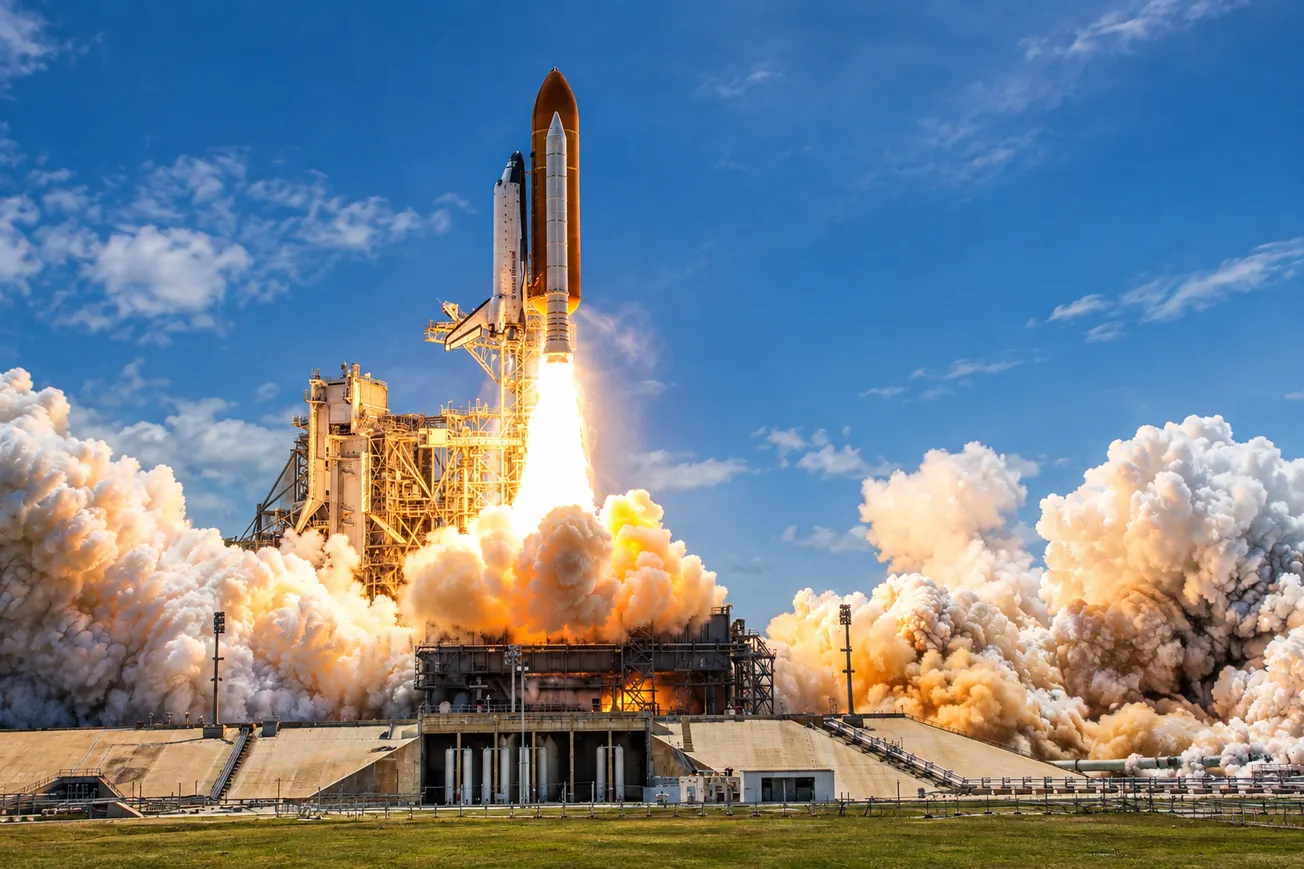
If you follow the news for more than five minutes, you’ll likely catch a headline about another milestone in commercial spaceflight, a new reusable booster landing safely on a drone ship, or plans for a permanent human settlement on Mars. We live in an age of staggering technological acceleration. Our collective drive to push past the limits of earth, innovate at lightning speed, and conquer the cosmos has reached a fever pitch.
In moments like these, it is easy to get swept up in the sheer magnitude of human ingenuity. You watch a towering rocket pierce the clouds, roar past the stratosphere, and deploy a constellation of satellites into orbit, and you can't help but feel a profound sense of awe. But for Catholic professionals navigating boardrooms, coding sprints, and project deadlines down here on earth, these modern marvels invite a deeper question. Where does our relentless ambition actually come from, and more importantly, where is it taking us?
The Dignity of Co-Creation
Let's be clear: the Church has never looked at human progress or technological triumph with suspicion. In fact, Catholic theology views human creativity not as a threat to God's domain, but as a participation in it. When engineers design reusable rockets, software developers write algorithms that optimize global supply chains, or entrepreneurs scale enterprises to solve complex problems, they are exercising what St. John Paul II called the "transcendent dignity" of human work.
We are made in the image of a Creator. That means our drive to build, invent, and explore isn't a glitch in our programming; it's a feature. When we push boundaries and master the material world, we are reflecting the divine spark within us. The problem, however, arises when our ambition detaches itself from its ultimate Author. When we start treating the stars as our only frontier and technological mastery as our ultimate salvation, our gaze shifts dangerously away from the horizon that truly matters.
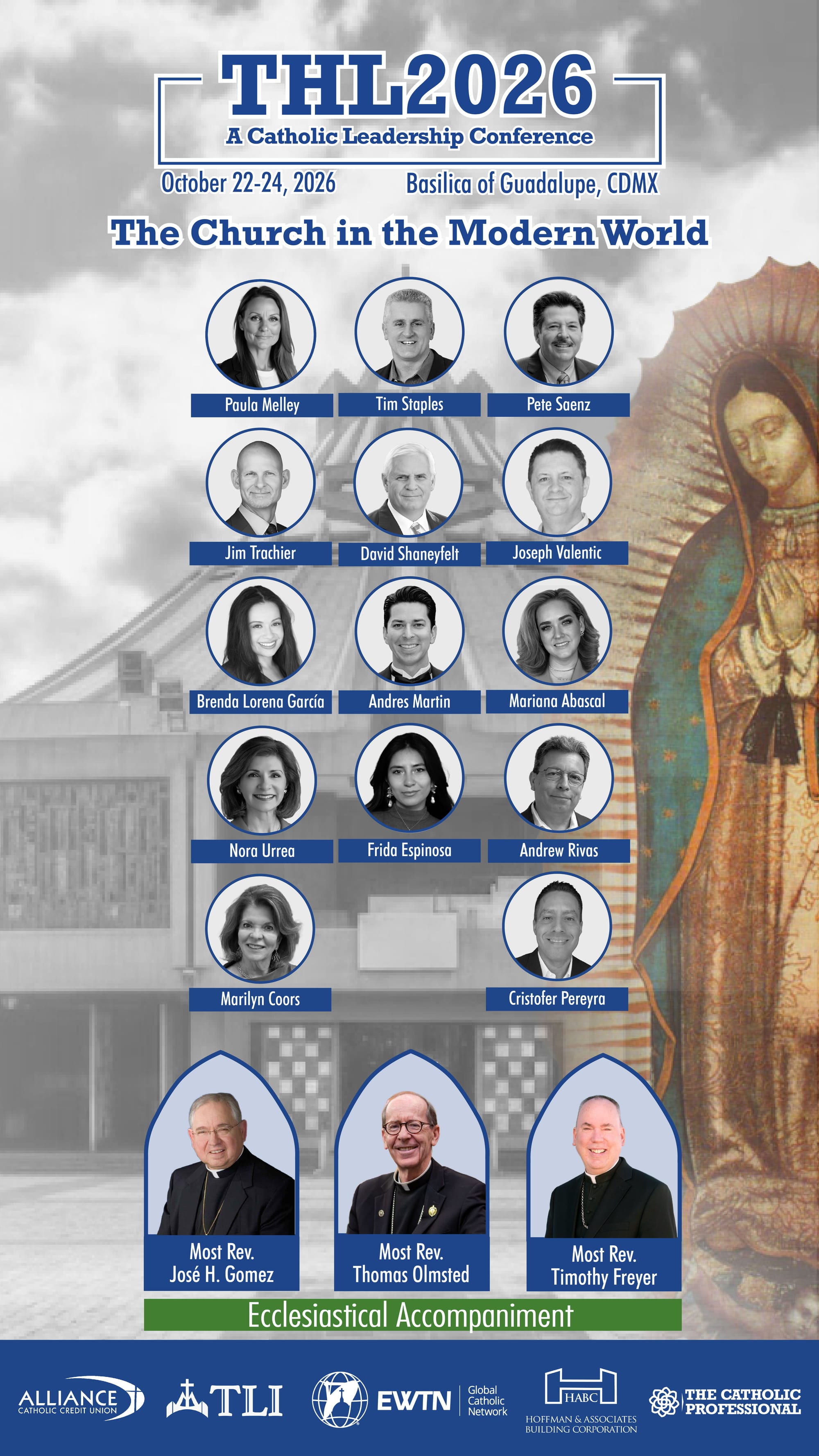
Ad: Discover the place where Our Lady of Guadalupe appeared to St. Juan Diego. See her image. And join Archbishop José Gómez, Bishop Thomas Olmsted and Bishop Timothy Freyer for The Hour of the Laity 2026 in Mexico City.
The Danger of Promethean Pride
In Greek mythology, Prometheus stole fire from the gods to elevate humanity, ultimately inviting tragic hubris and divine retribution. Today, our modern fire is rocket fuel and artificial intelligence. There is a subtle temptation in high-performing professional environments to believe that if we just scale fast enough, innovate cleverly enough, and launch far enough, we can engineer our way out of human brokenness.
We see this in the secular tech culture's obsession with transhumanism and digital immortality. The underlying myth is seductive: if we conquer the universe out there, we won't have to deal with the messy business of conversion, sin, and redemption inside our own souls.
Yet, Catholic social teaching and wisdom traditions remind us that all the orbital momentum in the world cannot fix a fractured human heart. As C.S. Lewis frequently observed, an enterprise that advances human power without a corresponding growth in moral and spiritual depth only gives human beings more efficient ways to destroy themselves.
Tending the Soil of the Soul
So, how are we supposed to view these incredible technological leaps from our desks and workstations? We celebrate them with gratitude, recognizing the brilliance of human intellect as a gift from God. But we also maintain a healthy, spiritual detachment.
Before we can successfully colonize Mars, we have to tend to the kingdom within. The most critical frontier we will ever explore isn't the cold vacuum of deep space; it is the quiet, uncharted territory of our own conscience. It is the daily, often unglamorous work of prayer, virtue, charity, and grace.
When a rocket launches into the night sky, it leaves a blazing trail of fire, but its fuel is entirely consumed in the process. For Catholic professionals, our ambition shouldn't burn us out on earthly vanity alone. Instead, our daily work, our professional triumphs, and our drive to innovate should serve as booster rockets for something infinitely greater: lifting our souls, and the souls of those we lead, toward the eternal communion for which we were truly made.
P.S. Join Archbishop José Gómez, Bishop Thomas Olmsted and Bishop Timothy Freyer for The Hour of the Laity 2026 in Mexico City. In the videos bellow you will see what they have to say about THL2026.
Ad: Tepeyac Leadership’s Leadership for the World is a $2 million, three year mission to form lay Catholic leaders for the public square. Without formation, others fill the void. Will you step in or step aside now, when it matters most?