Table of Contents
Every executive, manager, and team leader eventually hits the wall where math simply stops working in their favor.
The quarter-end deliverables are looming, two key team members are out sick, the client just expanded the project scope, and your remaining budget is a fraction of what the strategy actually requires. In the secular corporate playbook, the response to this pressure is predictable: sheer brute force. We call for mandatory overtime, send emails late into the evening, double down on micromanagement, and attempt to close the operational gap through our own anxiety-driven willpower.
Yet, as Catholic professionals, we are formed by a radically different narrative. In the Gospels, when the crowd of thousands was hungry and the disciples had only five loaves and two fish, human logic suggested one solution: send the people away and cut your losses. Instead, Christ asked for what little they had, blessed it, and multiplied it to exceed every expectation.
The psalm response reminds us: “The hand of the Lord feeds us; he answers all our needs.”
Notice what it does not say. It does not say our human capacity answers all our needs. It does not promise that our intellect, strategic brilliance, or calendar management will always be sufficient. It reminds us that our primary job as leaders is not to be the ultimate provider, but to be faithful stewards of the resources entrusted to us, even when those resources feel wildly inadequate.
Bring Your Honest Best, Then Stop
Christ did not perform the miracle out of thin air, requesting the five loaves and two fish first. God honors our authentic human effort. Bringing your loaves means doing the diligent work: building the thoughtful project plan, setting realistic priorities, and working with integrity during business hours.
However, overworking to the point of burnout is not a sign of high dedication, but often a subtle form of pride. It is the subconscious belief that the ultimate success of the enterprise rests entirely on our shoulders rather than on God’s providence. Bring your honest best to the table, and then have the humility to hand the outcome over to Him.
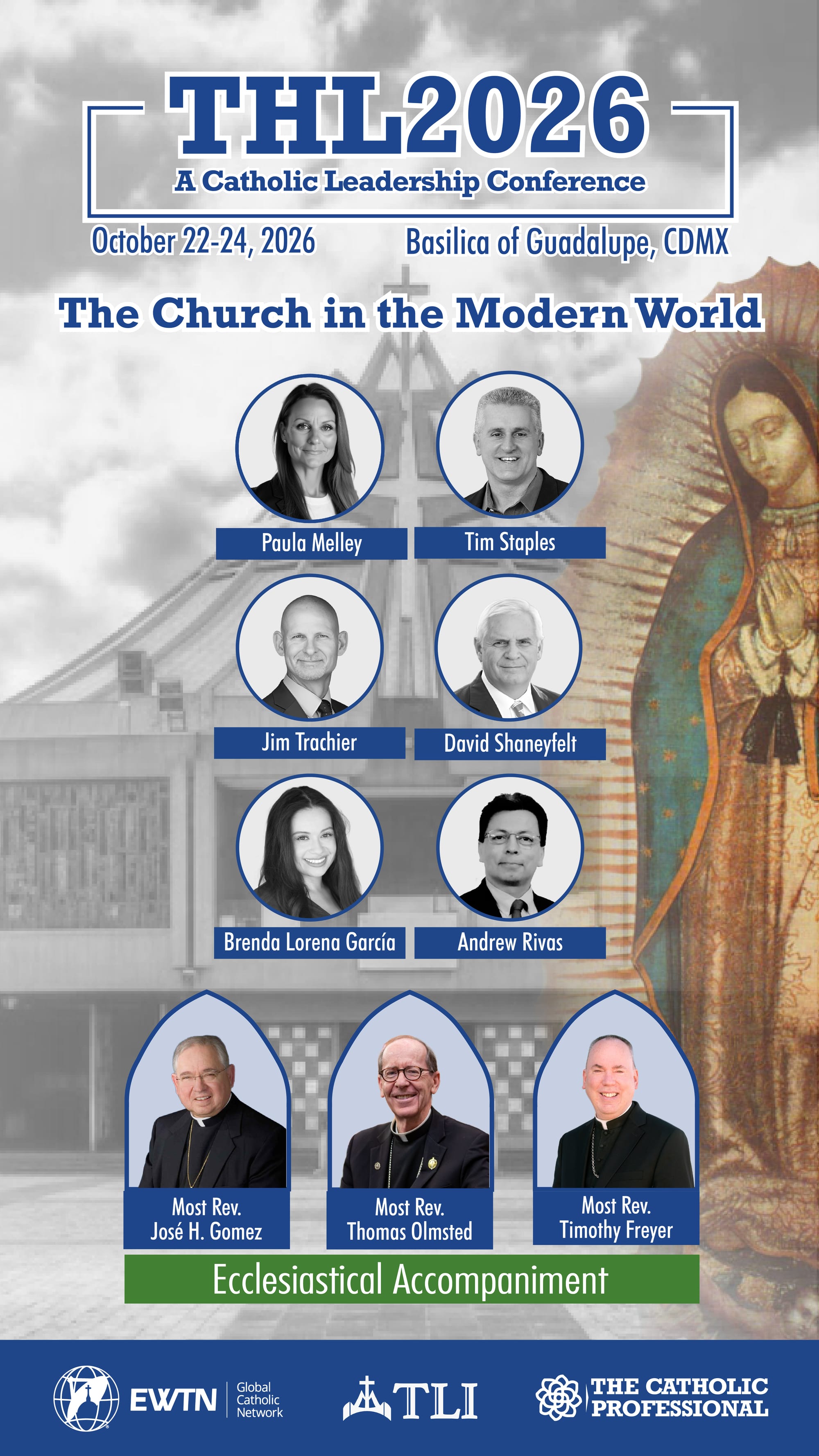
Ad: Discover the place where Our Lady of Guadalupe appeared to St. Juan Diego. See her image. And join Archbishop José Gómez, Bishop Thomas Olmsted and Bishop Timothy Freyer for The Hour of the Laity 2026 in Mexico City.
Practice Radical Prioritization
When capacity falls short, trying to do everything poorly is an act of poor stewardship. A faithful leader must discern what is truly essential.
Consider what core loaves are required today, identifying the critical tasks that protect your team’s well-being, honor your fundamental client commitments, and serve the true good of the organization. Be courageous enough to pause, delegate, or say a firm, polite "not right now" to low-impact tasks that only serve status or artificial urgency.
Transform Operational Strain into Prayer
The moment you feel the panic of a resource deficit, let it serve as a spiritual prompt. Before opening another emergency spreadsheet, pause at your desk. Offer the budget shortfall, the tight deadline, or the difficult negotiation directly to the Lord.
A brief interior prayer, asking the Lord to supply what is missing according to His will re-anchors your heart in trust. It shifts your leadership posture from frantic control to serene confidence, allowing you to lead your team with poise and clarity under pressure.
We are not called to perform miracles; we are simply called to bring our modest offerings to the One who does. When you surrender your limited capacity to the God who answers every need, you free yourself to lead not from panic, but from peace.
P.S. Join Archbishop José Gómez, Bishop Thomas Olmsted and Bishop Timothy Freyer for The Hour of the Laity 2026 in Mexico City. In the videos bellow you will see what they have to say about THL2026.
Ad: Tepeyac Leadership’s Leadership for the World is a $2 million, three year mission to form lay Catholic leaders for the public square. Without formation, others fill the void. Will you step in or step aside now, when it matters most?