Table of Contents
For many Christian professionals, the daily commute marks an unstated partition in their lives. On one side stands Sunday mass, personal prayer, and moral intentions, while on the other lies the secular grind of spreadsheets, client calls, quarter-end targets, and inbox clutter. It is easy to view nine-to-five work as a necessary distraction from faith, a secular obligation that simply pays the bills and funds charitable giving.
Yet, Catholic theology offers a radically different perspective. Work is not a spiritual obstacle to overcome, nor is it a neutral backdrop. It is the very material out of which holiness is forged. Drawing on the insights of St. Josemaría Escrivá and St. John Paul II’s encyclical Laborem Exercens, the Catholic tradition invites us to see our daily tasks not merely as a career, but as a primary path to sanctification.
The Altar of Daily Work
St. Josemaría Escrivá, the founder of Opus Dei, famously taught that ordinary life is the true setting for modern sanctity. He reminded laypeople that they do not need to enter a monastery or take religious vows to pursue holiness. Instead, the desk, the lab bench, and the boardroom table can become altars where work is offered up to God.
This vision requires a fundamental shift in perspective. When we approach a project with diligence, double-check details for accuracy, or mentor a junior colleague with patience, we are exercising the virtues of fortitude, justice, and charity. Professional excellence becomes a form of worship. As Escrivá noted, work done poorly or carelessly cannot be easily offered to God, because God deserves our best efforts, not our leftover energy.
Work as Co-Creation
In Laborem Exercens, St. John Paul II deepened this understanding by emphasizing that human work participates in the ongoing creation of the world. God entrusted humanity with cultivating the earth and building human culture.
When a lawyer drafts a fair contract, an architect designs a durable space, or a manager builds a healthy team culture, they participate in God's creative activity. Work carries intrinsic value because human beings perform it. It is not merely a means to earn a living, but a means to develop our God-given talents, serve our neighbors, and contribute to the common good.
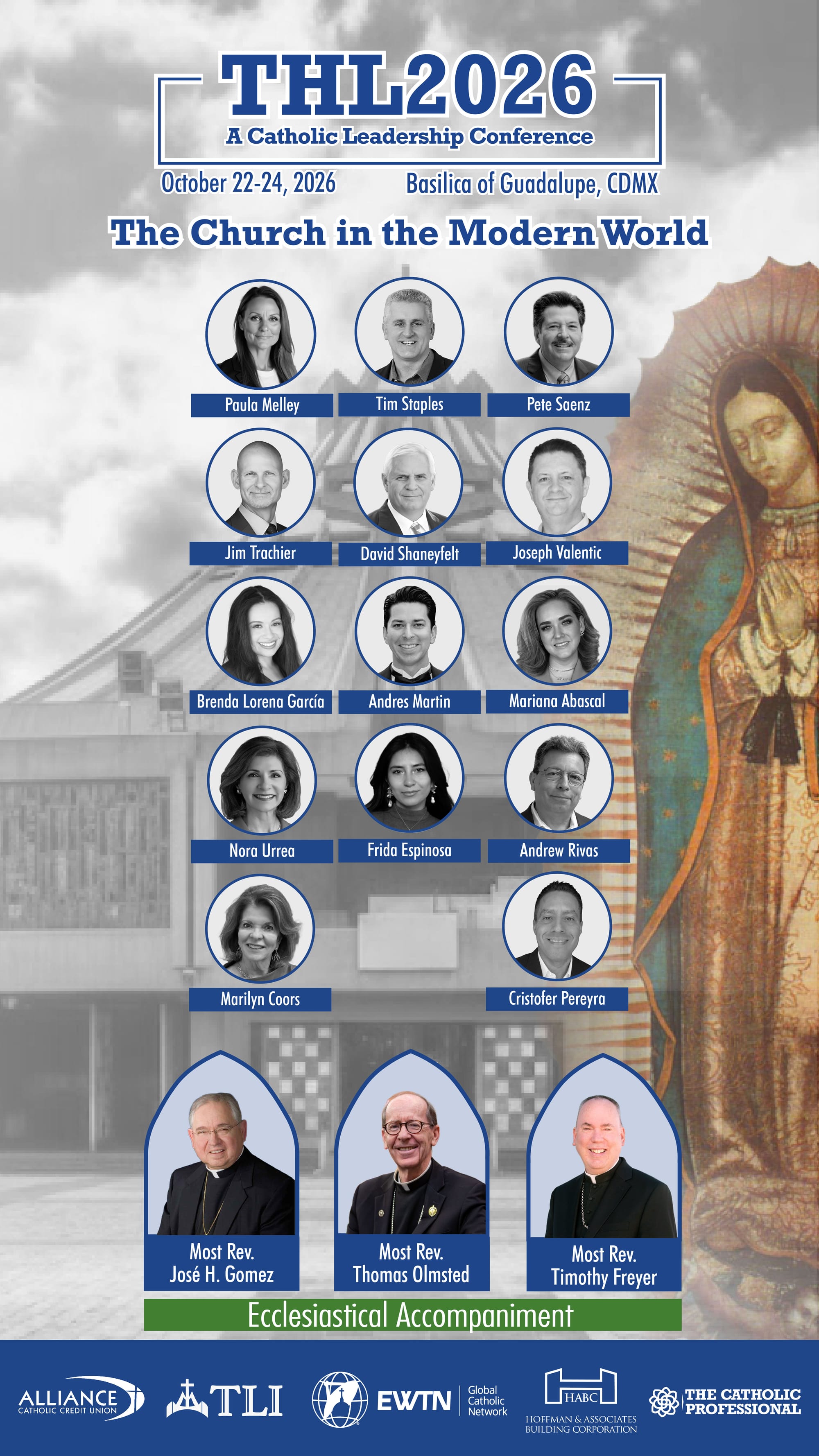
Ad: Discover the place where Our Lady of Guadalupe appeared to St. Juan Diego. See her image. And join Archbishop José Gómez, Bishop Thomas Olmsted and Bishop Timothy Freyer for The Hour of the Laity 2026 in Mexico City.
Practical Steps for the Workday
Living out this theology of work does not require broadcasting religious language at the office or neglecting professional standards. Instead, it shows up in quiet, consistent habits integrated into our morning-to-evening routines.
Offering the first moments of the morning is a powerful way to set the tone. Beginning the workday with a brief, silent offer of intention, turning over upcoming meetings, emails, and challenges to God, creates a calm baseline for the hours ahead.
Pursuing genuine excellence follows naturally from this foundation. When we treat professional quality as a matter of personal integrity, meeting deadlines, maintaining honest communication, and producing thorough work become direct expressions of respect for our colleagues and clients alike.
Finally, practicing presence and kindness transforms the unpredictable moments of the afternoon. Midday friction, tight deadlines, and difficult interactions are common in any workplace, yet viewing these challenges as opportunities to practice patience, charity, and emotional composure elevates routine stress into spiritual growth.
An Integrated Life
The goal of a Christian careerist is not to live a double life, one sacred and one secular, but to cultivate a single, integrated identity. When professional diligence is animated by faith, daily labor gains lasting purpose.
Our desks, task lists, and daily routines cease to be secular burdens. Instead, they become the precise places where we build character, serve others, and live out our vocation in the modern world.
P.S. Join Archbishop José Gómez, Bishop Thomas Olmsted and Bishop Timothy Freyer for The Hour of the Laity 2026 in Mexico City. In the videos bellow you will see what they have to say about THL2026.
Ad: Tepeyac Leadership’s Leadership for the World is a $2 million, three year mission to form lay Catholic leaders for the public square. Without formation, others fill the void. Will you step in or step aside now, when it matters most?