Dear TLI Family,
Labor Day weekend has just passed in the U.S., and as we ease back into the routine of our daily work, it is worth pausing to reflect on what labor truly means for us as lay Catholic leaders.
For many in the secular world, Labor Day is simply a long weekend marking the end of summer, a temporary pause before returning to the daily grind. But the Catholic Church has a rich, profound tradition when it comes to the subject of human labor. Far from viewing work as a mere economic necessity, a burden to be endured, or a means to accumulate wealth and status, the Church reveals work as a fundamental dimension of human dignity.
Through our daily efforts, we actively participate in God’s ongoing creation. Work is not merely what we do; it is the domain in which we sanctify ourselves and transform the world.
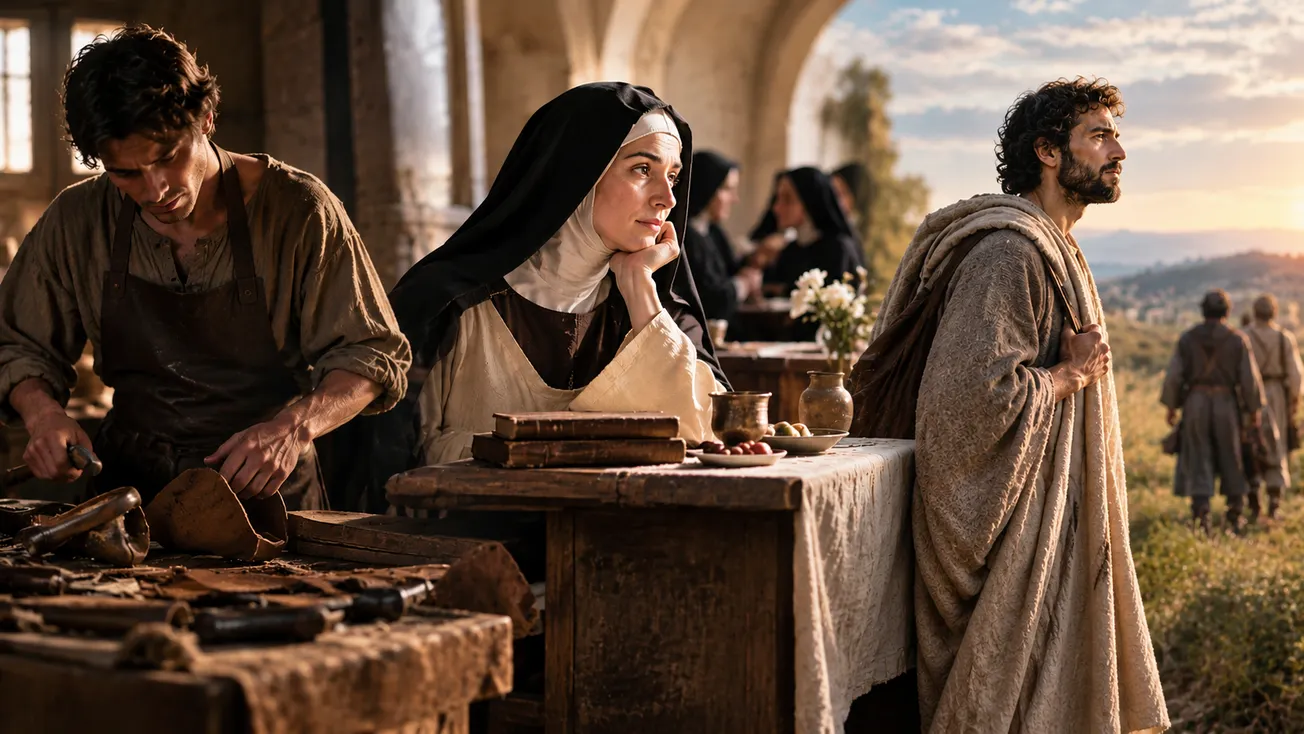
When we look for the supreme model of this reality, our eyes turn naturally to St. Joseph the Worker. Joseph was not a powerful politician, a wealthy merchant, or an influential scholar of his day. He was a carpenter, a humble craftsman who earned his living through the sweat of his brow. Yet, it was precisely through his manual labor, performed in quiet fidelity and love, that he provided for the Holy Family and fulfilled his central role in salvation history. St. Joseph shows us ordinary human labor can be an act of worship and profound spiritual significance.
Consider, too, the hidden life of Jesus. Before Our Lord launched His public ministry, preached the Sermon on the Mount, or performed a single public miracle, He spent roughly thirty years in Nazareth living a quiet, ordinary life. For decades, the Son of God worked his human hands. He may have handled timber, used everyday tools, dealt with demanding clients, and experienced the physical fatigue that comes at the end of a long workday.
Jesus did not merely tolerate those long years of hidden work; He sanctified them. By choosing to spend the vast majority of His earthly life engaged in quiet, everyday labor, Christ demonstrated that no honest work is insignificant or mundane. Every desk job, every boardroom meeting, every trade, and every administrative task carried out with excellence and offered to God carries eternal weight.
What does this mean for us as the TLI family?
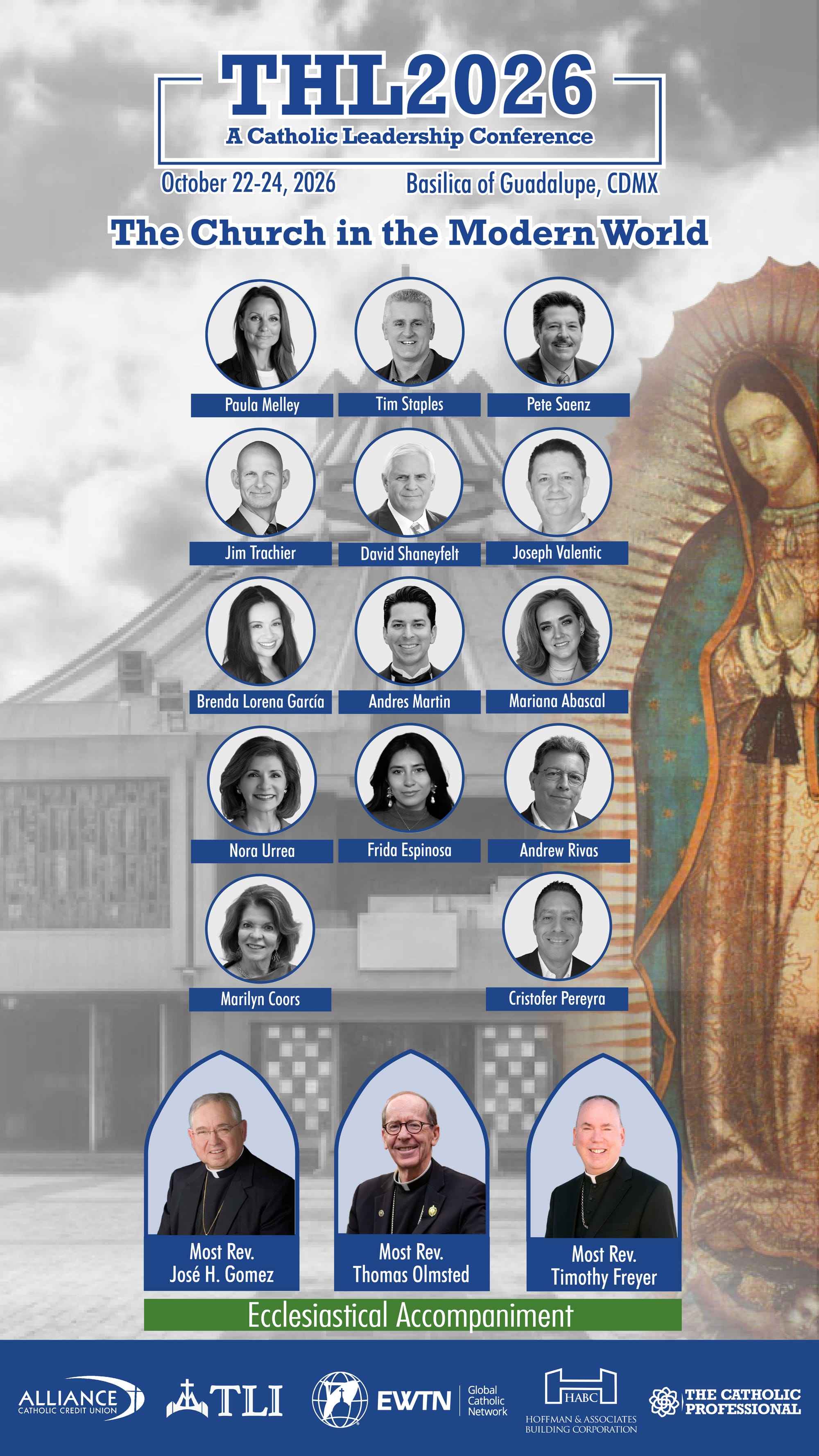
Ad: Discover the place where Our Lady of Guadalupe appeared to St. Juan Diego. See her image. And join Archbishop José Gómez, Bishop Thomas Olmsted and Bishop Timothy Freyer for The Hour of the Laity 2026 in Mexico City.
As lay Catholic professionals, our primary mission field is not behind a pulpit or inside a parish hall, it is out in the public square. It is in your office, your firm, your hospital, your classroom, and your job site. The hidden life of Jesus and the witness of St. Joseph remind us that our daily work is the altar upon which we offer our lives to God.
Leadership in the secular world does not begin when we receive recognition or achieve prominent titles; it begins in the hidden, quiet moments of faithful execution. When we perform our work with integrity, justice, patience, and professional excellence, we witness to the Gospel in a culture that desperately needs light.
As we go through this work week, let us reframe how we view our daily tasks. Whatever your hands find to do this week, perform it with the mind of Christ and the quiet dedication of St. Joseph. Let us carry our faith boldly into our workplaces, knowing that through our ordinary labor, God is doing extraordinary work in us and through us.
Sincerely yours in Christ and Our Lady of Guadalupe.
P.S. Join Archbishop José Gómez, Bishop Thomas Olmsted and Bishop Timothy Freyer for The Hour of the Laity 2026 in Mexico City. In the videos bellow you will see what they have to say about THL2026.
Ad: Tepeyac Leadership’s Leadership for the World is a $2 million, three year mission to form lay Catholic leaders for the public square. Without formation, others fill the void. Will you step in or step aside now, when it matters most?