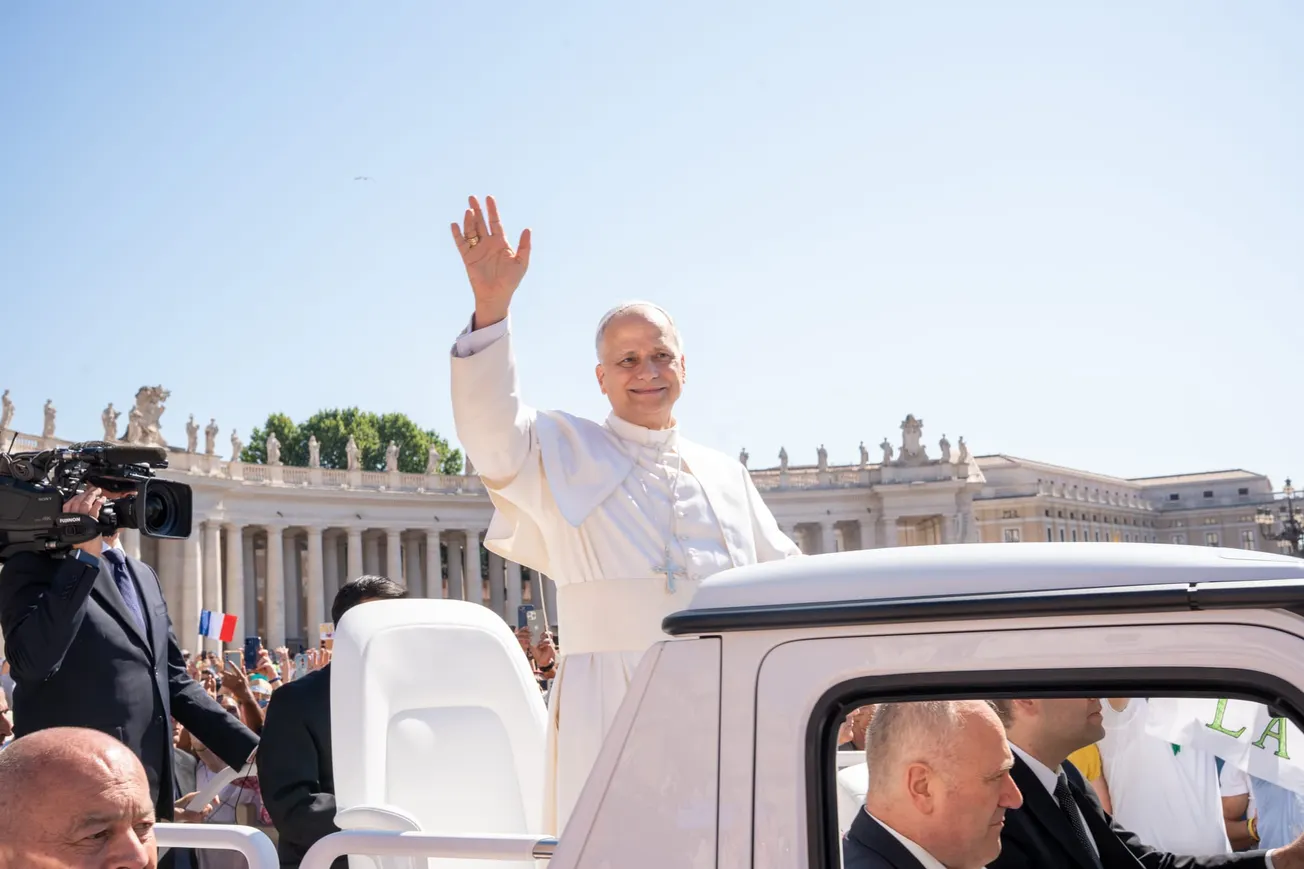
Few teachings of the Catholic Church are as misunderstood as the papacy. Many Christians ask whether the Pope is truly rooted in Scripture or whether the office developed centuries later through human tradition. Yet when we examine the Bible carefully, along with the witness of early Christian history, the evidence for the papacy becomes remarkably strong.
At the center of this discussion stands one passage: the words of Christ to Saint Peter in the Gospel of Matthew.
“You Are Peter”
In Matthew 16:18 to 19, Jesus tells Simon:
“And I tell you, you are Peter, and on this rock I will build my Church, and the gates of Hades shall not prevail against it. I will give you the keys of the kingdom of heaven, and whatever you bind on earth shall be bound in heaven, and whatever you loose on earth shall be loosed in heaven.”
This passage is foundational because Jesus is clearly establishing a visible authority within His Church.
The name “Peter” comes from the Greek Petros, meaning “rock.” In Aramaic, the language Jesus most likely spoke, the word would have been Kepha. Jesus was literally saying, “You are Rock, and upon this rock I will build my Church.”
Some argue that the “rock” refers only to Peter’s confession of faith, not to Peter himself. Yet the grammar of the passage points directly to Peter. Jesus changes Simon’s name, something highly significant in biblical history. Abram became Abraham. Jacob became Israel. Now Simon becomes Peter because he is being given a unique mission.
Christ does not say He will build many churches. He says, “My Church.” He establishes unity around a visible foundation.
The Meaning of the Keys
Jesus also gives Peter “the keys of the kingdom.”
This imagery is deeply biblical. In Isaiah 22:20 to 22, the king of Israel appoints a royal steward named Eliakim and gives him “the key of the house of David.” The steward exercised the king’s authority in the king’s absence.
Jesus, the Son of David and eternal King, echoes this exact language when He gives Peter the keys. The symbolism would have been unmistakable to Jewish listeners. Peter is being established as chief steward of Christ’s kingdom on earth.
The authority to “bind and loose” also carried rabbinical meaning. It referred to governing, teaching, and making authoritative judgments. While the apostles collectively receive this authority in Matthew 18:18, Peter receives it first and individually in Matthew 16.
Peter’s Leadership Among the Apostles
The New Testament repeatedly highlights Peter’s unique role.
Peter is always listed first among the apostles. He speaks on behalf of the Twelve. He preaches the first sermon after Pentecost in Acts 2. He performs the first apostolic miracle in Acts 3. He settles the question of admitting Gentiles into the Church in Acts 15.
Even after the Resurrection, Jesus singles Peter out for a special mission. In John 21:15 to 17, Christ tells him three times, “Feed my sheep.” Jesus does not merely ask Peter to care for his own local flock. He entrusts him with the shepherding of the entire Church.
Luke 22:31 to 32 provides another remarkable moment. Jesus tells Peter:
“I have prayed for you that your faith may not fail, and when you have turned again, strengthen your brethren.”
Christ prays specifically for Peter so that he may strengthen the other apostles. This reflects a unique pastoral responsibility.
The Historical Succession
The authority given to Peter did not disappear with his death. The early Church understood that his office continued through successors.
Historical evidence shows that Peter traveled to Rome, led the Church there, and was eventually martyred under Emperor Nero. From the earliest centuries, the bishops of Rome were recognized as successors to Peter.
Around A.D. 96, Pope Clement I intervened authoritatively in disputes within the Church of Corinth, even though the Apostle John was still alive elsewhere. This demonstrates the early recognition of Rome’s special authority.
In the second century, Saint Irenaeus of Lyons wrote that every church must agree with the Church of Rome because of its “preeminent authority.”
The papacy was not invented in the Middle Ages. It emerged naturally from the leadership structure Christ established in Scripture.
A Sign of Unity
The papacy is ultimately not about power. It is about unity, continuity, and faithful teaching.
Jesus knew His followers would need visible leadership. Throughout salvation history, God consistently works through covenantal structures and appointed leaders. The Pope serves as a visible sign of the unity of the Church and as a guardian of apostolic faith.
For Catholics, the papacy is not merely a tradition. It is a gift from Christ Himself, rooted in Scripture, affirmed by history, and sustained through the centuries as a witness to the enduring unity of the Church.
P.S. Discover the place where Our Lady of Guadalupe appeared to St. Juan Diego. See her image. And join Archbishop José Gómez, Bishop Thomas Olmsted and Bishop Timothy Freyer for The Hour of the Laity 2026 in Mexico City.